3 Comments

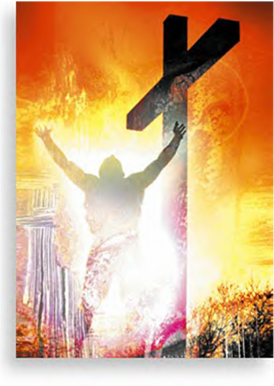
TODAY YOU WILL BE WITH ME IN PARADISE! (Jesus’ Seven Sayings from the Cross 2)


The Penitent Thief

The Penitent Thief

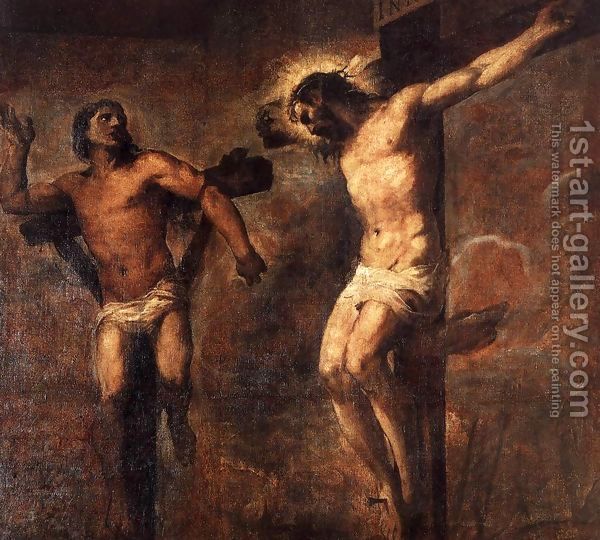
Jesus was crucified between two criminals. Even while he was dying, one of them – known as ‘the unrepentant thief’ – joined in with the crowd hurling insults at Jesus, scoffing and cursing him. But the other one – known as the penitent thief – was different. What did he see? What did he understand? He believed Jesus was a King – ‘Jesus remember me when you come into your kingdom’ (Luke 23:42). He accepted the justice he had received. He knew he deserved his punishment, just as much as he knew Jesus didn’t. And he feared God. As he was dying, he had a glimpse of eternity, of life beyond the grave. Jesus spoke words of comfort to him, words of assurance and hope – ‘Truly, I say to you, today you will be with me in paradise’ (Luke 23:43)! No ‘sinners prayer’ uttered? No ‘rite of baptism’ demanded? No apparent ‘gift of the Holy Spirit’ given? Just the promise of Jesus that there was nothing to fear for this man because, beyond the moment of his death, he would be with Jesus for eternity … for as the Apostle Paul implies, ‘paradise’ is part of heaven itself (2 Corinthians12:4).

Some people ask, ‘How can it have been “today”?!’ For three days Jesus was in the grave and, after the resurrection, it was a while before his ascension into heaven. Where is ‘paradise’? Is it indeed heaven? What does happen when we die? Is ‘paradise’ a conscious intermediate state like a royal garden where a guest waits for the king? Or do we enter an unconscious state, like a dreamless sleep, to be woken at the coming of the Lord? Or is there no intermediate state at all – so as soon as we die and have stepped out of time, we are immediately resurrected into eternity with God? What is the correct answer? All of us, who like the penitent thief truly put their trust in Jesus as Saviour, will find out one day!

What we can say for sure, is that ‘time’ takes on a whole different dimension in eternity! What is ‘today’ in terms of eternity? Eternity is the everlasting ‘now’. What is important to Jesus – which is why Jesus said what he did, and why what he said is important for us – is that, like the penitent thief, we need not fear death but believe and trust in King Jesus and receive his promise that we will be with him forever! Paradise is wherever Jesus is!

Julia Binney

Leave a comment

FATHER FORGIVE THEM! (Jesus’ Seven Sayings from the Cross 1)

Father Forgive Them!

Father Forgive Them!

Had we been in the crowd watching Jesus die, we would have heard him utter seven powerful statements from the cross. Remarkable words, not only due to his suffering, but because they conveyed deep meaning. No one Gospel records all seven. But why did he say what he said? Why are these last words so important? There appears to be no logical process or progression. But they make up a picture, like a mosaic, with Jesus at the centre. As we reflect on each of them, and consider their significance, let us appropriate them inwardly to ourselves and pray that we may see the whole picture more clearly and so go deeper in our understanding.

Luke tells us that as Jesus was dying on the cross he cried out, ‘Father, forgive them, for they do not know what they are doing’ (Luke 23:34). After the mockery of his trial, and the violent cries of the crowd, Jesus is led away by the Roman soldiers, tortured, and (with the help of Simon of Cyrene) forced to carry a heavy wooden cross up the hill to the Place of the Skull. People, including those who love him, follow on behind, and then Jesus is nailed to the cross and crucified. He could have judged the world and those who judged him. He could have cursed them as they cursed him. He could have deserted the world and forgotten it, as he was deserted and forgotten. But he forgives them … and despite his fearful pain he prays for those who were causing his pain, ‘Father, forgive them, for they do not know what they are doing!’

Who are the ‘them’ that Jesus refers to here? The disciples who abandoned him? Pontus Pilate and those who judged him? The Roman soldiers who actually hammered the nails thro his hands and feet? Jews? Romans? The whole baying mob? The mob who symbolise the whole of sinful humanity including us? ‘Father, forgive them, for they do not know what they are doing!’ Surely they knew what they were doing? The Jewish leaders knew! Pilate knew … even though he tried to wash his hands of the whole thing … knew that he was putting an innocent man to death! When given the opportunity by Pilate to free Jesus, the crowd had shouted all the more, ‘Crucify! Repeatedly insisting ‘Crucify him! Crucify him! They must have known that Jesus didn’t deserve to die!

Some say that this saying was aimed exclusively at the Roman soldiers because they didn’t know what they were doing? So ignorance is the key, is it? Anything is excusable as long as we can claim to be ignorant? Does Jesus only forgive us when we don’t know what we are doing? But usually we jolly well do know exactly what we are doing! And sometimes we have absolutely no intention of stopping?

Jesus preached and lived mercy and forgiveness all through his Ministry. This prayer of Jesus – ‘Father forgive them’ – was not a narrow, limited prayer. Its scope was much bigger than we realise. Everyone was included – those who acted in ignorance, and those who thought they knew what they were doing. Actually they didn’t really know what they were doing, and Jesus knew that they didn’t know – know that they were nailing God to a cross!? And we too might think that we know what we are doing, in our pride, when we sin? But actually we don’t, not really, not the extent of it anyway?! We don’t really understand the consequences of our sin. Nor do we fully comprehend that all our sin, all the sin of sinful humanity, is covered by the death of Jesus. Sin is finally dealt with! Nothing is left out! It is forgiven … all is forgiven! We are forgiven … not because we act in ignorance or stop or repent … but because of who God is and what he has done for us in Christ!

This is of such vital importance that it is one of the last things Jesus said! The Greek (the language Luke records this saying of Jesus in, in his Gospel) gives a profound sense of a prayer being constantly repeated as Jesus’ life drained away – ‘Father, forgive them! Father forgive them!’ – over and over and over again!

Julia Binney

Leave a comment

CAFE CHURCH

Jesus and the Samaritan Woman at Jacob's Well

Jesus and the Samaritan Woman at Jacob’s Well

So there I was, sitting in the cafeteria in Morrisons Supermarket, drinking coffee and reading a book. To be honest with you I was sitting at the back of the cafeteria, at a table obscured from the rest of the store by a pillar, because I was fed up with people ‘giving me that look’ for leaving Julia to struggle alone round the store doing our weekly family shop. For those of you who are not regular readers of our blogs I ought to explain that I recently had a mild heart attack, and subsequent investigations confirmed that I am ‘unique’ as I have ‘complicated plumbing’ around the heart, and therefore I am waiting for heart bypass surgery. The medical people, in their wisdom, have told us that I am not to do anything strenuous – like walking round a supermarket or lifting heavy loads – in the meantime. At 6′ 4″ tall, and weighing 16 stone, I find this medical dictate very embarrassing, especially when people look at me doing nothing to help and obviously think, ‘What a lazy so-and-so!’ because outwardly I appear to be strong and healthy!? For a couple of weeks, therefore, I have avoided our weekly trip to Morrisons and stayed at home instead!

There is a programme on British TV called ‘Escape to the Country’ which is all about people living in towns who want to relocate to a more rural environment. Well, we have been living in a ‘rural environment’ for over three years now … and sometimes we have to ‘escape from the country’ before we go ‘stir crazy’!? Our weekly drive into Weymouth, food shopping at Morrisons, followed by a coffee afterwards, helps to preserve our sanity! We usually pop next door to Beefeaters for a coffee (better quality coffee and ambiance) but today I get to have two coffees – one in Morrisons and the other in Beefeaters!? But I digress …

So there I was, as I said, sitting in the cafeteria in Morrison’s Supermarket, drinking coffee and reading a book. To be even more honest with you I had been getting somewhat depressed since coming out of hospital – primarily because I was feeling so useless! Everyone has been so supportive, so kind and understanding. Julia and Olivia (her mother) have been wonderful, taking on all my responsibilities in the home. Christian friends at church, college, and in the denomination have ‘filled in’ for me where necessary. But it is hard for someone who is normally so active, so ‘up front’, as me to suddenly find life ‘put on the back burner’ for a time. Especially I was beginning to feel ‘useless to God’ because I was ‘stuck at home’ most of the time, preaching and leading worship are now out of the question for the time being, and even when I manage to get to worship on a Sunday I have to just sit there, and can’t even join in the hymns and songs with my usual gusto anymore!?

So, as I keep trying to tell you, there I was sitting in the cafeteria in Morrison’s Supermarket, drinking coffee and reading a book. The book I was reading was The Autobiography of Richard Baxter by J M Lloyd Thomas (published in 1925), an abridged version of Baxter’s own book, the wonderfully named Reliquiae Baxterianae (published in 1696). Richard Baxter is one of my ‘heroes’ – if Christians are allowed to have heroes? He was a 17th century Puritan, the ‘Vicar’ of the West Midlands town of Kidderminster from 1641-1661. It was during his time there that ‘revival’ came to Kidderminster. It is said that when he first came to the town it was difficult to find a Christian family in any given street, but by the time he left it was hard to find a street in Kidderminster where every family was not Christian?! I have a particular interest in the principles behind Baxter’s ministry. I believe that they would still work today – even if his methods would need considerable updating. Of special interest to me, as a Pastor-Teacher, is Baxter’s commitment to Pastoral Ministry (outlined in his most famous book, The Reformed Pastor, which is still widely read today) as against a Preaching Ministry per se. In effect, Baxter’s ministry in Kidderminster was in two distinct periods (1641-42 and 1647-1661), separated by his enforced absence during the English Civil War. The county of Worcestershire (where Kidderminster is situated) was primarily ‘Royalist’ at that time, and Baxter (although not against the idea of monarchy) was essentially a ‘Parliamentarian’ and it was therefore wise for him not to remain in Kidderminster for the duration of the Civil War.

During his first period in Kidderminster (1641-42) Baxter, in common with the majority of his reformed colleagues, believed that preaching alone would bring about spiritual renewal throughout the nation. But when Baxter returned to Kidderminster in 1647 (after the Civil War) he had clearly changed his emphasis to a more ‘hands on’ pastoral approach – ‘personal dealings’ he called it – involving a ‘face to face’ meeting with every one of the 800 or so extended families in the parish on an annual basis. In doing this he enlisted the help of one or two ‘assistants’ but also undertook much of this himself. Baxter still maintained a ‘high view’ of preaching, but for the remainder of his time in Kidderminster gave less time to ‘sermon preparation’ and considerably more time to talking to people face to face. The intriguing question for me, is ‘Why did Baxter change his mind and his approach?’ Was he influenced by any other Pastor he met up with, or read about, during this period of ‘enforced sabbatical’? Was it something God revealed to him since he now had more time to think, read and pray, during this period? For me, it remains an intriguing question? However, I am digressing again …

So, as I was saying, there I was sitting in the cafeteria in Morrison’s Supermarket, drinking coffee and reading this old book, and still feeling pretty useless as far as the Kingdom of God was concerned, when suddenly this bloke comes up me and asks me what I am reading? ‘That looks a very interesting book you have there!’ he says. And it does! It is in good condition but it is nearly 90 years old! It is a proper book – not a paper back or a kindle edition. It doesn’t have a lurid front cover, and you can’t read the title unless you look closely … but it does look intriguing if you are a book lover. It is the sort of book you want to pick up and see what it is about, even if you were to put it straight back down again when you discovered it was about some old preacher guy?! ‘What is it about?’ he asks. I pause, take a deep breath, and tell him! He actually seems interested, so I give him a brief synopsis of Baxter’s impact on Kidderminster – told hopefully in my own winsome and amusing way! I am expecting him to move away, but he actually collects his own drink and bag from the table near mine where he had been sitting, and sits down at my table. We have a fascinating conversation about theology, Christianity, meditation, the meaning of life, and various other related subjects.

We introduce ourselves properly and he tells me that his name is Michael. He is a former Roman Catholic priest who has now left the priesthood but still retains an interest in spiritual things. He also reads a lot and produces a book from his bag that he is currently reading. It is a book about Julian of Norwich, the 14th century anchoress regarded as one of the most important of English Christian mystics. Fortunately I know a bit about her and have actually visited her cell built on to the wall of St Julian’s Church in Norwich from which she dispensed wisdom to various enquirers and seekers through the tiny window?! Michael is clearly a bit lost and, in response to my careful questions, begins to open up about himself. He tells me something of his story and it turns out that we have a number of common links and connections. We even lived near each other in South London at one time. Our conversation moves on to the impact of Taizé, the ecumenical Christian Community in France that draws around 4,000 to 6,000 visitors – mainly young people – each summer. Its unique blend of worship, bible teaching, reflection, and message of reconciliation, is both relevant and attractive. Julia and I have visited Taizé on several occasions and we love it there. Michael’s face lights up at the mention of Taizé … and he produces another book from his bag (a book that he has just bought second hand in a book shop in Weymouth) a book all about Taizé!? I am becoming more and more aware that this meeting between Michael and myself is not just a ‘coincidence’ but rather yet another one of those ‘God-incidents’ that happen from time to time!

Reflecting on my meeting with Michael later on in the day, I find myself thinking about both Richard Baxter’s approach to ministry, and the story (told in John’s Gospel) of Jesus’ meeting with the Samaritan woman at Jacob’s Well (John 4). We hear a lot today in church circles about the urgency of ‘winning others’ and the importance of being ‘missionary congregations’. ‘Systems’ and ‘methods’ that we could and should employ to achieve this abound?! Now reaching out to others in Christ’s name is really important! It is surely part of what it means for all of us who call ourselves ‘Christian’ to be a Christian, to be Church? Jesus exhorts us on a number of occasions to be ‘salt and light’ (Matthew 5:13-16), to ‘go and make disciples’ (Matthew 28:19,20), and so on! For over 40 years I have successfully ‘grown churches’ numerically and spiritually (not that I take any credit for this, at best I have simply been a vehicle God has chosen to use) but in all that time I have never ever adopted a ‘system’ for doing this. All I have ever done is ‘talk with people’! How encouraging, therefore, to realise that this was primarily what Jesus himself did a lot of the time? That this was what Richard Baxter did in 17th century Kidderminster? Oh to be sure, Jesus did teach the multitudes on occasion, and share with his disciples in a small group setting, but much of his time was spent face to face with individuals! And Baxter continued to preach to a full church every Sunday, but most of his time was spent simply talking to individuals or extended family groups!

Subliminally, I think I have learned a lot from both Jesus and Richard Baxter. For example, in his head Baxter classified people into seven possible groups ranging from the clearly unconverted to the outright rebellious Christian – but he was never able to put anyone into any of those groups until he had spent time talking to them? It would appear that these various ‘classifications’ were primarily for his own benefit, not as some kind of ‘judgment’ on others. Essentially he treated everyone the same! Jesus also took people at ‘face value’, recognising that we are all in the same boat – we all stand in need of the grace and mercy and help of God, whether we have never made any kind of commitment to God in Christ or if we have been ‘on the road’ for many years?! Why then are we Christians – especially us evangelicals – so quick to classify people as either ‘lost’ or ‘saved’, ‘in’ or ‘out’, ‘sound’ or ‘unsound’  before we actually know the first thing about them, and often without any kind of concept that here we are ‘face to face’ with someone who needs to know the ongoing love, grace, and mercy of God just as much as we do?! Take a little time to read through John 4 and see just how graciously Jesus treated this Samaritan woman who was anathema to her fellow villagers then, and who would be ‘written off’ by many ‘church people’ today, I am afraid?! A long time ago I stopped categorising people and learned to take them as they stand. I recognised that everyone needs to know the love, grace, mercy, goodness of God in one way or another – however outwardly defiant or ‘in control’ they appear to be? As Christians we are there to be ‘channels of God’s grace’ to others, but we cannot be this if we approach people with a pre-determined judgmental categorisation of who and what they are?

Another thing that strikes me about both Jesus and Richard Baxter, is that in their ‘personal dealings’ with people they actually ‘spoke with people’ and didn’t ‘preach at them’?! They left their ‘preaching’ in the pulpit or on the mountainside. Preaching has its place … but not in the ‘one to one’ situation. Jesus spoke with the Samaritan woman at Jacob’s well, not just to her, and especially not at her! He asked her about herself. He posed intriguing questions. He asked for her help and opinions. He entered in to a meaningful two-way conversation with her. He listened to her – to what she had to say – without already forming a reply before she had finished talking?! And as a result she came to experience God in a new and deeper way … and became the key to the transformation of her village! Richard Baxter adopted a very similar approach in his ‘personal dealings’ with his parishioners. He talked about practical matters as well as spiritual matters. He advised them about health and education when they solicited his advice. He tells us on one occasion that in a 15 minute conversation with one man he achieved more than he had in 15 years of this same man sitting under his preaching ministry week after week!? I have repeatedly found that when you get into conversation with people – and most people are happy to talk to anyone who will listen – and ask them about themselves and their situation, it is not long before they are telling you about themselves and their real needs. What a wonderful opportunity then, to share with them something of the love, and grace, and mercy of God … and at the very least promise to pray for them!?

Eventually Julia, pushing her loaded shopping trolley, finds me in the cafeteria, and it is time for me to go. Michael and I exchange email addresses and go our separate ways. Hopefully what we have shared together will prove to have been of mutual benefit as we both pursue our life journeys? He comes to Morrisons most week to meet up with another friend, who I gather is equally needy, so that they can encourage one another. I am sure that we will meet again in future weeks while I sit there in Morrisons Cafeteria, reading another book, because I am not allowed to do anything ‘strenuous’?! Perhaps we can do proper Cafe Church?! I certainly feel more encouraged leaving Morrisons than I did arriving. Perhaps I am not as useless to God as I thought I was?

Jim Binney

Leave a comment

DON’T JUST DO SOMETHING … STAND THERE!

Standing at the Cross

Standing at the Cross

I was sent home from hospital a month ago with strict instructions not to do anything – well nothing strenuous that is – in case it triggered another heart attack!? Now to be honest, at first, I though that this was rather a jolly good whiz! All I was allowed to do – and Julia was adamant on this – was either stay in bed or sit on a comfy chair, and let her wait on me hand and foot?! Now I know that some of you are already thinking – ‘So nothing much has changed there, then?!’ This of course is far from the truth – I actually normally do quite a lot around the house such as all the washing up, a lot of the maintenance jobs, working in the garden, carrying the shopping, etc. But, having now justified my existence, back to the point of this blog. Although there are times when I honestly feel incapable of doing anything – when the various drugs I am on ‘kick in’ or my breathing gets somewhat ‘laboured’ – it is against my nature to be lazy and do nothing. And after a few days of ‘doing nothing’ I began to get really bored and somewhat frustrated with not being allowed to do anything.

Julia, and her mother Olivia, were constantly hovering over me to make sure I ‘behaved’. Olivia took over the washing up, Tom (our gardener/handyman was left to look after the garden on his own and took on some of the practical jobs around the house that needed doing, and Olivia helped Julia with the weekly supermarket shop each week. Now I know that some of you will be suggesting that we should ‘shop over the internet’ but to be honest our weekly visit to Morrison’s (and a coffee afterwards) is part of our weekly ritual – an ‘escape from the country’ if you like?! At first I went with them to Morrison’s but stopped when I realised that people kept looking at me and thinking ‘Why doesn’t that big, strong guy help those poor ladies with pushing the trolley or carrying the shopping!?’ You can’t always see that someone has a dodgy heart like you can if he or she has a broken leg?! In reality, of course, everyone ‘in the know’ is being really kind and helpful. Other members of staff at Spurgeon’s College have taken over my marking responsibilities, friends at Dorchester Baptist Church are ‘filling in’ for me on the coffee rota, and the mid-week Prayer Meeting and Communion Service roster, and various other responsibilities I have within the Baptist Denomination are being ‘farmed out’ to others as well. But even so, although there are times when I really don’t feel at all like doing anything, there are other times – maybe the majority of times – when I feel really frustrated at not being able or allowed to do anything?!

Reflecting on this, I recalled an article I wrote several years ago entitled: ‘Don’t just do something … stand there!’ In this article I suggested that, in the first instance, ‘being’ was more important than ‘doing’ in the Christian life – that our service for God and others stemmed from our relationship with God, rather than the other way around? I even went as far as to suggest that if some Christians actually stopped all their ‘activity for God’ for a time they might discover that they actually didn’t have a real relationship with God at all?! I meant it kindly. It was not meant to be critical but rather to encourage Christians to discover a meaningful relationship with the living God in Christ, and enjoy the purposeful service in both the Church and the world that stems from such a meaningful relationship. Anyway, it proved to be quite controversial at the time, and I recall one Christian lady having ‘a right go’ at me ‘because the whole of my relationship with God is defined by what I do for him!’ Interestingly, this same lady came back to me some moths later to apologise for what she had said to me earlier. Almost immediately after her original outburst her personal circumstances radically changed in a way that meant that she had been forced to lay to one side all her ‘church activities’ … and in the period of time that followed she had come to realise that she did not have a meaningful relationship with God. This, in turn, led to a renewal of her commitment to Christ and, when her circumstances changed once again, a more limited but much more profitable period of service for Christ and others!

Anyway, back to the point, this period of enforced inactivity brought my own words back to haunt me – ‘Don’t just do something … stand there!’ Whether I like it or not, all I can do at the moment is primarily just be?! I can pray, of course, but prayer has never been a problem for me as it is for others seemingly. I am constantly praying – not always in the formal sense of getting down on my knees – but in the Brother Lawrence sense of Practicing the Presence of God moment by moment and day by day. I find myself, more and more, keeping one eye open towards God to see what he sees, and one ear open to hear what he has to say, as I observe what is going on around me and listen to the multitude of voices around us on any given day. I can read – interesting books, the Bible, the newspaper, stimulating articles on the internet. I can write – reflections on what I have read, or see around me, or experience – things like this ‘blog’ and all the other ‘blogs’ that remain half written on my computer but never see the light of day because they are the ‘fruit of my frustrations’ and far too explosive to publish!? But all of this is far different from the active life I lived, especially when I was in the Pastorate. But just how helpful was all that ‘activity’ – for me and for others – in terms of the ‘kingdom of God’?

We Christians, especially us ‘evangelicals’, are so activist you know! David Bebbington (the Church Historian) is widely known for his definition of ‘evangelicalism’, referred to as the ‘Bebbington Quadrilateral’. In his 1989 classic study Evangelicalism in Modern Britain: A History from the 1730s to the 1980s, Bebbington identifies four main qualities which are to be used in defining evangelical convictions and attitudes: Biblicism (a particular regard for the Bible, e.g. all essential spiritual truth is to be found in its pages); Crucicentrism (a focus on the atoning work of Christ on the cross); Conversionism (the belief that human beings need to be converted); and Activism (the belief that the gospel needs to be expressed in effort). It is this latter quality that I want to concentrate on here for a few moments.

Now Activism is a quality – over the years I have been immensely grateful for all those people, in the various churches and congregations I have pastored, who have worked tirelessly for the sake of the Kingdom. In the Baptist Church in Dorchester, where Julia and I are members, two of the most successful activities are Messy Church and Kids and Co. Messy Church meets monthly and attracts around 150 people, mostly outsiders, who see this activity as ‘their church’. Messy Church requires a considerable amount of effort to put on – involving a whole variety of things from numerous fun activities around a biblical theme to a full blown meal for everyone to conclude – and the same group of committed helpers turn out month after month to make sure everything runs efficiently and winsomely. Kids and Co operates on weekly basis and is designed for parents, guardians and carers with pre-school children. It attracts up to 200 people every week to either the morning or afternoon session and is a ‘lifeline’ for many of those who attend. Once again its success is dependent upon the small army of dedicated people who fulfill a whole range of responsibilities each week to make sure this activity runs efficiently. Whilst these two activities are ‘front of house’ in Dorchester, there are other more ‘hidden’ activities, such as the Food Bank, that operate on a regular basis and are dependent on a key group of dedicated people who simply ‘get on with the task at hand’ week after week. I am sure that there are many other churches who could tell a similar story. Activism is an undoubted quality!

My concern is not, however, with those actively involved in those ‘good works which God has prepared in advance for us to do’ (Ephesians 2:10), but with the fact that so many Christians (and churches) seem to be rushing around like headless chickens either maintaining organisations and activities that are clearly past their ‘sell-by date’ or massaging their own egos in a vain attempt to ‘appear important’ or even display a ‘martyr spirit’!? Even though we evangelical Christians understand that ‘it is by grace we have been saved, through faith – and this is not from ourselves, it is the gift of God – not by works, so that no-one can boast’ (Ephesians 2:8,9) there remains somehow, something within us (probably stemming from our old Adamic nature) that subliminally attributes a place to ‘works’ in order to achieve our salvation?! Now ‘good works’ have their place – they ‘confirm’ the genuineness of our salvation – but not just any kind of good works. As Paul reminds us in the next verse in this passage in his Letter to the Ephesians – a verse already referred to in this paragraph – ‘For we are God’s handiwork, created in Christ Jesus to do [those] good works which God prepared in advance for us to do’ (v.10)!

The simple fact of the matter is that human effort or activity alone will never produce anything significant in terms of the Kingdom of God. Even when we have done our very best – and we should seek to do our very best – there is that certain something that remains to be done, something that God alone can introduce. As the Prophet Zechariah came to understand, success in terms of the Kingdom of God is not achieved ‘by might nor by power but by my Spirit, says the Lord Almighty’ (Zechariah 4:6)! And as Jesus himself reminds us, ‘apart from me you can do nothing’ (John 15:5)! It is vital, therefore, that all our energy and activity is put into doing those ‘good works God has prepared beforehand for us to do’ (Ephesians 2:10), those activities that are ‘according to [God’s] purposes’ (Romans 8:28) rather than those activities we take on either because we want to do them, or we are driven to by guilt because ‘no-one else is doing it’?! I wonder just how much activity that goes on in church life is either because, a) the church down the road is doing it so we feel we ought to do it as well, or b) the particular activity in question will die if we don’t keep it going?! The reality, however, is that we really don’t have to ‘ape’ what other churches are doing – that might be their call but not necessarily ours? And honestly ‘the need doesn’t constitute the call’ – if God hasn’t called us to it, it won’t work anyway however much effort we put into it!? And sometimes things do come to the ‘end of their natural life’ and we mustn’t be afraid to let certain activities and organisations ‘die’ – we of all people should believe in death and resurrection – because maybe God has something better to replace that particular activity or organisation we insist on keeping going?!

What all this boils down to is our need to stop being active for the sake of being active! We need to take time out – as individuals and as churches – to prayerfully seek God as to what it really is he wants us to give our time and energy to. Jesus himself frequently took ‘time out’ to prayerfully wait on his Father for guidance as to what he should be doing during ‘the years of his flesh’. Luke records that on a number of occasions Jesus took himself off to prayerfully wait on God – especially prior to the ‘key decisions’ in his life – his baptism (Luke 3:21,22); his wilderness experience (Luke 5:15,16); before choosing the Twelve (Luke 6:12,13); before eliciting the first disciples’ confession of faith (Luke 9:18-20); prior to his Transfiguration (Luke 9:28,29); prior to teaching those same disciples the art of prayer (Luke 11:1,2); in Gethsemane prior to the Cross (Luke 22:39-46). As individuals we need to resist having our arms twisted to take on any job in church life just because ‘someone needs to do it’! As Leadership Teams and Church Meetings we need to be brave enough to have an honest look at all our church activities and organisations, prayerfully discern just what it really is God wants us to give our time and effort to, and be prepared to scrap that which is ineffective and unnecessary in order to make room for that which truly is of God!

This will not be easy. On two occasions I have persuaded the churches I was pastoring at the time to stop all their activity, apart from Sunday Morning Worship, for a week and wait prayerfully on God for him to reveal just what it was that he really wanted us to be doing as a church. Both attempts ended in failure. In the first church everybody agreed that this was a great idea … until it came to their particular organisation or activity!? “We thought you meant everyone else’s activity” they said, “not ours?!” In the second church I suggested that rather than stopping every activity, each organisation continued to meet but instead of following their usual programme, they devoted the time to prayerfully waiting upon God for him to either tell them it was ‘time to call it a day’ or impart fresh vision to them. “But we have Mrs So-and-So already booked to speak to us about ‘Are You One of God’s Little Rose Bushes”‘ said the leader of the Women’s Own?! “But we have planned to celebrate someone’s insignificant birthday that week!” said the leader of one of our Homegroups?! Even though it will not be easy, it is surely time for us as individuals and churches to get ‘in tune’ with God? To discover that unique ‘work for Jesus, only we can do’!? It is said that ‘The secret of success is to find out what God is doing in your day … and get into it!’ Perhaps, as a corollary to this, I would suggest that when we prayerfully spend time waiting on God for guidance over what we should be doing, we should expect him, more often than not, to be showing us activities that enable us to engage externally with the society we are part of in a meaningful and significant way rather than looking internally. We have been obsessed with self-preservation for too many years, and we need to become once again that ‘salt and light’ that God always wants his people to be (Matthew 5:13-16)!

This period of ‘enforced inactivity’ for me has been both frustrating and exhilarating at one and the same time. I think that, if I was fully fit, I too (in my arrogance) would be ‘pushing a few doors’ trying to give God a helping hand in getting Julia settled in a church, enabling Dorchester Baptist Church to become more like the church I want it to be, sorting out the Baptist denomination along the lines I think it should be going … and so on. As it stands, however, I can literally, virtually ‘do nothing’ without getting breathless and feeling tired – apart from taking a week to write yet another ‘blog’ that is, of course!? Frustrating, in that I long to be able to do more! Exhilarating, in that I am beginning to discover more and more the value of ‘letting go and letting God’ do whatever he wants with and through me … but that is the subject of another blog?!

There’s a work for Jesus, ready at your hand,
‘Tis a task the Master just for you has planned.
Haste to do His bidding, yield Him service true;
There’s a work for Jesus none but you can do.

Work for Jesus, day by day,
Serve Him ever, falter never; Christ obey.
Yield Him service loyal, true,
There’s a work for Jesus none but you can do.

There’s a work for Jesus, humble though it be,
‘Tis the very service He would ask of thee.
Go where fields are whitened, and the labourers few;
There’s a work for Jesus none but you can do.

There’s a work for Jesus, precious souls to bring,
Tell them of His mercies, tell them of your King.
Faint not, nor grow weary, He will strength renew;
There’s a work for Jesus none but you can do.

Elsie Duncan Yale (1873-1956)

Jim Binney
1 Comment

OUR TIMES ARE IN GOD’S HANDS

Time

Time

One of the questions that I am never asked, but which I sense is on everyone’s lips since my recent heart attack, and the news that I am to have heart bypass surgery, is ‘Are you worried about the possibility of dying on the operating table?’ Well, of course, I am a bit anxious, even nervous, about having such a major operation – it would be surprising if I wasn’t? For a start I have never ever had such a major operation before, although I did have to live through my son, David, having major heart surgery a few years ago. His surgery was more serious than mine is going to be in as much as his problems were with the heart itself, whereas mine are to do with problems around the heart. For the medical minded among you (or for those who just like gory stuff) David has ‘Ebstein’s Anomaly’ – a congenital heart defect in which ‘the septal leaflet of the tricuspid valve is displaced towards the apex of the right ventricle of the heart’ and he also has a ‘hole in the heart’. I, on the other hand, have an unnamed condition where numerous fistulas or branches run off the main arteries – some that lead nowhere, and others between the artery and the lungs resulting in shunting of blood and improperly oxygenated blood. Both conditions are quite rare and, as far as we know, there is no connection between our heart problems other than us being father and son – and both of us being ‘unique’ of course!? Having said that, however, I am reliably informed by some of the medical staff at Dorchester Hospital that there is a PhD out there for someone who can discover the connection between our two conditions?!

But back to the question I posed at the beginning of this blog – ‘Am I worried about my impending major heart surgery?’ Well, to answer that question, I would have to say that I am somewhat anxious and a little nervous, but not really worried. In fact, I would really just like to ‘get on with it’. If I could go into Southampton Hospital and have the operation tomorrow I would do so – instead of having to wait seemingly endlessly for an initial appointment with a Heart Consultant at Southampton leave alone the apparent 16 weeks wait for the operation following that?! I am not worried about the operation itself because I am reliably informed that although heart bypass surgery sounds somewhat horrendous – look it up on the internet if you want to know all the gory details – it is pretty straightforward these days and the vast majority of those who have the operation make an excellent recovery and enjoy great benefit as a result. My friend David Harper (who is somewhat older than I am) tells me that he had a similar operation ten years ago and feels so fit now that he even goes to the gym three times a week?! Apparently most people are out of bed two days after the operation, back home after a week, and back to living a normal life after about 12 weeks.

Perhaps the main reason why I am not worried about having impending major heart surgery, however, is because I firmly believe that ‘our times are in God’s hands’ as the Psalmist reminds us in Psalm 31! The poor Psalmist appears to have suffered a great deal – mentally as well as physically – with everyone seemingly against him, and yet the Psalm concludes by emphasising that whatever our circumstances, ‘the Lord preserves the faithful’ (v.23). This Psalm has impressed itself on more than one biblical character deeply enough to come to mind at moments of supreme crisis. Thus we find Jonah’s prayer in the belly of the great fish draws upon it (v.6), Jeremiah haunted by a phrase found in v.13, David (in old age) opening his prayer in Psalm 71 with the substance of vs.1-3, and Jesus himself quoting from it in his last utterance from the Cross (v.5).

Psalm 31 is an excellent illustration of the way in which the Psalms meet a great variety of human need beyond the boundaries of use in formal worship and the original experience of the authors. This, of course, is how it should be. Biblical hermeneutics (the science of interpreting the Scriptures) places great stress on what is called ‘reader response’ – what the particular verse or passage of Scripture in question says to us personally when we read it for ourselves. Whilst this can be abused (and a reason why there are other ‘rules’ for interpreting the Scriptures as well as ‘reader response’) we must never rule out the way in which the Holy Spirit (who inspired the various biblical authors to write what they did) can ‘underline’ a particular verse or passage of Scripture in our own hearts and lives. This is the thought behind Paul’s insightful phrase describing the word of God as ‘the sword of the Spirit’ (Ephesians 6:17). For me, personally, at this particular time in my life, it is that little phrase, found in v.15, that stands out from the page – ‘My times are in your hands’! The reference here is not simply to what we may call ‘clock time’ but to those special moments in life when something memorable happens – marriage, the birth of a baby, falling ill, recovering from illness, a sudden awareness of beauty, hearing ‘the lost chord’ (as one commentator puts it), and so on – moments of deep meaning that never return but which we can never forget! These all come from God – they are moments of eternity breaking into time. And the most profound of these moments is when we suddenly become aware that God’s face is shining upon us! Awareness of this wonder drives out all the horror that may be confronting us if we find ourselves in circumstances that make us fearful about the future. As the old saying has it, ‘We may not know what the future holds, but we know Who holds the future!’ The fact that ‘Our times are in God’s hands’ – and that therefore nothing can befall me that is outside of his will – is a truth that has sustained me for many years now!

There is one final point that needs to be made, however, before I conclude this blog – something that needs to be confronted, and which follows on from the point that I have just made, and which brings us back to the question I started this blog with – ‘Am I worried about the possibility of dying on the operating table?’ Even though I am assured that having a heart bypass operation these days is standard, and that the vast majority of people who have the operation make an excellent recovery and discover a new level of fitness that surpasses their expectations, there is a risk!? Now, to be honest, I don’t want to die right now. It’s not that I am afraid of death – I settled that question a long time ago when I accepted Jesus Christ as my Saviour and Lord. I can now honestly say with the Apostle Paul (who contemplating the significance of Christ’s death upon the Cross for us, cries out), ‘Death is swallowed up in victory. O death, where is your victory? O death, where is your sting? For sin is the sting that results in death, and the law gives sin its power. But thank God! He gives us victory over sin and death through our Lord Jesus Christ’ (Romans 15:54-56)!

Now part of me is happy to die anytime. I have lived a full and exciting and rewarding life. I have not lived a ‘perfect life’ by any means, but for the most part I have sought to live my life to the full, for the glory of God and the good of others. Not that I think for one moment that any good I have achieved will earn me my salvation – salvation is by God’s grace alone (Ephesians 2:8-10). Nevertheless it is good to look back over 70 years and see so many lives and situations touched in a significant way for the glory of God and the good of others! But, like the Apostle Paul, I also find myself caught in two minds about dying?! Writing to the Philippian Church he tells them: ‘I really don’t know which is better. I’m torn between two desires: I long to go and be with Christ, which would be far better for me. But for your sakes, it is better that I continue to live’ (Philippians 1:21-24). On one hand I would welcome death, but on the other hand I feel have so much that I believe God still wants me to do. I would hate to leave Julia, although I know that one day that is inevitable since I am 15 years older than she is. She is my ‘soul mate’ and my best friend and my partner in ministry, and we just love being together and working together for the Lord and the Kingdom of God. But above and beyond even that, I believe that there is so much yet to do to help the Church recover its place in God’s great scheme of things and to turn this broken and hurting world of ours ‘right side up’ once again. My conviction is that God wants me to be involved in that, and that he hasn’t finished with me yet!

So for me dying or living is a ‘win-win’ situation! Ever the optimist, however, I am believing that I will come through this pending major heart surgery with flying colours and be fitter and stronger than I have been for a long time – in preparation for whatever it is that God has for us both in the future. Even my recent heart attack, and the opportunity to get everything finally ‘sorted’ is not a ‘negative’ but a ‘positive’ – a God-given opportunity to get me into a better place for the next exciting chapter in God’s great plan and purpose for our lives!

My times are in Thy hand;
My God, I wish them there;
My life, my friends, my soul I leave
Entirely to Thy care.

My times are in Thy hand;
Whatever they may be;
Pleasing or painful, dark or bright,
As best may seem to Thee.

My times are in Thy hand;
Why should I doubt or fear?
My Father’s hand will never cause
His child a needless tear.

My times are in Thy hand,
Jesus, the crucified!
Those hands my cruel sins had pierced
Are now my guard and guide.

My times are in Thy hand,
Jesus, my Advocate:
Nor shall Thine hand be stretched in vain,
For me to supplicate.

My times are in Thy hand,
I’ll always trust in Thee;
And, after death, at Thy right hand
I shall forever be.

~ William Freeman Lloyd (1791-1853)

Jim Binney

Leave a comment

LIFE ON HOLD

Life On Hold

Life On Hold

Since I had my recent heart attack my life has literally been on hold. Having been discharged from hospital around 10 days or so ago I have heard nothing at all from the hospital … until today that is?! I was sent home with a small sack full of drugs – I think I actually have drugs that help me remember which drugs I have to take when, and drugs that stop all the drugs inside me from rattling around – and strict orders to do as little as possible. The Cardiac Team were meeting the day following my discharge to discuss my case and I would hear from the hospital in due course. Eventually I got fed up waiting and, earlier this week, I phoned my local doctor for an appointment. He too had heard nothing from the hospital – he hadn’t even received the letter informing him of the fact that I had been rushed into hospital after a heart attack and providing him with all the information as to the results of all the tests I had had, together with what drugs I was now on. Fortunately I had been given a copy of this letter on my discharge so I was able to show it to him!? Ten out of ten to the doctors and nurses who looked after me – they were all absolutely wonderful – but nought out of ten to the admin staff?!

Anyway, cutting a long story short, my visit to my doctor produced the goods. One phone call from him and information started coming through at the rate of knots! I had a really helpful phone call from one of the Cardiac Team Nurses who has been assigned to look after me. Apparently the Cardiac Team have decided, because I am so ‘unique’ and so ‘complicated’ (but you all knew that already), that heart bypass surgery is the best way forward. It will take place at Southampton Hospital approximately 16 weeks after I have seen the consultant at Southampton … but I will have to wait for an appointment to see the consultant?! In the meantime I am not do anything strenuous … just keep taking the tablets?! I have to cut down on some of the things I do for the church, college and denomination, for a while. Neither am I to be too adventurous … and camping on the continent in France for the Summer is definitely out of the question?! So, once again, my life is literally on hold for the foreseeable future!

In some ways my life was already ‘on hold’ and has been since we left Beckenham three and a half years ago. Going from leading a very active life, as the Senior Minister of a large and growing suburban London church, to living a very quiet life in ‘retirement’ in a small hamlet of around 12 houses in the Dorset countryside took quite a bit of getting used to. From numerous meetings, pastoral visitation, evangelistic outreach, leading worship and preaching regularly, and so on … to doing virtually nothing proved very difficult for me. I simply wasn’t ready to retire – it had been ‘forced on me’ rather than something I willingly ‘chose to do’. I tried to get involved in my local Baptist Church as best I could … but its not easy being a ‘retired minister’ in a congregation, and the last thing I wanted to be was a ‘problem’ for our Pastor (as a lot of ‘retired ministers’ can be). I took on some ‘extra mural activities’ such as being an On-Line Tutor for Spurgeon’s College, and writing a column for the Baptist Ministers’ Fellowship Journal, but none of these are particularly demanding. Some of the things I did initially take on at church – such as being part of the Prayer Ministry Team – I had to let go again (in the Prayer Ministry Team case I couldn’t hear what people were asking prayer for, partly because I am getting deaf and partly because the Worship Band were playing so loudly). I am sure than lots of people – including a number of Ministers – would envy me living quietly in a beautiful part of the country with little or nothing to do other than enjoy ‘retirement’. Unfortunately I am not built that way. I retain my passion for the Gospel, a strong desire to play my part in building the kind of local church that God wants his Church to be, a real conviction that ‘God hasn’t finished with me yet’ and that I still have a lot to offer in the work of the Kingdom. I appreciate that I am probably not the only ‘retired’ minister who feels like this, but I also feel that as a denomination we are guilty of ‘ageism’ and that we write off older ministers far too soon. There are many churches in the UK that would benefit from having an older, experienced minister rather than looking for someone in their 30s with 2.4 children who can revive their dying or non-existent children’s and youth work. Julia also passionately believes that I still have a lot to offer – and she is my fiercest critic as well as my greatest supporter. We have a deal anyway … she will tell me when I really am ‘past my sell-by date’. But I digress … and getting back to the subject at hand, whatever the future may hold for me, my life at this precise moment in time remains on hold!

Much the same could be said for Julia. She also went from leading a pretty active life as the Associate Minister at Beckenham to a much quieter life. It is true that she has had the major responsibility of caring for her elderly mother and running the home here. It is equally true that she has been asked to do a bit more than me in our local church, and has also busied herself improving her IT skills, her French conversation, her water colour painting, and learning to repair antique furniture. But she did not ask to be ill, or to have to ‘stand down’ from the pastorate and take a year’s ‘leave of absence’ from the ministry as a result. She did not ask to have to lay her ministry – she is an excellent preacher and caring pastor – to one side, and still be waiting three years later for the right opportunity to pick it up again. But stuff happens! And for Julia too, life is equally on hold as well!?

Reflecting on all this I am reminded of a story Jesus told called ‘The Parable of the Talents’ (Matthew 25:14-30). In this story a wealthy landowner goes away on an extended business trip and leaves three of his servants with varying amounts of ‘talents’ to make best use of in their Master’s best interest – one is given five talents, another two, and the third one talent. In Jesus’ day a ‘talent’ was a unit of weight, in gold or silver, used as legal tender in trading transactions. In many of our modern translations of the Bible the word ‘talent’ is therefore replaced by ‘bags of silver’ or some similar phrase. In the story the first servant invested his five talents and doubled the amount before his Master returned. Similarly the second servant put his two talents to work and also doubled the amount. But the third servant was so fearful of his Master, and so petrified of wasting what he had been entrusted with, that he just buried it in the ground, so that when his Master returned he had made no losses but made no profit either. As a result the first two servants were rewarded for their efforts, but the third servant found himself in serious trouble for neglecting to make best use of his talent, and ultimately found himself cast out from his Master’s presence?!

Interestingly enough the Greek word talanton (used in this Parable) is the root of our word ‘talent’ – used today to denote various ‘gifts’ or ‘abilities’ that we may find ourselves blessed with as human beings. Unsurprisingly, therefore, this particular Parable has been understood more widely over the generations to cover making best use of our God-given gifts and abilities and not just best use of our money. The interpretation of Parables is notoriously difficult, and it is best not to try and find a meaning behind every phrase or character in the various stories. Essentially, Parables are ‘earthly stories with a heavenly meaning’ and therefore we need to concentrate on the ‘core message’ at the heart of this particular story – the importance of making best use of our own particular God-given gifts and abilities – rather than finding parallels with the rather harsh Master in the story and the character of God himself for example?!

Having said that, I have to confess to feeling really sorry for the third servant in the story – increasingly so as, in my present predicament particularly, I find myself identifying more and more with him!?  This poor man was clearly totally overawed by his Master – scared stiff might be an appropriate term – and needed a lot of help and encouragement from his fellow servants to see that although his Master was indeed a ‘hard’ man he was also a fair man. One suspects that this support and encouragement was not forthcoming and that his fellow servants were quite happy to ‘climb’ over their unfortunate fellow servant – always good to have a ‘fall guy’?! And then this poor man clearly suffered from an ‘inferiority complex’. He was not as ‘gifted’ as his fellows – he only had ‘one talent’ and the others had at least double that. He needed to be encouraged to see that even though he only had a single talent, that one talent could be put to good use for the Master’s benefit. Surely the other servants must have witnessed this poor man’s dilemma – perhaps they had even known that he had buried his talent – and they could surely have helped him to see that he could make better use of it. The first servant could have helped him to invest it perhaps, or the second servant could have shown him how to ‘put his talent to work’? But both these servants appear to be so caught up with themselves that they didn’t recognise the need of their fellow servant?! And to be honest I am not even sure that the so-called ‘advice’ from the Master on his return – far too late to have been of any use to this poor man – that ‘you should have put my money on deposit with the bankers, so that when I returned I would have received it back with interest’ (v.27) was that helpful? It certainly wouldn’t have been so in the current financial climate?!

We cannot excuse this poor man entirely, however. To some degree we are all ‘masters of our own destiny’. He certainly was not helped by the people around him as he should have been, but perhaps he could also have done more to help himself. He could have reflected more on the character of his Master, and responded accordingly? He could have observed his fellow-servants and learned from their methods and industry? He could have ‘thought outside the box’ and come up with an alternative and productive use for his one talent? Sometimes we find ourselves with our ‘lives on hold’ through no fault of our own … but sometimes we contribute to this state ourselves. For how long had this particular servant been avoiding direct contact with his Master, leaving as much of the work as possible to others, repeatedly putting himself down, thinking he had nothing much to offer, and so on?

The parallels between the essential message of ‘The Parable of the Talents’ and the use of our own God-given gifts and abilities in the service of God and others are obvious. Clearly we need to make ‘best use’ of our own gifts and abilities and encourage and help others to do the same. We need to recognise that none of us are useless and that we all have something to offer. We need to stop putting ourselves (and others) down and embrace our God-given talents (even if we only have ‘one talent’) whole heartedly recognising that God can make good use of even the little we feel we have to offer, just as he did with the small boy’s loaves and fishes (Matthew 14:13-21) and the poor widow’s two copper coins (Luke 21:1-4). Even if we feel that for us, life is on hold through no particular fault of our own – as Julia and I both do – we also recognise that we can all ‘contribute’ to this by our own inertia.

It is easy to be ‘wise in retrospect’ but following my recent heart attack I recognised that this had in fact been coming on for some time. I had been ‘slowing down’ over a period of time, feeling easily tired more often, dragging behind Julia when we were out walking simply because I couldn’t keep up. Some of the aches and pains I had been feeling I had put down to age, or indigestion, or trapped nerves, etc., but the reality was I failed to recognise that all these were in my case symptoms of heart trouble. In a similar way, although there may be those who deliberately ‘opt out’, bury their talent, even turn their back on Christ … the majority of those who suffer from ‘spiritual inertia’ do so as a result of it creeping up on them, slowly but surely. As W T H Richards used to say many years ago, ‘There are many who start well in the Christian life, but few who end well!’

Despite all of this I remain very positive about the future. Although I have to be patient and wait at least 16 weeks for my heart bypass operation, and then at least another 12 weeks before I am considered fit enough to get back to ‘doing stuff’, I am anticipating that in God’s great scheme of things I will actually end up fitter and stronger than I have been for a long, long time, and able to take an active place alongside Julia in the ministry that we both believe that God is going to open up for her in due course! Life may be ‘on hold’ for us at the moment … but only for a moment! As we read in the Prophet Jeremiah, ‘I know the plans I have for you, declares, the Lord, plans for good and not for evil, plans to give you hope and a future’ (Jeremiah 29:11).

Jim Binney

Leave a comment

THE HEART OF THE PROBLEM

The Human Heart

The Human Heart

Just over a week or so ago I was woken early one morning with what I thought at the time was bad indigestion. I had this really annoying pain right across my chest. I had had it before a few times, off and on, during the previous ten days or so, but it usually wore off after about ten minutes following a dose of Gaviscon or a couple of Rennies. I have had a hiatus hernia for several years, for which I am prescribed Lansoprazole by my doctor, but of late even doubling the dose for a short time had failed to resolve the onset of my indigestion problem of recent days. I had tried eating more sensibly, eating more slowly, not eating too late … but the problem still recurred intermittently. Eventually, even though I wasn’t supposed to take any additional ‘off the shelf’ medication in addition to the Lansoprazole, I resorted to the odd swig of Gaviscon or a couple of Rennies when the chest pain came on. In addition to this, I had been experiencing problems with pain down my right leg when out walking for any length of time, and quite severe pain across my shoulders and down my arms that would suddenly grip me. Both these pains subsided after a short while when I rested. These had been going on for several months, and I had put them down to a trapped nerve somewhere in my back. Several expensive visits to the chiropractor helped a bit but failed to resolve the problem. In the end I decided to ‘learn to live with the problem’ before I managed to spend all our savings?! To me, there was no relationship between the indigestion problem and the shoulders/arms/leg problem. These were simply the symptoms of old age and, after all, having finally reached 70 I could not expect to remain as fit as I was when I was in my 20s?!

Anyway, cutting a long story short, this particular morning when I was actually woken up by the ‘indigestion’ pain, the pain did not go away. I tried taking the usual tablets but nothing worked. Eventually I woke Julia and she drove me to Dorchester Hospital at around 6.00 a.m. I was seen straight away and subjected to various tests – ECG, blood pressure, x-ray, blood etc. It turned out that I had had a mild heart attack, and the ‘indigestion’ had not been indigestion, and the chest, shoulder, arms, neck, leg pain had not been anything to do with a trapped nerve. I spent the next week in hospital having various other tests including an angiogram, and taking numerous additional pills to thin my blood and resolve my problems.

I ought to say at this time that I do have a subsisting heart condition, which I have had from birth, but which is so unusual that the medical people don’t have a name for it. My condition was only discovered 12 years ago when I was taken into Selly Oak Hospital in Birmingham after feeling a bit breathless. I suffer from hay fever and, at the time put my breathlessness down to this. As a result, a casual visit to the doctor turned into a full scale emergency with me being rushed straight into hospital from the surgery at the doctor’s insistence, even though I felt reasonably o.k. at the time?! In hindsight he was right and I was wrong because I ended up spending a week in hospital, feeling completely exhausted, being subjected to numerous tests, and then having to take seven months off work before the doctors would sign me back on as fit to work again. The angiogram that I had then showed that I am completely ‘peculiar’ – as one of the hospital doctors informed me. I told her that the actual word she was looking for to describe me was ‘unique’! Apparently I have various fistulas – branches off the arteries – some that lead nowhere, and others between the artery and the lungs resulting in shunting of blood and improperly oxygenated blood. This, of course, explains why I never managed to play football or cricket for England? Julia says it explains a lot of other things about me as well?! Anyway, without digressing further, the decision at the time was that my condition was so complicated that the best thing to do was to do nothing, and see what the future held. Initially I was put on medication for a short while, and my condition was monitored periodically if the various hospital I was under at the time (we have moved house twice in the last 12 years) remembered to call me in?

So, 12 years later, here I was back in hospital having numerous tests and being given lots of different forms of medication. The angiogram that I had the following day aroused great interest in the theatre – every medical person present gathering around the TV screen and making various comments along the lines of ‘Wow! Look at that!’ or ‘Never seen anything like that before?!’ Anyway, the final conclusion was that my condition hadn’t improved any – and if anything it might have deteriorated slightly. This was somewhat difficult to ascertain because the Princess Royal Hospital, Farnborough (which I was under prior to moving to Dorset three years ago) appear to have lost my records?! The heart specialist at Dorchester did request photos of my previous angiogram, but the dear old Princess Royal sent him pictures of one of my knees instead?! Eventually Dorchester Hospital sent me home to recuperate with lots of pills to take, a copy of an incomprehensible letter to my doctor, a verbal confirmation that the cardiac department ‘would be having another meeting’ to discuss me soon, and the vague promise that I would probably be an eventual candidate for bypass surgery at some point in the future.

Reflecting on all this at home, whilst I lie around not allowed to do anything energetic until the doctors give me permission, started me thinking about the old saying that often times, ‘The heart of the problem, is the problem of the heart!’ It is probably most often quoted in connection with tales of unrequited love or theological explanation of the poor state of humanity. In my case, of course, it was definitely medically true. I did not have an ongoing problem with indigestion, nor did I have an ongoing problem with a trapped nerve somewhere in my back?! I had a problem with my heart that manifested itself in indigestion-like pain in my chest, and serious pain across my shoulders, down my arms, in my neck, and down one leg. Now I am home from hospital – and on the right sort of medication – I no longer have ‘indigestion’ or pain across my shoulders etc. And eventually, I guess, I will possibly have heart bypass surgery which will correct the problem completely.

My reflection also led me to those words found in Ezekiel 36:26 where God promises his ancient people, ‘I will give you a new heart, and I will put a new spirit in you. I will take out your stony, stubborn heart and give you a tender, responsive heart’. Ezekiel prophesied around 597 BC, and what he has to say is not so much a theological manual as the word of God to a battered remnant in exile in Babylon. Their dire situation was in many ways of their own making – years of neglecting God and his purposes for them – but what we have here (and Ezekiel 36:26 is a good example) is God’s promise of restoration, restoration that is not bound to their prior repentance, but as an act of God’s grace which leads to repentance (repentance being a complete reversal of direction).

Many of us (perhaps even the majority of us) would like to change the world that we live in for the better – a fairer world, free from want, violence, slavery, and so on – but we will never change this world until the hearts of men and women are changed. We all need ‘a new heart’ and ‘a new spirit’! We need our ‘stony, stubborn hearts’ removed and replaced by ‘tender, responsive hearts’. Only God can do this for us. We cannot ‘pull ourselves up by our boot laces’. Like Saul of Tarsus, on Damascus Road (Acts 9), we need to be ‘converted’ – turned right around so that we are now going God’s way, seeing things from God’s point of view, doing the things that Jesus himself did. This is not just true for non-Christians, it is also true for the Church. Many of us professing Christians have become consumed by institutional religion, religious legalism, the wrong kind of fundamentalism, spiritual pride and arrogance, and so on. We too, need to change. We too need ‘a new spirit’ and ‘a new heart’. We need our ‘stubborn, stony hearts’ replacing with ‘tender, responsive hearts’. It is no good for any of us to look for alternatives, or even short cuts. Our problem is not ‘spiritual indigestion’ or ‘trapped nerves’. Our real problem is to do with our ‘hearts’ – not our literal hearts, the thing that pumps blood around our bodies and essentially keeps us alive – but the very centre of our whole being, that which in the Bible is used figuratively for the hidden springs of our personal lives. The heart of the problem is the problem of the heart!? Time for us to turn to Doctor Jesus for help, methinks!

Jim Binney

Leave a comment

LEAP OF FAITH

A Leap of Faith

A Leap of Faith

One of my favourite films is Indiana Jones and the Last Crusade, the 1989 fantasy-adventure film directed by Steven Spielberg. It is the third instalment in the Indiana Jones franchise. In the film, set largely in 1938, Indiana searches for his father, a Holy Grail scholar, who has been kidnapped by Nazis, and for the Grail itself. Towards the conclusion of the story Indy and his father find the temple where the Grail is kept but have to overcome three obstacles in order to reach the Grail. The third of these obstacles literally involves a ‘leap of faith’. Barring their way to the entrance of the cave where the Grail is to be found is a huge chasm that is far too wide to simply step across. According to the old book, that has provided all the clues along the way that Indy has needed to find the Grail, the only way to cross this chasm is to literally step out in faith into what seems to be nothing (apart from a huge drop of several thousand feet into the chasm and certain death). When Indy finally manages to pluck up enough courage to step out in faith, however, a previously invisible bridge materialises beneath his feet and he is able to cross over.

It is Francis Sellers Collins, the American physician-geneticist noted for his discoveries of disease genes and his leadership of the Human Genome Project, and an evangelical Christian, who suggests that ‘Nobody gets argued all the way into becoming a believer on the sheer basis of logic and reason. That requires a leap of faith’. The word ‘faith’ in the New Testament implies the necessity of ‘trust’. It is true that the word also means ‘a firm persuasion or conviction based on hearing from God’ but that persuasion or conviction involves trusting God’s word when we hear it! This is true of what we might call ‘saving faith’ – that initial step of faith by which we trust ourselves to God for the gift of salvation. And it is also true for those further ‘steps of faith’ – those things which God will most certainly call us to in future days as we continue in our journey of following Christ as Saviour and Lord.

Jesus began his public ministry by stressing the vital nature of repentance and faith for any who were serious about finding and following the Living God in this life and beyond. Mark tells us that ‘Jesus went into Galilee, proclaiming the good news of God: The time has come … the Kingdom of God is right here, right now … repent and believe the good news’ (Mark 1:14,15). In other words, turn away from doing your own thing and going your own way and turn to God and his ways … and put your trust in, have faith in, the promise of the Gospel message! Of course it was not only ‘initial faith’ that Jesus spoke about, as important as this was. His teaching to his disciples was full of explanation and exhortation concerning the vital place of ‘ongoing faith’. For example, when Jesus came down from the Mount of Transfiguration he discovered that the majority of his disciples (who had remained below) had unsuccessfully attempted to deliver a demon-possessed boy (Matthew 17:14-21). When these same disciples asked him later why they couldn’t drive out the demon, Jesus replied ‘Because you have so little faith. Truly I tell you, if you have faith as small as a mustard seed, you can say to this mountain, “Move from here to there” and it will move. Nothing will be impossible for you!’ (vs.20,21). Jesus was not saying here that these disciples didn’t have any faith. He was saying that they were not making proper use of the faith they already had!?

‘Faith’ is an essential ingredient for us if we are to experience salvation, and if we are to fulfil the plans and purposes God has for us as individuals and as churches. The Writer to the Hebrews tells us that ‘Without faith we cannot please God’ (Hebrews 11:6) and Paul tells us that we are to ‘walk by faith and not by sight’ (2 Corinthians 5:7). Whilst I have, and God-willing will always have, a passion to see men and women who do not know Jesus Christ as their Saviour and Lord turn to him in genuine repentance and faith, my real concern at this particular time is for Christians and local churches who need to step out in faith in response to all that God is calling us to today!

The situation in many local churches here in the UK at this moment in time is dire. Congregations are dwindling, membership is declining, churches are closing. I have been a Baptist Minister for more than 40 years now, and a Christian for more that 50 years, and in that time I have seen a number of churches that were once numerically large become just a shadow of what they once were. There are, of course, some churches that are growing and new churches have been planted, but we must not let the ‘success stories’ blind us to the overwhelming reality. Julia is currently in what is known as the ‘Settlement Process’ in which our Baptist Regional Ministers seek to match Baptist Ministers looking for churches with ‘vacant churches’ looking for new Ministers. No doubt, when she eventually settles, she will drag me along with her in some capacity or other even if it is only cutting the crusts of the cucumber sandwiches for the ‘vicarage tea parties’?! Each month or so we are sent the ‘Pastoral Vacancies List’ which lists the various churches looking for Ministers and provides a short profile about them. The idea is that if we come across a church we think we might be suited for, we can request that Julia’s name and profile be sent there. Needless to say, we have never availed ourselves of this option, preferring to leave it to our Regional Ministers … and to God! Some of these church profiles make for exciting reading … but many of them paint somewhat of a sad picture. Having been ‘on the List’ for two years now we are vary aware that some of these churches have also been there for a similar length of time or even longer without settling, even though there are far more Ministers looking than churches seeking so they should be spoilt for choice?! Now I know (as my friend, and a former Regional Minister himself, David Harper, says) that for both Minister and churches, ‘It is better to get it right than to get it soon!’ For this very reason – because we have not been convinced that any of these situations were right – we have declined to take further the few approaches, that have come Julia’s way over the past two years. But, looking at some of these church profiles, one can’t help but feel a sense of defeat that comes across, together with a real fear of stepping out in faith and trusting God to do something fresh and new amongst them. As James Cameron (the Canadian film director, and self-confessed ‘converted agnostic’) says, ‘There are many talented people who haven’t fulfilled their dreams because they over thought it, or they were too cautious, and were unwilling to make the leap of faith!’

My personal conviction is that God doesn’t want any of us, or any church for that matter, to feel this way, and wants to do something significant in each individual heart and every congregation who will look to him, trust him, and take that leap of faith in response to his word. Jeremiah encourages God’s people of every generation to believe God’s word is true when God tells us, ‘I know the plans I have for you … plans for good and not for evil, plans to give you hope and a future!’ (Jeremiah 29:11). If only we would trust God, believe that this is true, and step out in faith in response to God. Hebrews 11 lists a whole series of men and women – ‘heroes of faith’ – who heard the call of God to do something ‘risky’ and as a result saw amazing things happen. Noah built an ark and thus saved his family, Abraham ventured forth into the unknown and found the Promised Land, and so on. In each case God called these people to take a leap of faith in response to a particular promise he gave them or task he called them to. In each case God’s word inspired faith in their hearts – so much so that it was easier to believe than not believe! In each case, however, they had to trust God – to take him at his word and be brave and bold in taking that initial leap of faith in response to that which God was calling them to, and then to keep ‘waking by faith’. And, as P T Forsyth (that great Congregational Church theologian) reminds us: ‘It is well to get rid of the idea that faith is a matter of spiritual heroism only for a few select spirits. There are heroes of faith, but faith is not only for heroes. It is a matter of spiritual maturity!’

So in these early weeks of another New Year, may I encourage you – as an individual or as a local church – to take time out to listen to God, shake off your fears, and take a real leap of faith into 2014. Remember

Faith hears the inaudible,
Sees the invisible,
Believes the incredible, and
Receives the impossible!

Jim Binney

Leave a comment

2013 in review

The WordPress.com stats helper monkeys prepared a 2013 annual report for this blog.

Here’s an excerpt:

A New York City subway train holds 1,200 people. This blog was viewed about 4,200 times in 2013. If it were a NYC subway train, it would take about 4 trips to carry that many people.

Click here to see the complete report.

Leave a comment

O LITTLE TOWN OF BETHLEHEM

Christmas in Bethlehem

Christmas in Bethlehem

In 1865, a young American clergyman names Phillips Brooks journeyed on horseback from Jerusalem to Bethlehem. At the end of his journey he attended the Christmas Eve Service at the Church of the Nativity in Manger Square. The experience moved him and, although he returned to America, the memory vividly remained within his heart. In 1867 Brooks used these powerful memories as the basis for writing his famous carol, O little Town of Bethlehem. At the time he was Rec­tor of the Church of the Advent, Phil­a­del­phia, Penn­syl­van­ia and he wrote the carol for the children of his Sunday School. Brooks has been called ‘the great­est Amer­i­can preach­er of the 19th Cen­tu­ry’ and was known for his sup­port of free­ing the slaves and al­low­ing for­mer slaves to vote. In 1869, he be­came Rec­tor of the famous Trin­i­ty Church in Bos­ton which to­day stands in Bos­ton’s Back Bay. In 1891, he be­came Epis­co­pal bi­shop of Mass­a­chu­setts.

A year ago Julia and I had the privilege of being in Israel-Palestine for a month. We have visited Israel before, but this extended visit provided us with the opportunity to attempt to ‘get beneath the surface’ and learn more about what was actually going on in ‘the Holy Land’. Like Phillips Brooks we too visited Bethlehem, albeit a month or two before Christmas. We found our visit both deeply moving and deeply disturbing, and in this particular blog – especially as Christmas approaches – I want to share something of our thoughts and feelings with you.

The Bible identifies Bethlehem (which literally means the ‘House of Bread’) as the city of David and the birthplace of Jesus Christ. Neighbouring south Jerusalem, modern day Bethlehem  is located in the central West Bank, with a population of about 25,000 people. It is the capital of the Bethlehem Governorate of Palestinian Authority. Bethlehem has a Muslim majority, but it is also home to one of the oldest and largest Palestinian Christian communities in the world, although the size of that community has shrunk in recent years due to emigration. Bethlehem primarily depends economically on tourism, which peaks during the Christmas season when Christian pilgrims throng to the Church of the Nativity. Bethlehem has over thirty hotels and three hundred handicraft work shops.

Bethlehem has had a chequered history. In 529 it was sacked by the Samaritans but rebuilt by the Byzantine emperor Justinian I. In 637 Bethlehem was conquered by the Arab Caliphate of Umar ibn al-Khattab who guaranteed safety for the city’s religious shrines. In 1099 the Crusaders captured and fortified Bethlehem and replaced its Greek Orthodox clergy with Latin clergy. The Latin clergy were expelled after the city was captured by Saladin, the sultan of Egypt and Syria. With the coming of the Mamluks in 1250, the city’s walls were demolished, but were subsequently rebuilt during the rule of the Ottoman Empire. The British wrested control of the city from the Ottomans during WWI and it was to be included in an international zone under the 1947 United Nations Partition Plan for Palestine. Jordan annexed the city in the 1948 Arab-Israeli War. It was occupied by Israel in the 1967 Six-Day War, and since 1995, Bethlehem has been governed by the Palestinian National Authority.

In recent years Israel has commenced building a huge wall around the West Bank, including Bethlehem. There are several terms for this structure. Some people call it a ‘separation barrier’, others an ‘apartheid wall’, and the Israeli authorities call it a ‘security fence.’ The word barrier is appropriate as a general term because in many places it is a high fence – topped and surrounded with razor wire and with protection zones around it, which include trenches, roads for patrol vehicles, electronic sensors and video cameras. In Bethlehem itself there is no escaping the fact that this is a wall, and its presence, has had a major impact on the town and its surrounding villages. The fence is eight metres high (about 26 feet), and it snakes through and around Bethlehem, disrupting its social, religious, cultural and economic life. Not only are the people of Bethlehem physically cut off from their own capital city of East Jerusalem, but it creates a psychological barrier too. Many are not allowed to travel to Jerusalem anyway – they need permits to visit family; work permits; health permits to visit hospitals; religious permits to go to churches and mosques in Jerusalem. But in Bethlehem the presence of the separation barrier is a daily reminder and a physical representation of their situation.

Every morning the tour buses drive through the vehicle checkpoint, from the Jerusalem side, taking their passengers to visit the Church of the Nativity … and later in the day most of them drive out again. Very few tourists stay in Bethlehem. Local traders tell repeatedly of how the tourist trade has been decimated, as a direct result of the building of the wall, and that nowadays they find it very difficult to make any sort of living from selling the craftwork, embroidery and pottery that stock their shops. From the Israeli point of view one can understand the building of the wall in some ways, in order to prevent extremist Palestinian insurgents attacking Israeli citizens, although one must also bear in mind that some of Israel’s actions are equally driven by a hawkish mentality. The stark truth of the matter, however, is that the building of this wall has resulted in the vast majority of ordinary, innocent, Palestinians in Bethlehem – many of them Christians – suffering very badly indeed.

In 2004 the International Court of Justice gave an advisory ruling that the route of the wall is illegal under international law because it is being built on Palestinian land. In most places it is built on the Palestinian side of the ‘green line’ – the UN approved 1949 boundary between Israel and the West Bank. In parts it intrudes a long way into the already small area of the West Bank. On UN maps, we can see how the proposed route of the wall creates ‘fingers’ that stretch into Palestinian land to bring Israeli settlements – areas where Israeli people have moved into the West Bank – into Israel. These settlements are illegal under international law. Near Jerusalem the proposed ‘E1 development’ intends to expand the settlements further into the area outside Jerusalem and redefine the Jerusalem boundary, in order to bring the current large Israeli settlements into Israel. One plan also extends the wall to include these areas, though there is debate about this. If carried out, the E1 development would divide the southern West Bank from the north – thus making a Palestinian state non-viable and the two-state solution unworkable?!

Millions of Christians from all over the world mention Bethlehem during their Christmas celebrations year after year, as they recall the first Christmas story.  Yet, few of these know how Christmas is actually celebrated in Bethlehem today, or how these Palestinian Christians put to one side their many problems for a brief time in order to celebrate the birth of Jesus Christ, the Saviour of the world! The Christmas celebrations in Bethlehem actually commence in the first week of December, when thousands of people come to the Manger Square to light the Christmas Tree.  Local choirs sing Christmas carols, fireworks are let off, and festive lights line the streets close to the Church of the Nativity. The activities and anticipation of the season build to a crescendo on Christmas Eve when over ten thousand visitors flood the town.  From early morning boy and girl scout troops lead musical parades in Manger Square and at 1.00 p.m. the Catholic Patriarch arrives from Jerusalem, accompanied by various other clergy, consuls, and the mayors of Bethlehem, and the adjoining towns of Beit Jala, and Beit Sahour. The main event on Christmas Eve starts around 8 p.m. when thousands of locals and tourists from all over the world gather at Manger Square to sing Christmas Carols.  The crowd joins with choirs from different parts of the world and the joyful singing continues until midnight. At midnight the Christmas Eve Mass takes place. It is shown on large outdoor screens in the Square, and broadcast around the world.  After the Mass everyone lingers on in Manger Square, eating and drinking and celebrating until 2 or 3 in the morning. Tourists generally stay on in Bethlehem for a day or two, but for many the celebration of Christmas comes and goes in a matter of days.

The Bible encourages to ‘pray for the peace of Jerusalem’ (Psalm 122:6) but perhaps we ought also to pray (and seek justice) for the people of Bethlehem?! ‘But you, O Bethlehem Ephrathah, are only a small village in Judah. Yet a ruler of Israel will come from you, one whose origins are from the distant past’ (Micah 5:2). As Ralph Sockman suggests: ‘The hinge of history is to be found on the door of a Bethlehem stable!’

O little town of Bethlehem, how still we see thee lie!
Above thy deep and dreamless sleep the silent stars go by.
Yet in thy dark streets shineth the everlasting Light;
The hopes and fears of all the years are met in thee tonight.

For Christ is born of Mary, and gathered all above,
While mortals sleep, the angels keep their watch of wondering love.
O morning stars together, proclaim the holy birth,
And praises sing to God the King, and peace to men on earth!

How silently, how silently, the wondrous Gift is giv’n;
So God imparts to human hearts the blessings of His Heav’n.
No ear may hear His coming, but in this world of sin,
Where meek souls will receive Him still, the dear Christ enters in.

Where children pure and happy pray to the blessèd Child,
Where misery cries out to Thee, Son of the mother mild;
Where charity stands watching and faith holds wide the door,
The dark night wakes, the glory breaks, and Christmas comes once more.

O holy Child of Bethlehem, descend to us, we pray;
Cast out our sin, and enter in, be born in us today.
We hear the Christmas angels the great glad tidings tell;
O come to us, abide with us, our Lord Emmanuel!

~ Phillips Brooks (1835-1893)

Jim Binney