Leave a comment

EASTER PEOPLE LIVING IN A GOOD FRIDAY WORLD

jimandjuliabinney's avatartherevdrjs

Easter Peoeple Easter People

John Foster tells how an enquirer from Hinduism approached an Indian Bishop. Unaided he had read the New Testament, and the story had fascinated him. In particular he was gripped by the person of Jesus Christ. He felt he had entered a new world. In the Gospels it was all about Jesus … his works, his suffering. In the Book of Acts it was all about the disciples of Christ … what they did, what they taught. They had taken the place Christ had occupied. The Church continued where Jesus left off. ‘Therefore’ this man said to the Bishop, ‘I must belong to the Church that carries on the life of Christ!’

During the last 2,000 years there have been times when the Church has undoubtedly lived up to being this kind of Church. Even today there are parts of the world where the Church is growing phenomenally…

View original post 1,145 more words

Leave a comment

THE HARROWING OF HELL (Holy Saturday)

jimandjuliabinney's avatartherevdrjs

The Harrowing of Hell The Harrowing of Hell

Two of my grandsons were discussing the meaning of Easter. Their conversation went something like this. George (age 5): ‘Luke, do you know that Easter time is when Jesus died on the cross?’ Luke (age 3)  ‘Yeah … then he fell down a big hole!’ Now in some ways that is not a bad answer. What are we to make of Easter Saturday? The Western Church has a lot to say about the events of Palm Sunday, Maundy Thursday, Good Friday, and Easter Sunday … but little is said of Easter Saturday. Easter Saturday seems a puzzle to many Christians.

Interestingly, Orthodox Easter icons do not portray the empty tomb which is the typical representation in Western Christianity. Rather, the Easter icons of the Orthodox Church depict what is known as ‘the harrowing of hell’. The harrowing of hell refers to the events between Jesus’ death…

View original post 1,585 more words

Leave a comment

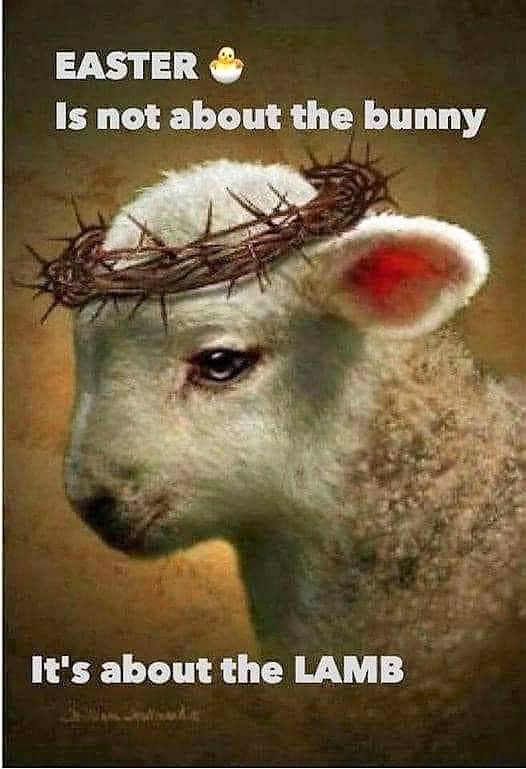
IT’S NOT ABOUT THE BUNNY (Easter 2021)

The schoolteacher was completely nonplussed. It was her first Easter with her new class (she had only started at this particular school in the January) and she had innocently asked her children who the person at the heart of the Easter Story was. ‘The Easter Bunny!’ one little boy had replied instantly. ‘What about Jesus?’ the schoolteacher responded. The small boy looked at her cluelessly – he obviously had no idea as to who this ‘Jesus’ was – and repeated his answer with absolute certainty. ‘Easter is about the Easter Bunny! He brings us all Easter eggs! My Nanna told me about him, and my Nanna is always right … about everything!’

The Easter Bunny (sometimes called the Easter Rabbit or the Easter Hare) is a figure from folklore depicted as a rabbit bringing Easter eggs. Originating among German Lutherans, the Easter Bunny originally played the role of a judge, deciding whether or not children had been good enough during Eastertide to receive an Easter egg.  In legend, the bunny brings coloured eggs in a basket, sweets, and sometimes also toys, to the homes of children, and as such shows similarities to Santa Claus in as much as they both bring gifts to children on the night before their respective festivals.

We smile at the bewilderment of the young schoolteacher (and know that she will have other perplexing moments to come). We recognise the naivety of a child and his total faith in his Nanna (but trust he will become wiser over the years, whilst still loving his Nanna). We are saddened by the thought that probably too many children today know little or nothing about Jesus (but encouraged to hear that Religious Education is being given a higher status in the school curriculum these days because the pandemic/lockdown has apparently revealed ‘a renewed spiritual need’). We hope that believing the central character in the Easter Story to be the Easter Bunny (and the like) is limited to childhood … but somehow we doubt it.  As G K Chesterton once said, ‘When men choose not to believe in God, they do not thereafter believe in nothing, they then become capable of believing in anything!’

Writing about race and racism, Francis Bridger, suggests they are rooted in ‘the folk or everyday concept’ of race, rather than any genuine ‘analytical or scientific sense’. By this he means values and attitudes rooted essentially in the genre of folk tales (stories originating in popular culture typically passed on by word of mouth), folk beliefs, myths, doctrines, even folk religion. Widely accepted assumptions that may, or may not, have some kind of validity are largely based on what is known as ‘the illusory truth effect’ – the idea that if something is repeated often enough, people will slowly start to believe it to be true. If ‘Trumpism’ in the USA has taught us anything it is surely a timely warning of the damaging effects of being gripped by ‘conspiracy theories’ of one kind and another which are not rooted in solid fact. And before you tell me that believing in Jesus Christ is ‘not based on fact’ let me tell you that there is actually a lot more factual evidence for the existence of Jesus Christ, his teachings, and his claims upon your life and mine, than there is for a lot of other so called ‘historical facts’ we seemingly accept without question.

Easter, however, is not about the bunny … it’s about the Lamb! When Jesus first appeared on the public scene, at his baptism in the Jordan, John the Baptist declared ‘Behold, the Lamb of God, who takes away the sin of the world!’ (John 1:29). We cannot (we must not) separate the events of Easter Sunday from those of Good Friday. They are the head and tails of the same coin. When Julia and I lived in Beckenham, Churches Together in Beckenham, held a silent march of witness through the streets on Good Friday. It was one of the highlights of Easter for me. Several hundred people walking in silence through the town to the Green where a short public service was held. It was a powerful and effective witness to the events of that first Good Friday. In contrast the churches in nearby Penge held a noisy, flag-waving, whistle-blowing, tambourine-banging, shouting and singing, march of witness on Good Friday. If it had been on Palm Sunday or Easter Sunday I would have had no complaint … but for me, it seemed totally inappropriate for Good Friday. It was as if they couldn’t get to Easter Sunday fast enough … even if that meant ignoring the key event of Good Friday. We cannot, we must not, do that, however. It was through his sacrificial death on the cross that Jesus atoned for our sins and opened a way back to God for sinful people like us! No wonder that the Apostle Paul exhorts the Galatian Christians, ‘God forbid that I should glory in anything except the cross of our Lord Jesus Christ’ (Galatians 6:14). Easter is not about the bunny … it’s about the Lamb!

Conversely, however, we must not stop at the cross (which is why our symbol is an empty cross not a crucifix, by the way). As Annie Johnson Flint puts it: ‘If the Christ who died had stopped at the cross, his work had been incomplete. If the Christ who was buried had stayed in the tomb, he had only known defeat, but the way of the cross never stops at the cross, and the way of the tomb leads on, to victorious grace in the heavenly place where the Risen Lord has gone!’ The German theologian Jurgen Moltmann expresses the same thought in a single sentence, covering the great span of Good Friday to Easter Day: ‘God weeps with us so that we may someday laugh with him!’

In 1930 Albert Henry Ross, a religious sceptic, set out to write a book – which he planned to call Jesus: the Last Phase – in which he determined to analyse the various sources behind the resurrection of Jesus to demonstrate that it was all a myth. However, in compiling his notes, he became convinced of the truth of the resurrection, and set out his reasoning in the book (which was so proficient people thought he must be a lawyer) which was published under Ross’ pseudonym, Frank Morison. The book was called Who Moved the Stone? It has subsequently become one of the most influential Christian books of all time affecting numerous people, since its publication for God and for good. Ultimately, however, the most compelling proof that Jesus is alive is our own personal experience of coming to know him for ourselves. As the Apostle Paul himself once put it: ‘I know whom I have believed, and am persuaded that He is able to keep that which I have committed to Him until that Day’ (2 Timothy 1:12).

I serve a risen Saviour, He’s in the world today,
I know that He is living, whatever men may say,
I see His hand of mercy, I hear His voice of cheer,
And just the time I need Him He’s always near.

He lives, He lives, Christ Jesus lives today!
He walks with me and talks with me,
Along life’s narrow way.
He lives, He lives, Salvation to impart.
You ask me how I know He lives?
He lives within my heart!

~ Alfred Henry Ackley (1887-1960)

Jim Binney

Leave a comment

IN SPIRIT AND TRUTH (Palm Sunday 2021)

Reflecting this week on the events of that first Palm Sunday, and particularly the hollow praises of the majority of the people who witnessed Jesus’ so-called ‘Triumphal Entry’ into Jerusalem (Matthew 21:1-11), reminded me of another incident forever etched on my memory from my student days at Spurgeon’s College back in the 1960s. [NB. It is a sure sign of old age when stories from one’s youth are amazingly clear, but what I did yesterday is exceedingly hazy].

There was a very ‘sound’ church, just a short bus ride away from the college, popularly known as the ‘coffin’ church because it was coffin-shaped in structure (I don’t think it is there anymore), who were having a visit one Sunday from a very well-known fundamentalist preacher of the day (I forget who). Anyway, a few of us decided to go and hear him. I recall the Church Service well for two specific reasons. Firstly, the Children’s Talk (do you remember those days?) was on ‘the abomination of desolation’ (Matthew 24:15,16 KJV). I don’t think any of us adults understood a word of it, leave alone the children. Secondly, there was a man in the congregation who vociferously and enthusiastically (rather like the crowd on Palm Sunday) greeted virtually every sentence the famous preacher uttered with a loud ‘Amen!’ or ‘Hallelujah!’ or ‘Praise the Lord!’. This went on for a good 20 minutes – it was like listening to a radio play in stereo – ‘Amen!’ Hallelujah!’ ‘Praise the Lord!’. And then he knocked his hymn book off the pew on to his foot ‘D%*#£*%*n!’ he shouted with equal vociferousness! We were still laughing when we got back to college an hour or two later!

In conversation with the Samaritan woman at Jacob’s Well (John 4:1-42) about ‘worship’, Jesus reminds her that the only kind of worship God wants from us is worship that is ‘in spirit and truth’ (v.23). What does this mean? Well, the word ‘worship’ essentially means to ‘declare the worth of something or someone’, in this case declaring God’s worth or value! Although the Greek word for ‘spirit’ (pneuma) is capable of signifying ‘Spirit’ with a capital ‘S’, that is, the Holy Spirit, I don’t think that is what it means here. I would suggest that it is a reference to the human spirit. What Jesus is saying here is that when we worship God, the kind of worship God wants from us is that which comes right from the heart. Worship that is genuine, and which aligns itself with God’s ‘truth’ – the sincerity God wants to see in us. More ‘Hosanna!’ and ‘Hallelujah!’ than ‘D%*#£*%*n!’

The worship offered to Jesus that first Palm Sunday was vociferous, enthusiastic, seemingly wholehearted … but just a few days later those same voices that were shouting ‘Hosanna!’ (Matthew 21:9) were crying out ‘Crucify!’ (Matthew 27:22,23). What Jesus is looking for in us is fervent faith not fickle faith! Not ‘easy believe-ism’ but dedicated discipleship. As William MacDonald reminds us: ‘The Saviour is not looking for men and women who will give their spare evenings to Him, or their weekends, or their years of retirement. Rather He seeks those who will give Him first place in their lives.’ At first sight this seems very demanding but in reality, to hand our lives over to God ‘lock, stock and barrel’ so to speak, is actually very releasing. I recall overhearing an evangelist friend of mine, William Hartley praying one day (he had been given a car by some friends, and the tyres had become worn), ‘Father … your car needs new tyres!’ This car was not his car but God’s car. Hartley was a man of great faith who lived by faith … and sure enough a few days later the four new tyres were fitted to the car (donated by an anonymous doner who, without knowing the need, felt led by God to give William some money ‘for work to be done on his car’). A committed life is a releasing life! As Paul reminds us, ‘In absolutely everything God is working for the good of those who love him, those who seek to live out his plans and purposes’ (Romans 8:28).

Moreover, true worship is not just about what we do for an hour or so in church on a Sunday – singing hymns, saying prayers, listening to sermons.  True worship is also about what we do every day of week – the selfless service we offer to God and others – whether inside the church building or even more so outside the church building. As Evan Hopkins suggests, Jesus ‘looks today, as he has ever looked, not for crowds drifting aimlessly in his track, but for individual men and women whose undying allegiance will spring from their having recognized that he wants those who are prepared to follow the path of self-renunciation which he trod before them!’

When Jesus mounted that donkey, and rode into Jerusalem that first Palm Sunday, accepting the adulation of the crowds however fickle or faithful it may have been, he knew full well what he was doing. He knew that the shouts of praise would turn to calls of condemnation. He knew that what lay ahead of him was not a throne but a cross! Do we know what we are doing? With our words? With our lives? With Jesus?

When I survey the wondrous cross
On which the Prince of glory died,
My richest gain I count but loss,
And pour contempt on all my pride.

Were the whole realm of nature mine,
That were a present far too small;
Love so amazing, so divine,
Demands my soul, my life, my all.

~ Isaac Watts (1674-1748)

~ Jim Binney

Leave a comment

CUT LOOSE (Views from the Abbey 23)

Someone sent me a short film clip recently of a barn owl caught up in a barbed wire fence. Now, I love barn owls – perhaps it has something to do with living in rural Dorsetshire for five years, or perhaps it is their cute faces – although if I were a small vole or field mouse I probably would not be so keen on them! There was something incredibly sad about such a magnificent creature seemingly so hopelessly bound, unable to get free, unable to fly as it was meant to! Fortunately, the story had a happy ending because a farmer, discovering the owl’s plight, was able to cut it loose and set it free to fly as it was meant to!

This incident reminds me of the Raising of Lazarus (John 11:1-44).  Jesus, in response to the news that his friend Lazarus is gravely ill, travels to Bethany only to discover that Lazarus is already dead. Miraculously, Jesus raises Lazarus from the dead, despite the fact that he has been dead for four days already. It is an amazing story which draws the reader right in – the unforced delay in going to Lazarus’ aid (vs. 6,7): the anger of Martha at her brother’s death (v. 21); the heartfelt compassionate tears of Jesus (v. 35); the authority with which Jesus speaks into the tomb – ‘Lazarus, come forth!’ (v. 43). Indeed Jesus spoke with such authority here that (as someone once suggested) it was a good job he named Lazarus … otherwise the whole cemetery would have risen from the dead!

The thing that strikes me about this story however – and the thing I would like us to take to heart now – is something that often escapes us but which is vitally important! When Lazarus emerged from the tomb he was alive but remained ‘wrapped in burial clothes binding his hands and feet, with a cloth over his face’ (v.43a). He may have been alive but he couldn’t walk, he couldn’t use his hands, he couldn’t speak, and he couldn’t see where he was going. In my mind I have a picture of Lazarus wrapped in bandages (rather like an Egyptian mummy) hopping out of the tomb! Jesus has to tell his disciples to ‘Cut him loose, and let him go!’ (v.43b).

Sadly, this state of affairs could describe many Christians today. We have been ‘born again’ of God’s Spirit (John 3:3). We have been ‘made alive’ in Christ (Ephesians 2:5). But too many of us, like Lazarus, remain bound by the trappings of death that hold us back from truly following Christ in the liberty and power of the Holy Spirit (2 Timothy 1:7). Too many of us are bound by ‘stuff’ that prevents us going anywhere in God, doing anything significant for God, speaking out the good news of the Gospel, seeing the plans and purposes God has for us.

What is this ‘stuff’ that binds us? We are familiar with the old adage that the Christian’s three great enemies are ‘the world, the flesh, and the devil’ and there is some truth in that. Even as Christians we can still allow the ways of this world to ‘squeeze [us] into its own mould’ (Romans 12:1,2 J B Philips). We can still be slaves to the flesh life – addicted to pornography or gambling or gossip, and the like. We can still ‘play devil’s advocate’ sowing seeds of dissension and chaos in both church and community (in Christ’s name, of course) without acknowledging the true source of our actions or words.

For the Apostle Peter, however, the thing that he is most grateful to God for saving him from is none of the above, but saving him from ‘an empty or wasted way of life’ (1 Peter 1:18). Peter is thinking here of the ‘emptiness’ of being genuinely religious but possessing (or being possessed by) just an empty Jewish religious tradition. The kind of thing the Apostle Paul (who before he was set free in Christ also suffered from) described as ‘holding an outward form of religion but without God’s real power’ (2 Timothy 3:5). How many of us, I wonder, are bound by our religious traditions (even Baptist tradition) failing to distinguish between what is a godly heritage (a good thing) and what is mere tradition (a bad thing)! As has been often pointed out, the last seven words of a dying church are, ‘We’ve never done it that way before!’

Take a moment to think about your own life? Take another moment to think about our own church? Is there anything that is binding us? Anything stopping us from going the way God wants us to go? Doing the things God wants us to do? Seeing the things God wants us to see? Saying the things God wants us to say? Being the people God wants us to be? Jesus came to set us free from all the ‘stuff’ that binds us, that holds us back, from being the people God wants us to be. Jesus said, ‘If the Son sets you free, you will be free indeed!’ (John 8:36). The Apostle Paul tells us that ‘Where the Spirit of the Lord is, there is freedom!’ (2 Corinthians 3:17). But Jesus also told us that, if we want to enjoy this kind of freedom, we need to face up to the truth – ‘the truth shall set you free’ (John 8:32) – the truth about the dangers of falling foul of the ‘Lazarus syndrome’, the truth about ourselves maybe, and the truth that we need Christ himself to truly set us free!

In the film clip about the barn owl caught in the fence, the kindly farmer was able to set the owl free – but it was not without a struggle. Even though the farmer was trying to free the owl, the owl fought him all the way, attempting to claw him and peck him viciously at times. Just like us with Jesus perhaps, when he puts his finger on something in our lives, and wants to set us free … but we make it a fight instead of welcoming the freedom.

Some years ago I knew a man called Albert Rose. He was a large man, somewhat rotund, a Pentecostal-Christian, who always wore his Sunday-best three-piece suit to church complete with a button-up-the-front waistcoat. His favourite hymn was Charles Wesley’s And can it be which Albert always sung with great enthusiasm.  I remember him for two particular reasons, both associated with this particular hymn. Firstly (remember his surname was Rose), when it came to the verse that ends with the line ‘I rose, went forth, and followed Thee’, he would turn round and face the rest of the congregation (not being a Baptist he always sat in the front row) and point to himself as he sung that line – ‘I Rose … went forth, and followed Thee’. Secondly, he had a fondness for repeating this particular verse of the hymn. The special occasion I especially recall – it is eternally sketched on my memory – is the time when he did this and, singing with such gusto in his tight-fitting waistcoat, got to the line ‘My chains fell off, my heart was free’, and suddenly all the buttons on his waistcoat burst off rather like bullets from a machine gun, and Albert Rose’s corpulent stomach was truly set free in that moment!

We smile at Albert Rose being finally set free from his tight-fitting waistcoat. We reflect of Lazarus’ need (despite the gift of new life) to also be set completely free. And we ask ourselves if there is anything we too need to be set free from in order to be truly free in Christ in order to serve God and our generation? 

Long my imprisoned spirit lay,

Fast bound in sin and nature’s night;

Thine eye diffused a quickening ray – 

I woke, the dungeon flamed with light;

My chains fell off, my heart was free,

I rose, went forth, and followed Thee.

~ Charles Wesley (1707-88)

Jim Binney

Leave a comment

THE SMALL WISDOM OF FEEDING VULTURES (Views from the Abbey 22)

One of the best illustrations of the progressive nature of temptation is found in the Jungle Doctor stories. The story in question is called ‘The Small Wisdom of Feeding Vultures’. ‘A small monkey called Tichi was once fascinated by the curves of the dangerous beaks of vultures. A vulture landed near Tichi in the family tree. Tichi stared at every inch of its foul body. When no one was looking he threw it some food, then clapped and shouted, “Be Gone!” Next day two vultures came and landed near Tichi. Again he threw food to the vultures before clapping and shouting, “Be Gone!” Soon more and more came to the tree and Tichi was now scared so he started to throw stones at the big birds.  As the week went by the vultures no longer stood at a distance from Tichi. They grew bolder and bolder and drew closer and closer. Some were above the little monkey. Some were below. More and more began to circle ahead. Tichi started to clap and scream frantically. But eventually there were too many. The vultures alighted and there was one final shrill cry as the monkey was devoured.’

Today is the Third Sunday in Lent and traditionally one of the stories from the Bible we think about is Jesus’ battle with temptation (Luke 4:1-13). Jesus is on his way back from being baptised in the River Jordan (Luke 3:21,22). It had been an amazing time – the baptism, the voice from Heaven, the Spirit’s anointing – but now, instead of engaging in the amazing deliverance ministry God had anointed him for (Luke 4:18,19) he is immediately ‘led by the Spirit into the wilderness and for forty days he was tempted by the devil’ (vs.1,2). A few weeks ago we were thinking of how Israel had some amazing ‘mountain top’ experiences of God, but how all their battles/victories were won in the valley! Have you noticed that whenever we have some kind of ‘mountain top’ experience – following Jesus through the waters of baptism, or hearing and responding to God’s call, or experiencing a fresh infilling of the Holy Spirit – almost inevitably we find that experience being tested in some way? Oftentimes, instead of finding ourselves launching out into seeing something incredible being accomplished by God through us, we find ourselves (like Christian in Bunyan’s Pilgrims Progress) into the valley of despair, the slough of despond, being tempted by the devil?

By the way, do take the devil seriously! C S Lewis (the great Christian apologist), in his Screwtape Letters, suggests that there are two equal and opposite errors into which we can fall about the devil. One is to disbelieve in his existence, and the other is to believe and to feel an excessive and unhealthy interest in him. The thing to hang on to in all of this is that if we are truly a woman or a man ‘in Christ’ then we have nothing to fear. As the Apostle John tells us, ‘Greater is he (Christ) who is in us, than he (the devil) that is in the world’ (1 John 4:4). Just as Jesus was victorious over the devil when in the wilderness so we too can be victorious through Christ!

We also need to note, however, that Jesus didn’t overcome the devil, or these particular temptations, by getting into some kind of discussion/debate with the devil (like Eve did in Genesis 3) about the validity or other wise of the particular temptation. Every time Jesus countered the devil by quoting scripture back to him. He took up ‘the sword of the Spirit which is the word of God’ (Ephesians 6:17) – the only offensive weapon in the whole armour of God – to fight off the devil! The devil will always outwit us if we rely on our own reasoning powers, but he can’t cope with the truth of God’s word! Whilst Jesus’ battle with temptation was in one way specific to him, in another way there is something universal in them for us all.

The first temptation was to reduce the Gospel to a social gospel: ‘If you are the Son of God, tell these stones to become bread!’ (v.3). This wilderness was not covered by sand but by little bits of limestone that looked exactly like small loaves of bread. On top of this Jesus was ‘hungry’ (v.2) because had nothing to eat for days, so this particular temptation had a very personal element to it.  More to the point, however, it was a temptation for Jesus to prove that he was indeed the Son of God by bribing people to follow him by providing them with material gifts. In effect the devil was saying to Jesus, ‘If you want people to follow you, use your wonderful power to give them material things!’. Jesus’ response was to quote Deuteronomy 8:3 and remind the devil that ‘People can’t live by bread alone’ (v.4). The Gospel is a holistic gospel – it covers our physical, mental, social, emotional and environmental needs as well as our spiritual needs – but a purely ‘social gospel’ is never enough. Men and women do need (like Nicodemus) to be ‘born again’ of God’s Spirit (John 3:3).

The second temptation was to live a life of compromise: ‘I will give you all the kingdoms of the world – and the power and glory that goes with them – if you worship me!’ (vs.5,6). The devil filled Jesus’ imagination with a vision of the whole civilised world bowing the knee to Jesus (without the cost of the Cross being on the agenda). We know of course (because we have read that wonderful hymn of the early church in Philippians 2:5-11) that what was on offer here would one day be fulfilled for Jesus – that a day would come when ‘every knee would bow, and every tongue confess, that Jesus is Lord’ – not because the devil gave it to Jesus (it was never his to give) but because God the Father (to whom it does all belong) will bestow it on his Son. But here was the temptation to strike a bargain with the devil. To settle for a life of compromise. To settle for ‘a religious life’ of sorts but without the cost of the cross! Does this kind of temptation ring any bells? The temptation to settle for the lower rather than the higher road. To offer God less than our best. Jesus quotes Deuteronomy 6:13; 10:20 in response: ‘You must worship the Lord your God – only him must you serve!’ (v.8).

The third temptation was to try and force God’s hand: ‘If you are the Son of God, throw yourself down from here [the pinnacle of the Temple in Jerusalem] … God will command his angels to protect you’ (vs.9,10). There is so much in this particular temptation alone that we could spend time on. The temptation to perform a spectacular, but pointless miracle in order to compel wonder and belief of a certain kind – albeit a somewhat shallow belief based on signs and wonders rather than dedicated discipleship? The misuse of the Bible in order to justify twisted and perverse views (as the devil did here in responding to Jesus’ use of Scripture by quoting from Psalm 91 himself)? But essentially the major temptation here was to try and persuade Jesus to ‘jump the gun’ by sacrificing his life here, rather than on Calvary! Jesus knew that his Incarnation would ultimately lead to his Passion. He knew that his birth in Bethlehem’s manger would end in Calvary’s cross. He knew that his primary purpose in life was to atone for human sin through his sacrificial death (John 10:14-18). Here, the devil seeks to see that death precipitated knowing full well that such a premature death would not force God’s hand but undermine the very act of salvation that Calvary would achieve! Despite misreading 2 Peter 3:11,12 we cannot ‘hurry along’ God’s plans and purposes. We can only faithfully seek to ‘keep in step with the Spirit’ (Galatians 5:25), although even that requires prayerful patience and persistence. No wonder Jesus’ response to the devil is to quote Deuteronomy 6:16): ‘You must not put the Lord your God to the test!’ (v.12).

Luke rounds off the narrative with the devil decisively beaten. He had ‘finished tempting Jesus in every way’ (v.13 NEB). Jesus had not yielded. In the very next verse we are told that having come through this time of trial, ‘Jesus returned to Galilee full of the power of the Holy Spirit’ (v.14). What the devil intended for evil, God turned to good! This does not mean that from this point on Jesus was not subject to further temptation. Luke tells us here that having tempted Jesus with ‘every kind of temptation, the devil departed from him until another opportune time’ (v.13). But time and time again Jesus came through these times of testing victoriously. And it will be the same with us. We too will be tempted and tested but we too can come through them all the stronger. Looking on the bright side we must be doing something right if the devil is so bothered by us!

Nevertheless (perhaps with vultures in mind), we still need to be on our guard. Remember the old Chinese proverb that says, ‘You can’t stop the birds flying over your head … but you can stop them building nests in your hair!’

Jim Binney

Leave a comment

UPS AND DOWNS, HIGHS AND LOWS (Views from the Abbey 21)

Archibald Orr Ewing (1857-1930) was born into a wealthy family in Scotland. A successful businessman, he was deeply influenced for Christ both through the D L Moody mission to Glasgow in 1882, and by attending the Keswick Convention in 1885. As a result he devoted himself to missionary service and served with the China Inland Mission from 1886 to 1911. It is said that he was so devoted to Christ, and spent such quality time in prayerful communion with the Lord Jesus, that his features became radiant, so much so that the Chinese people called him ‘Mr Glory Face.’

Today (at this time of writing) is the final Sunday in Epiphany, a day on which traditionally we reflect on the Transfiguration of Jesus on Mount Tabor (Matthew 17:1-5) where we see Jesus’ divinity shone through his humanity. Not so much ‘Glory Face’ but ‘Glory Whole Body!’ The word transfiguration means ‘a complete change of form or appearance into a more beautiful or spiritual state.’ Here is a moment in time when heaven and earth meet, time and eternity, divinity and humanity are one. Matthew records that Jesus was transfigured and literally shone with the glory of God! ‘His appearance changed from the inside out, right before their eyes. Sunlight poured from his face. His clothes were filled with light. Then they realised that Moses and Elijah where also there in deep conversation with him’ (v. 3 the Message). Moses represented the Law and the promise of salvation that is fulfilled through Jesus’ Passion. Elijah represented the Prophets, as the appointed restorer of all things perfectly achieved in Jesus.

To have been there on the top of that mountain and witnessed this must have been an amazing experience. Matthew tells us that Peter started babbling about building shelters for them all, referring perhaps to the Feast of Tabernacles where booths were built to commemorate Israel’s wandering in the wilderness (Leviticus 23:33-44). Peter, you see, wanted to cherish this precious event, to capture the experience, to preserve it … to ‘stay in the moment’ for the rest of time and eternity! But … after the cloud had enveloped them and they had heard the voice speaking the same words spoken at Jesus’ baptism – ‘this is my Son, whom I love; with him I am well pleased. Listen to him!’ (the Father identifying Jesus as not simply a mere human being, but the very Son of God) – the moment was over, and they had to start the long walk back down the mountain (v. 9).

There are many examples in Scripture of God meeting with people on mountains, e.g. Mount Carmel (1 Kings 18:19), Mount Zion (2 Chronicles 3:1). God seems to have a thing about mountains, and often leads people to the top of them to encounter him, or to receive some new revelation or spiritual experience, e.g. Mount Sinai (Exodus 19:20), Mount of Olives (Acts 1:12). We too can have mountain top experiences of revelation and encounter. However, just like the disciples we cannot hang on to them, or try and bottle them, or attempt to ‘stay in that particular moment’ for ever and ever more, amen! We have to come back down from the mountain, back down to the valley.

On the way down from the Mount of Transfiguration, Matthew tells us, Jesus spoke to the disciples about the suffering and death he is going to face (v. 12). He also talked to them of the death of John the Baptist (v. 13). I wonder if this was the first that they had heard about it. Having had this amazing spiritual experience they are back down to earth with a heavy bump.

Our lives are full of such ups and downs, highs and lows. Praise God for the mountain highs … but God is with us just as much in the valley lows. ‘Israel had many mountain top experiences of God… but all their battles were won in the valleys’ (Jim Binney). The ups and downs of life make us who we are. Our stories are part of us. The highs and lows of our spiritual experience of God forge our character. They are often the crucible of Christian virtue. Paul tells us that we can ‘rejoice in our sufferings, because we know that suffering produces perseverance; perseverance, character; and character, hope’ (Romans 5:3,4). Despite all we go through – perhaps because of it – hope comes alive in our hearts. Can we even thank God for the lows, our mistakes, our failures, our bruising, our scars … because they have made us who we are and brought us closer to God? As God promised his Old Testament people through the prophet Hosea, ‘I will make the Valley of Achor a door of hope’ (Hosea 2:15). God can transform our valleys of trouble into mountains of hope. Only God can transfigure our downs into ups, our lows into highs!

Waking up to a new sunrise,
Looking back from the other side,
I can see now with open eyes.

Darkest water and deepest pain,
I wouldn’t trade it for anything,
‘Cause my brokenness brought me to you.

And these wounds are a story you’ll use.

So I’m thankful for the scars.
‘Cause without them I wouldn’t know your heart.
And I know they’ll always tell of who you are.
So forever I am thankful for the scars.

Now I’m standing in confidence,
With the strength of your faithfulness,
And I’m not who I was before.
No, I don’t have to fear anymore.

I can see, I can see how you delivered me.
In your hands, in your feet I found my victory.

I’m thankful for your scars.
‘Cause without them I wouldn’t know your heart.
And with my life, I’ll tell of who you are.
So forever I am thankful for the scars.

Matthew Armstrong, Matthew Hein, Ethan Hulse, Jon Mcconnell 2018

~ Julia Binney

Leave a comment

DO YOU WANT TO GET WELL? (Views from the Abbey 20)

Anthony de Mello (1931-1987) was an Indian Jesuit priest, psychotherapist, and spiritual writer. His classic book is Awareness, specifically about spiritual awareness. He was also known for his story telling. For example, ‘A businessman goes into a bar, sits down and sees this fellow with a banana in his ear! A banana in his ear, would you believe! And he thinks to himself, ‘I wonder if I should mention that to him. No, it’s none of my business.’ But the thought nags at him. So after having a drink or two, he says to the fellow, ‘Excuse me … eh, you’ve got a banana in your ear.’ The fellow says, ‘What?’ The businessman repeats, ‘You’ve got a banana in your ear!’ Again the fellow says, ‘What was that?’ ‘You’ve got a banana in your ear!’ the businessman shouts. ‘Talk louder,’ the fellow says, ‘I’ve got a banana in my ear!’ The point de Mello is making is that people don’t really want to grow up, don’t really want to change, don’t really want to be cured! ‘Even the best psychologist will tell you,’ de Mello writes, ‘what people want is relief … a cure is painful.’

The Gospels are full of examples and incidences of the healing and deliverance ministry of Jesus, ‘He healed many who had various diseases. He also drove out many demons’ (Mark 1:34). People sought Jesus out, knowing that if he would just touch them, they would be healed. A man with leprosy begged Jesus to make him clean; ‘If you are willing, you can make me clean.’ Filled with compassion, Jesus reached out his hand and touched the man. ‘I am willing,’ he said. ‘Be clean!’ Immediately the leprosy left him, and he was cured’ (Mark 1:40-42). A woman, who had been bleeding from her uterus for twelve years, desperately reached out for Jesus in a crowded square, thinking to herself, ‘If only I could touch his cloak, I will be healed’ (Matthew 9:21). She touched him and was instantly healed (Luke 8:48). Two blind men kept following Jesus crying out, ‘Have mercy on us, Son of David.’ Jesus said to them, ‘Do you believe that I am able to do this.’ ‘Yes,’ they said. Then he touched their eyes, and their sight was restored’ (Matthew 9:27-29). These are examples of people who had come to the end of themselves, they had run out of options, they had nowhere else to turn. By seeking for God’s help, by reaching out to Jesus, they at last found the help, solace, cleansing, forgiveness, and healing that they knew they so desperately needed.

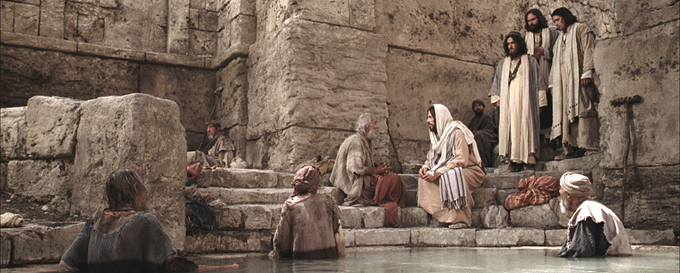
But here is another example from the Gospels that gives us another angle on Jesus’ healing ministry. Jesus and his disciples were in Jerusalem walking near the Sheep Gate by the pool of Bethesda (John 5:1-15) where hundreds of people gathered every day for the supposed curative powers of the water. A man was there who had been an invalid for thirty-eight years. The man did not seek out Jesus but Jesus, amongst all the people there, sought him out. ‘Do you want to be well?’ he asked him. Why ask that? Surely the answer would be obvious. Perhaps the man was reluctant? He would lose his lucrative begging income? Perhaps he had lost the belief that he could be healed?  Or lost the will, the determination to find a way to be cured. But Jesus made him well anyway (v. 15).  

So here is the question, the challenge, the application of this part of the story. Do we really want to be made whole? To be cured, to change, to grow in Christ, to be healed (even if that means not necessarily being totally pain or trouble free) to the extent that we are able to live fully for God? According to John Swinton, ‘healing is more than ridding a person of difficulties. It stretches beyond the boundaries of disease and cure and into the realms of transcendence, purpose, hope and meaning that form the very fabric of human experience.’

Do we really want God to heal us and make us whole? If we do, he can! The man by the pool had a choice. He could stay confined in his alcove by the pool in familiar surroundings, with his poorly friends around him, or he could step out and grasp a whole new life in God, full of purpose, hope and meaning – even after thirty-eight years! – by putting himself fully into the hands of God, allowing Jesus to touch him with his healing power.

So here’s the question: Are we willing for God to touch us and make us whole? Are you willing to take the banana (or whatever its equivalent is) out of your ear?

~ Julia Binney

Leave a comment

WHOLENESS (Views from the Abbey 19)

Is there anything more frustrating in life than discovering something is missing? You spend hours doing a jigsaw puzzle (that was a bargain from the charity shop) only to find at the end that a piece is missing. The endless hours of pleasure doing it, spoiled in a moment! You carefully put together the unit you bought from IKEA (and you are really pleased with yourself for doing so without consulting the instructions) only to find that one vital piece or screw is missing! You finally manage to re-assemble that piece of machinery that you have just repaired (a new blade for the lawnmower or replacement battery for the clock) only to find a washer or spring lying around and wondering to yourself if it just happened to be there already or have you left something vital out of the piece of machinery you just re-assembled? Perhaps the only thing more frustrating in this direction is when you sense something important is missing in the life of a loved one – a member of your family or friend – or even in your own life? By way of contrast it is so much more satisfying when you know something or someone is complete, whole. The jigsaw paints a perfect picture, the bookcase stands firm and secure (and is full of books), the lawnmower or clock works perfectly, and the person we love has ‘got it all together’. 

The English dictionary defines ‘wholeness’ as ‘the state of forming a complete and harmonious whole; unity; unbroken or undamaged’, whilst the Christian dictionary defines ‘wholeness’ as ‘the state of being perfectly well in body, soul, mind, will, emotions, and spirit’. 

One of my favourite words is the Hebrew word shalom which is commonly defined as ‘peace’ – the absence of conflict or war, but which in the Hebrew actually means so much more. Essentially it comes from the root word shalam which means ‘to be safe in mind, body, or estate’ and speaks of completeness, fullness, or a type of wholeness that encourages you to give back, to generously re-pay something in some way. A classic example of this is the exhortation to the Jewish exiles to ‘seek the peace and prosperity of the city’ where God had placed them (Jeremiah 27:7) rather than moan about being in exile away from where they would rather be.

The New Testament has a number of different words for ‘wholeness’ that variously mean ‘to be in good health’ or ‘to be thoroughly saved’ [NB. What is the difference between being ‘saved’ and being ‘thoroughly saved’?], or (my favourite) ‘to be made perfectly whole’. We are told on numerous occasions in the Gospels that, as part of his mission and ministry, Jesus came to ‘make people whole’.  A classic example of this is found in the story of Jesus healing the invalid at the Pool of Bethesda (John 5:1-15) where Jesus spoke healing and deliverance into the life of a man who had been a partial paralytic for 38 years. John tells us that when ‘Jesus said to the man, “Get up! Pick up your mat and walk!”  Immediately the man was made whole, and took up his bed, and walked!’ (vs. 8,9). It is clear, from the rest of the story, that this man was not simply healed of his physical paralysis – all kinds of other good stuff was going on inside of him as well.

When I first became a Christian (more than 60 years ago now) there was a popular saying (one of many) in evangelical circles about ‘the whole Gospel for the whole man’ [we would want to use more inclusive language today] to indicate that the Gospel was not just about ‘saving our souls’ but about making us ‘whole’ people. As human beings we need to recognise that we are holistic beings who have physical, mental, social, emotional, environmental, as well as spiritual needs … and the Gospel has something significant to contribute to each of those needs that will enable us to become truly ‘whole’. We don’t simply need to be ‘made right with God’ spiritually … many of us need to know God’s touch upon our lives physically, or mentally, or socially, or emotionally, … and even environmentally i.e. making us more aware of our responsibility to be ‘good stewards of God’s creation’ (Genesis 2:15).

If we are to be truly ‘made whole’ however, we need firstly, to recognise that we are holistic beings, and that the Gospel is not limited to our spiritual needs alone (even though our spiritual need is vital). And secondly, we need to engage with God (co-operate with God if you like) in allowing God to make us whole right across the board. Let me illustrate. In one of my churches we went through a season of seeing significant healings take place through the ministry of the laying on of hands and prayer (James 5:14,15). Not everyone who was prayed for was healed, however, and I recall one of our Elders (a highly respected brother in Christ) getting up in church one Sunday and stating rather bluntly that there was little point in some people coming for prayer for healing when they weren’t making any effort to improve their diet, eat sensibly, take exercise, and so on. And he was right! Prayer is not a ‘quick fix’ for those who want to ‘cut corners’ living a disciplined life!  But, if we genuinely engage with God (and play our part in the process) God can do more, much more, than we could ever achieve on our own!

One final thing needs to be said which echoes something we learned earlier from the Old Testament word shalom. The wholeness that God wants us to enter into is a type of wholeness that ‘encourages you to give back, to generously re-pay something in some way’. Being ‘made whole’ should result in us making ourselves ‘wholly available to God’! Abraham was blessed by God in order for Abraham himself (and his descendants) to share God’s blessing with the rest of humanity (Genesis 12:2). Paul encourages Christians everywhere, having become recipients of God’s mercy, to ‘offer ourselves back to God as living sacrifices’ (Romans 12:1,2). To say, with Chris Bowater –

Here I Am, Wholly Available
As For Me, I Will Serve The Lord

The Fields Are White Unto Harvest
But Oh, The Labourers Are So Few
So Lord, I Give Myself To Help The Reaping
To Gather Precious Souls Unto You

The Time Is Right In The Nation
For Works Of Power And Authority
God’s Looking For A People Who Are Willing
To Be Counted In His Glorious Victory

As Salt Are We Ready To Savour?
In Darkness Are We Ready To Be Light?
God’s Seeking Out A Very Special People
To Manifest His Truth And His Might

Here I Am, Wholly Available
As For Me, I Will Serve The Lord

~ Chris Bowater (b. 1947)

Jim Binney

Leave a comment

ORDINARY PEOPLE, EXTRAORDINARY GOD (Views from the Abbey 18)

It may come as a surprise to many of us, but ‘God’s ways are not our ways nor are God’s thoughts our thoughts,’ so the Prophet Isaiah tells us (Isaiah 55:8). God doesn’t think the way we think or work the way we work.

The positive spin on this for us is that it means that God uses ordinary people to accomplish extraordinary things for the sake of his Kingdom. God chooses people like you and me with all our faults and failings, weaknesses, and flaws to carry out his extraordinary plans for the world. As the Apostle Paul tells us, God chooses ‘things the world considers foolish in order to shame those who think they are wise. And he chooses things that are powerless to shame those who are powerful. God chooses things despised by the world, things counted as nothing at all, and uses them to bring to nothing what the world considers important’ (1 Corinthians 1:27-29 NLT).

What the world thinks of as important and significant is often not so in God’s kingdom and vice versa. This is illustrated by the simple, and seemingly insignificant, yet utterly delightful, episode at a wedding party in Cana in Galilee recorded in John 2:1-11. The Apostle John records that right at the start of his ministry, Jesus turns water into wine (John 2:8), the first of his miraculous signs whereby the disciples glimpsed something of his glory and believed in him. As Sister Vandana (an Indian theological writer) reminds us: ‘Water! An ordinary, everyday, familiar thing, usually taking for granted and unnoticed – except when found absent and needed. This the Lord used as an instrument to “manifest his glory … and his disciples believed in him.”’ God often uses very ordinary things and lets his glory shine out through them.’

We hear the words ‘God’s ways are not our ways’ and we decry our weakness. God, however, considers it strength because it means we are more dependent and trusting in his strength and ability to bring about what we, in our weakness and frailty, cannot (2 Corinthians 12:10). In this way his glory is revealed. What is impossible for us is possible for God (Matthew 19:26). What is totally impossible for us to do in our own strength is possible for us to do in God’s strength (Philippians 4:13). In and of ourselves we have nothing to boast about. As the Apostle Paul reminds us, ‘God deliberately chooses men and women that the culture overlooks and exploits and abuses, chooses these “nobodies” to expose the hollow pretensions of the “somebodies?” That makes it quite clear that none of you can get by with blowing your own horn before God. Everything we have – right thinking and right living, a clean slate, and a fresh start – comes from God by way of Jesus Christ. That’s why we have the saying, “if you’re going to blow a horn, blow a trumpet for God!”’ (1 Corinthians 1:27-29 The Message).

It is good for us to know that we are nobodies. To have a right perspective of ourselves, but also to have a full and profound appreciation and understanding of what God can do with a bunch of nobodies – like us! It is said of Moses (who lived to be 120 years old) spent the first forty years of his life thinking he was a somebody, the next forty years of his life thinking he was a nobody, and the last forty years discovering what God can do with a nobody!

So how do you see yourself? Do you think you are a nobody?  Good, because that means that God can use you! Not necessarily in anything spectacular but, by being strengthened and equipped by the Holy Spirit, doing ordinary things extraordinarily well, and by being enabled to see our extraordinary God in all the ordinary things of life. Jesus, the perfect party guest, did not change the water in the ceremonial jars into cheap plonk but into a wine of classic vintage (John 2:10)! So, let us trust and pray that in our lives, and in the life of our church, God has ‘saved the best wine until now’ (John 2:10)!

~ Julia Binney