Leave a comment

WHAT’S ALL THIS GRACE BUSINESS? (Fourth Sunday in Advent 2021)

A few years ago Julia and I took part in the BBC programme Cash in the Attic. Very popular at the time, the programme purported to find various antiques hidden away in people’s homes which could be then sold at auction and raise money that the participants could then spend on holidays or hobbies or whatever. At the time we were both Ministers at Beckenham Baptist Church in Kent, and we were raising money to build a large Community Garden at the rear of the church. The idea was to create a beautiful and peaceful space that could not only be used by the church but also by the community – a place for reflection and prayer as well as fun.

Someone donated a sapphire ring with the suggestion that we could auction it and put the money towards the Community Garden Fund. This inspired me to contact the BBC, tell them what we were doing, and suggest that they do a programme based on our church, a programme about people attempting to raise money for a charitable cause and not just to fund a foreign holiday. The BBC liked the idea, both the church and the community bought into it, people donated various antiques, and we even discovered various antiques of our own squirreled away in various parts of our church buildings. We ended up with a great programme (that you can still find on You Tube) and raised a lot of money for the project. Although we were told unofficially by the programme producers ‘not to talk about Jesus … the BBC don’t like too much of that’ we ended up having a number of deep conversations with both the presenters and the programme staff about the difference Jesus can make in a person’s life. The programme culminated with a great open air concert at the church in which we were able to display just what a multitalented bunch of people we had in Beckenham. ‘Wow!’ said one of the cameramen, ‘I didn’t think Christianity could be like this!’

A major part of the programme was the actual auctioning of the antiques, in our case filmed at Chiswick Auctions. The BBC filmed the auction element of two programmes on the same day. The other programme filmed the same day as ours featured a nice Jewish couple. I got into conversation with the nice Jewish lady who, when she found out that I was a Christian, asked me if I had been to Jerusalem. ‘Yes’ I replied. ‘Did you pray at the Wailing Wall?’ she asked. ‘Yes’ I replied. ‘What did you pray for?’ she asked. ‘I prayed for my son’ I replied, ‘he has a heart condition and I prayed God’s blessing on him!’ ‘I prayed for my son, as well’ the nice Jewish lady said, ‘he was still single, and living at home, so I prayed that the good Lord would find him a nice Jewish girl to marry.’ ‘Did God answer your prayer?’ I asked. ‘Yes …’ she replied hesitantly. ‘What is she like?’ I asked, sensing her hesitancy. ‘She is a right shrew’ the nice Jewish lady replied, ‘she is very, very religious … insists that we all keep every jot and tittle of the Jewish Law … its dreadful!’ ‘Well,’ I said, ‘that’s partly why I am a Christian and not a Jew.’ ‘What do you mean?’ the nice lady asked. ‘Well,’ I responded, ‘our Bible tells us that as Christians “we are no longer under the Jewish Law but under grace” (Romans 6:14).’ She looked at me with a puzzled look on her face. ‘Grace! Grace!’ she said, ‘What’s all this grace business?’ Good question … and I was able to spend a few minutes explaining to her not only that Jesus was indeed the Promised Jewish Messiah, but also the difference coming to know him as Saviour and Lord makes.

Today is the Fourth Sunday in Advent, and traditionally the theme for this particular Sunday is ‘The God of Grace’, and we often think specifically of the role of Mary the Mother of Jesus in the Advent/Christmas story. Luke tells us that when the angel revealed to Mary that she was to be the mother of God’s Son, he greeted her with the words, ‘Hail Mary, full of grace, the Lord is with you’ (Luke 1:28). ‘Grace’ is one of the most wonderful words in the Bible, in the Christian Faith. It signifies the unmerited favour of God freely given to weak, sinful people like us. We cannot buy it, we cannot earn it, it is the free gift of God. It is that which carries all the various blessings of God to us – ‘one blessing after another’ (John 1:16 RSV). It was God’s grace, and grace alone, which enabled Mary to go through all that she had to go through in order to fulfil her calling to be the mother of God’s Son.

‘Grace’ is at the very centre and core of the whole Bible. ‘Grace’ is the most important concept in the Bible, Christianity, and the world. ‘Grace’ is the unmerited favour of God. It is the love of God shown to the unlovely … the peace of God given to the restless. ‘Grace’ is God reaching down to people who are in rebellion against him. ‘Grace is the love that cares and stoops and rescues!’ (John Stott). It is most clearly expressed in the promises of God revealed in Scripture and embodied in Jesus Christ! 

Mary was not the only one full of grace. John tells us that at that first Christmas God, in the Person of his ‘one and only Son’, came among us – ‘moved into the neighbourhood’ (The Message) – ‘full of grace and truth’ (John 1:14-16). Indeed Jesus came ‘full to overflowing’ (which is what the word means). So much so, in fact, that we are the beneficiaries of this amazing grace – we have all received ‘grace in place of grace’ or ‘one blessing after another’ (RSV). Common Grace that keeps us all alive – the very air that we breathe. Special Grace that comes to us in the Person of Jesus Christ that enables us to become spiritually alive!

Moreover, God’s grace is available to all who will turn to God in and through Jesus Christ. Joseph Smith (in a sermon entitled Standing Close to the Lightning Strike) suggests that God’s grace is like lightning and transforms whoever it strikes. ‘Martin Luther found that out. Walking through the forest one day, praying and working through spiritual torment, literally, the lightning did strike close by. And he felt that as the summons of God. Luther came closer, and when God sent the lightning strike, it was grace. It was what he needed to turn his life around.

John Wesley found it out. Serving as a missionary in the Georgia penal colony, he was a miserable failure. He sailed home in distress, not sure what he would do with the rest of his life. But in a little chapel in Aldersgate Street in London, listening to someone comment on the Scripture, Wesley says that he “felt his heart strangely warmed, and did know that Christ was his saviour.” Wesley came closer, and when the lightning struck and God got his attention, he found that it was grace, all grace, and hope.

Jim Vaus found it out. As a professional criminal, working for the Cohen gang in New York City, Vaus chose to steal, swindle, maim, or even kill to get what he wanted. But there was a nagging feeling inside that it meant nothing. The things that do not satisfy. The FBI arrested Jim Vaus and he was sent to prison. But in prison he heard the gospel, and knew that it was for him. The last I knew, Jim Vaus, ex-criminal, ex-con, was running a youth ministry in a place aptly called Hell’s Kitchen. The lightning struck, and it was grace.’

‘Grace! Grace!’ What’s all this grace business?’ Well, it is something very special that is available to all of us in Jesus Christ. True, we can read all about it in the Bible, hear about it in Church, learn about it from countless testimonies, biographies and autobiographies … but so much better to turn to God in Jesus Christ and experience it for ourselves!

Jim Binney

Leave a comment

WAKEY! WAKEY! (Third Sunday in Advent 2021)

A Pastor in a certain Baptist Church I know of, was greatly annoyed by one of his elderly members who fell asleep during his sermons every Sunday. After the service one day, the Pastor said to the old man’s grandson (who always sat with his grandfather), ‘If you can keep the old man awake, I’ll pay you £2 a week.’ This worked for two weeks; the old man was very alert and listened to the sermons attentively. On the third Sunday, however, there he was, up to his old tricks again, sound asleep in the pew. After the service the Pastor called the boy over and said, ‘I am disappointed in you. Didn’t I promise you £2 a week to keep your grandfather awake?’ ‘Yes,’ replied the boy, ‘but Grandpa gives me £5 not to disturb him.’ All too often we are like Grandpa. We don’t like being disturbed. We enjoy living in an atmosphere of quiet contentment. We don’t want anyone or anything rocking our boat. We like stability in our lives. For the most part, as long as everything is going reasonably well and we are not being affected to much by what is going on around us, we just want to be left alone.

Traditionally, the theme for the Third Sunday in Advent is ‘The God Who Disturbs’, and we often look at the role of John the Baptist – in many ways the last in the line of what we might call the Old Testament Prophets – in preparing the way for the Advent or Coming of Jesus Christ. John was Jesus’ cousin (just a few months older than Jesus himself) and we first hear of him in the birth narratives of Jesus (Luke 1 and 2). Like Jesus himself, John doesn’t really burst on the scene until some 30 years later when he appears ‘out of the blue’ so to speak – a disturbing character with a disturbing message. Matthew tells us that he emerged from living in the desert, wearing rough clothing (camel skin), eating weird food (locusts and honey), calling one and all to repent and turn back to God (Matthew 3:1-12). John’s message culminated in pointing to Jesus as God’s long awaited Messiah – ‘the Lamb of God who will take away the world’s sin’ (John 1:29).

The effect was amazing with hundreds of people – even some from amongst those trapped in institutional religion – turning back to God and demonstrating this by being baptised. Ultimately, of course, John’s disturbing ministry backfired on him – it upset the wrong people – and led to his untimely death (Matthew 14:1-12). John’s message, however, was not John’s message but God’s message – John himself was simply the mouthpiece. It was not John the Baptist who disturbed people but his God – ‘the God who disturbs’!

I am reminded of a picture God put into my mind some time ago. I saw a lovely village out in the country somewhere (imagine the Cotswolds, perhaps) with cottages, church, pub, a few shops all gathered around the village pond. It all looked very tranquil and pleasant until you realised that the pond was lifeless, soulless, with no waterlilies, etc. and no ducks or geese. It was stagnant. And then along came a man with a big stick, a long staff of some kind or another – he was clearly someone of importance in the village, perhaps the local Squire or Mayor – and he pushed the big stick down into the centre of the pond, right to the very bottom, and began to stir it all up. All sorts of rubbish began to float to the surface as he kept on stirring things up. If anything the pond looked even worse than before. The villagers began to complain that their tranquillity was being disturbed (even though it was the peace of death) but the man kept on stirring things up. When all the rubbish that had been killing the pond for years was finally brought to the surface the man had it all collected and removed … and slowly but surely the pond came back to life with plants growing in and around the pond and wildlife re-inhabiting the whole area.

Although in Advent we centre our thoughts on and around the birth of Jesus, we cannot really separate his birth from the rest of his life and ministry. Sadly, some people never seem to get beyond the ‘baby Jesus’ stage. Mark tells us that, following the imprisonment of John the Baptist, Jesus himself burst on the scene, also as an itinerant preacher, declaring an equally disturbing message: ‘The kingdom of God is now here … turn back to God … believe the good news!’ (Mark 1:14,15). For the Apostle John, Jesus more-or-less also began this public ministry by deliberately going into the Temple Courts and causing a major disturbance, driving out the traders and money-lenders misusing this sacred space to take advantage of the poor, vulnerable and needy (John 2:13-22).

This is what happening today – not only in the Church, but in society, right around the world. Covid and its associated troubles are just one example of what is going on. There is definitely a disturbing presence in the air. Whilst we must be careful not to draw a negative theology from a positive i.e. God is not the author of Covid (if anything, humankind has brought this and many other of our troubles upon ourselves through our selfishness, materialism, greed, and neglect of God and our fellow human beings) he is undoubtedly using these disturbing days to bring all kind of muck to the surface – in government, industry, the city, society in general, the Church, and the world – so that it can be dredged away and new life come forth. Above all, he is (as he did 2,000 plus years ago with John the Baptist) calling us to look with new eyes to Jesus Christ – ‘Behold the Lamb of God, who takes away the sin of the world’ (John 1:29).

When I was a child back in the late 1940s and early 1950s we did not have television but we did have radio. One of the most popular radio programmes of the day was The Billy Cotton Band Show on a Sunday lunchtime. It always began with Billy Cotton’s trademark catch phrase, ‘Wakey! Wakey!’ Did he really think we were all still asleep at that time, it being a Sunday? Well, amongst the myriad of messages that God is seeking to communicate to us all during this Advent/Christmas Season, one of them is surely ‘Wake up! It is ‘time to smell the coffee’ (as our American friends say). Time to take a good look at what is going on around us – in our world, in our country, in society in general … in our own lives perhaps! Time to look again at the true meaning of Christmas!

Jim Binney

Leave a comment

HELLO! CAN YOU HEAR ME? (Second Sunday in Advent 2021)

Although she doesn’t know it yet, Julia recently gave me Adele 30 (the latest album by Adele Adkins, one of the world’s best-selling music artists, with sales of over 120 million records) as either a late birthday present, or early Christmas present. She knows that I like Adele’s music (I have all her previous albums). I haven’t had time to listen to it properly yet – it is said to tell a story of a recent chapter in Adele’s life (which is why she wants us to listen to the various songs in the order they appear on the album and not on ‘shuffle’). Like her other albums Adele’s songs grow on you the more you listen to them and you find deeper meaning in the process of listening and thinking about the words.

There is a line in the song Hello from Adele’s previous album which contains the line ‘Hello … can you hear me?’ The song is about a long distance phone call between Adele and someone she was obviously once in love with but hasn’t been in contact with for a long time. Almost on a whim she phones to see if any spark remains between them that can possibly be rekindled after all the years apart. Even as she makes the call she is not sure that any meaningful contact has been made, or that the person on the other end of the line is hearing what she is trying to say.

‘What has this to do with Advent or God or anything important at all?’ I hear you saying. Well, quite a lot actually. Traditionally, the theme of the Second Sunday in Advent is The God Who Speaks. The Writer to the Hebrews tells us that ‘In the past God spoke to our ancestors through the prophets at many times and in various ways, but in these last days he has spoken to us by his Son’ (Hebrews 1:1,2). The Writer suggests here that rather than God being up there, out there, distant from us, deliberately incommunicado, he has repeatedly attempted to communicate with us many times and in many ways, primarily through a whole series of prophetic figures who sought to share God’s ‘now word’ with generation after generation. Regrettably, by and large, God’s word through these prophetic voices was ignored, so in the end God sent his one and only Son, Jesus Christ, into our world to make his message to us loud and clear. And what is that message? What is it that God wants us to hear? Well, essentially it is this: ‘God so loved the world that he gave his one and only Son, that whoever believes in him shall not perish but have eternal life. For God did not send his Son into the world to condemn the world, but to save the world through him’ (John 3:16,17). This, however, is not to be interpreted simply in a personal way but in a missional way. The Apostle Paul reminds us, that God not only ‘reconciled us to himself through Christ’ but also entrusted us with the ‘ministry of reconciliation’ (2 Corinthians 5:18) in which we too are to work to see our fellow human being reconciled to God and to one another.

Sadly, as Jesus himself foretold in the Parable of the Evil Farmers (Matthew 21:33-46), not only did the majority of people reject what God has to say through his prophets, but rejected what God has to say through his Son! The evil farmers ‘took him and threw him out of the vineyard and killed him’ (Matthew 21:39). Jesus came with a message of love … and we nailed him to a cross! But … just as the tomb could not hold him so his death could not silence him. Matthew’s Gospel begins with the story of the birth of the Christ-child – one whose given names were ‘Emmanuel – God with us, and Jesus – because he will save his people from their sins’ (Matthew 1:21,23), but concludes with the Risen Jesus appearing to his followers and telling them, ‘All authority in heaven and on earth has been given to me. Therefore go and make disciples of all nations, baptising them in the name of the Father and of the Son and of the Holy Spirit, and teaching them to obey everything I have commanded you. And surely I am with you always, to the very end of the age’ (Matthew 28:18-20).

What is more God is still speaking to us today! Through the Bible, through anointed preaching and the testimony of Christians, by the still small voice of the Holy Spirit, in a variety of situations and circumstances … and in countless other ways … but supremely in the Person of his Son Jesus. But are we listening? In Jesus, God has taken the initiative. God is ‘on the line’ so to speak. And what is he saying? How does God initiate the ‘conversation’?  Probably just like Adele: ‘Hello! Can you hear me?’ Can we?

He came to you, for in His gentle voice

He’d much that He would say …

Your ears were turned to earth’s discordant note

And so … He went away.

He came, and in His hand He had a task

That He would have you do.

But you were occupied with other things

And so you missed that too.

He would have touched you, and His touch could thrill

And give you quickening power,

But earthly things enveloped, and you could

Not feel Him in that hour.

Jim Binney

Leave a comment

CHRISTMAS PUZZLE (First Sunday in Advent 2021)

Like many of you we will be getting together with members of our family over Christmas. It is always good to meet up in this way, especially if you are not in the habit of meeting regularly during the course of the year. But if you are together for any length of time – let’s be honest about it – things can get a bit fraught?! After all there is only so much eating and drinking, thanking everyone else for your Christmas presents, watching TV programmes, going for long walks that end up in a pub, etc., etc. that one can do over Christmas and New Year. The solution we have found is to have a large Christmas jigsaw puzzle set up somewhere – a card table in the corner of a room – that various members of the house party can dip into whenever they feel the need to escape. The joy of completing the edging, sorting out the pieces into various coloured piles, finding that the most unlikely piece actually fits the space you never thought it would, the mad hunt under the table or round the room for the final missing piece (why didn’t we buy a new puzzle and not one from the charity shop?) … and the ecstasy of finding it and finally completing the Christmas puzzle!

Christmas itself is a puzzle to many people? A recent survey conducted in Oxford Street in London revealed that astoundingly the majority of people interviewed remained clueless about Christmas. For many it was simply about children, family, holiday, Santa, reindeers, snow, awful, piped Christmas music in stores, and so on. Even those who recalled that perhaps it had something to do Jesus Christ (the clue is in the name by the way – ‘Christ-mas’) didn’t associate it with Jesus’ birth. One interviewee thought it was to do with ‘Jesus’ death … or something … isn’t it!?’

In fairness it is confusing to many today. We live in a day when the majority of people never go to church, read the Bible, listen to a sermon (even a street preacher), or want to talk about such things. Thanks to Oprah Winfrey we are all encouraged to believe in whatever we like – ‘your truth’ – and wallow in it (rather like sitting in warm bath, perhaps ignoring the fact that the water is gradually getting colder by the minute). There is a story of a young boy looking at a manger scene which his schoolteacher had set up in the corner of the classroom. The boy had a puzzled look on his face as he surveyed the scene. When his teacher asked him what it was that was puzzling him the boy replied: ‘What I want to know is … where does God fit in?’ Good question. Where does God fit in at Christmas?

Well … right at the centre of the Christmas story actually. Traditionally, the theme of the First Sunday in Advent (that four week period before Christmas Day itself when the Church prepares its people for the birth of Jesus Christ) is ‘The God Who Comes’. When Jesus was born in that manger in Bethlehem 2,000 plus years ago, he was given two names: “Immanuel … which means ‘God with us’” and “Jesus, because he will save his people from their sins” (Matthew 1:21,23). As amazing as it may seem this tiny baby was none other than God himself, come amongst us in human form. One who would grow up to teach us by word and example the way God wants us all to live. One who would deliberately sacrifice his own life on Calvary’s cross in order to redeem us from the power of satan, sin, death and an empty or wasted way of life, and open up a new and living way back to God for all (in whatever age or generation) who will turn to him. 

This was the experience of the famous Oxbridge don and writer C S Lewis (1898-1963) author of the Narnia stories who, after a long struggle, finally found his way to God. He tells us that once, while riding on a bus in Oxford, he had the sense that he was ‘holding something at bay, or shutting something out’. He could either open the door or let it stay shut, but to open the door ‘meant the incalculable.’ He finally submitted himself to God, the most ‘dejected and reluctant convert’ in all England in 1929, but it was not until 1931 that he fully surrendered himself to Christ. Why such a struggle to turn to God in Christ? Lewis’s first experience at Oxford was highly symbolic. When he exited the Oxford railway station for the first time, he was loaded down with luggage. Mistakenly, he started walking down the street in the wrong direction. As he kept walking, he grew disappointed at the rather plain houses and shops he found. Only when he reached the edge of town did he turn around to see the beautiful spires and towers that constitute Oxford. In telling this story, Lewis says, ‘This little adventure was an allegory of my whole life.’ From boyhood, he tells us, he had been looking in the wrong direction … until one day he stopped, turned round, and started looking in the right direction. His direction changed from ‘self-scrutiny’ to ‘self-forgetfulness’. He rejected the ‘unsmiling concentration on the self’ and was ‘taken out of myself’ to love God and others. As David Downing (one of Lewis’ biographers) says: ‘The real story of Lewis’s conversion … is not about dramatic changes in a man’s career but about dramatic changes in the man [himself]!’

Jim Binney

Leave a comment

MAPPING THE JOURNEY (Views from the Abbey 26)

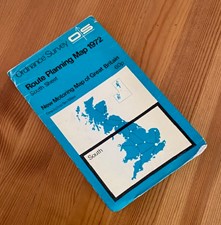
During the recent ‘deep clean’ of our church buildings at Abbey Baptist Church, Reading – a great opportunity to also ‘de-junk’ the various cluttered storerooms, nooks and crannies, cupboards and corners – we came across an old Route Planning Map from 1972. We love old maps. They are so colourful and informative – the ‘A’ roads marked in bright red, the names of important towns written in CAPITALS, the estimated mileage and time of various journeys between where you are and where you hope to get to clearly indicated (in a helpful chart) – but in terms of usefulness for today this particular route planning map is virtually absolutely useless. It is completely out of date. There are virtually no motorways indicated (apart from the M1). Things that were important then are not so important now (where you can find an AA Phone Box, for example). Even some of the so-called ‘important’ towns are no longer that important (Kidderminster is no longer ‘a vibrant carpet-making town). We are off on holiday shortly … but we won’t be using this particular map to plan our journey!

Reflecting on our ‘discovery’ I confess that the thought did cross my mind that this particular map could equally illustrate the ‘mission statement’ of many churches (including our own?) up and down the UK today. We are mapping the journey ahead using outdated maps and methods that may appeal to us but don’t cut any ice with the vast majority of people ‘out there’ – people whom Christ calls us to reach out to in his name (Luke 24:45-49). Many years ago Sir John Lawrence posed the rhetorical question: ‘What does the average church member want? He wants a building that looks like a church, Services of the kind he has been used to, Ministers who dress in the way he approves … and to be left alone!’ Is this observation still true today? Sadly ‘the proof of the pudding has been in the eating’. I visited a church some time ago and the first thing that struck me as I entered was a large notice that said: ‘Switch it off, unplug it, and empty it!’ Fortunately, it turned out to be instructions for the hot water boiler and not the Mission Statement for the Church?! Sadly, it could well have been the mission statement for many a church over the last 50+ years.

As a church we have a ‘Vision Day’ coming up in August. It will be an opportunity to re-think, re-work, re-pray our own ‘Mission Statement’. I hope we will use the day well. It is not a day for recrimination or regret (although perhaps a little repentance for missed opportunities in the past may not be entirely out of place). It is a day to seek, discover, and affirm the plans and purposes God still has for us (Jeremiah 29:11). We need to be brave enough to consign the outdated map we have been following to the heritage cupboard, and embrace God’s up-to-date Route Planning Map for 2021/22. I am not suggesting that following the so-called ‘New Churches’ Sat Nav is any better by the way. Many of these churches are discovering that their way of being and doing church is equally dated (far too caught up with Sunday stuff, sung worship, personal prophecy, etc. than selfless service in the community in Christ’s name seven days a week). Even Sat Nav’s need to be regularly updated!

God’s road map for us is unique (as with every other church). We can only find it by prayerfully waiting on God – and we need to start doing that right now, not waiting until the Vision Day itself to decide yet again to do nothing until we have prayed about it some more! We need to come with ‘God ideas’ not just ‘good ideas’ of our own. God will show us the way forward as we genuinely seek him. As in the days of the Prophet Isaiah we too ‘will hear a voice behind [us] saying, “This is the way. Follow it, whether it turns to the right or to the left.”’ (Isaiah 30:21)! Mixing metaphors, let’s dare to believe God has kept the best wine until last (John 2:10)!

One more step along the world I go,
One more step along the world I go;
From the old things to the new,
Keep me travelling along with you:


And it’s from the old I travel to the new;
Keep me travelling along with you.

Round the corners of the world I turn,
More and more about the world I learn;
All the new things that I see
You’ll be looking at along with me.

As I travel through the bad and good,
Keep me travelling the way I should.
Where I see no way to go,
You’ll be telling me the way, I know:

Give me courage when the world is rough,
Keep me loving though the world is tough;
Leap and sing in all I do,
Keep me travelling along with you:

You are older than the world can be,
You are younger than the life in me;
Ever old and ever new,
Keep me travelling along with you.


~ Sydney Carter (1915-2004)

Jim Binney

Leave a comment

THIS IS MY BODY … BROKEN FOR YOU (Views from the Abbey 25)

Tuesday evening at Spurgeon’s College back in the 1960s was Devotional Evening when the entire college community would gather in the College Chapel for corporate worship and to listen to God’s Word together, and once a month to share Communion. One such evening we had a somewhat elderly retired Baptist Minister – prominent in his day – leading our time together. It was a wonderful evening but when we came to Communion he really struggled to break the bread (whoever had prepared the Communion had neglected to subtly cut the underside of the loaf beforehand). Initially we feared that the Minister’s struggle to tear the loaf would spoil the evening … but actually it made it. Having spoken to us of the cost of the cross for Jesus on our behalf, the Minister’s seemingly endless battle to break the bread reminded us that it was no easy thing for Jesus to make salvation possible for us!

I thought then, and I have often thought since, that when Jesus first spoke those highly significant words, ‘This is my body … broken for you’ at the Last Supper (recorded in all three Synoptic Gospels), he was not just thinking of his own body about to be broken on Calvary’s cross, but thinking of the disciples seated with him around the table – the embryonic church, if you like – the body of believers, the ‘body of Christ’ as the Apostle Paul describes the Church (1 Corinthians 12:27). Did Jesus, just for a moment, lift his eyes look at these handful of believers and envisage a church made up of men and women, their lives laid on the altar of life for God, going out into a broken, rebellious, hurting, yet needy society to take the life-transforming Gospel (in all its multi-faceted layers) out into the world.

Bob Pierce (1914-78) was an American Baptist Minister and evangelist. Much of his work was in Asia, but after a visit to suffering children on an island in Korea, a significant sea change took place in his life. He was so deeply moved by the sacrificial service of the dedicated missionaries that he met, and the plight of those people they sought to serve in Christ’s name, that he became a changed man.  He wrote this famous prayer in the flyleaf of his Bible: ‘Let my heart be broken by the things that break the heart of God!’ He came home and founded (the now well-known) Christian Relief Organisation, World Vision in 1950. I vividly recall reading Richard Gehman’s book Let My Heart Be Broken (which tells Pierce’s story) c. 1968 whilst a student at Spurgeon’s. My friend, and prayer partner, David Carter read it at the same time and one day felt so deeply moved that we both prayed that same prayer in one of our prayer times. After we had prayed it there was a long pause … and then David turned to me and said, ‘I have a dreadful feeling that God heard that prayer … and took us seriously!’

It was a former Archbishop of Canterbury, William Temple (1881-1944) who famously suggested that ‘The Church is the only organisation that does not exist for itself, but for those who live outside of it.’ Are we prepared, as individual Christians and as a church, to be ‘broken’ by Christ so that like the alabaster jar (in the incident at the home of Simon the Leper recorded in Mark 14:3,4) the fragrance of Jesus might fill the room? If we continue to splash around in the shallows of preserving the existence of our church we will surely die, but if we ‘launch out into the deep’ (Luke 5:1-11) as Jesus exhorts us, we will not only survive but grow!

Broken for me, broken for you,

The body of Jesus, broken for you.

He offered His body, He poured out His soul;

Jesus was broken, that we might be whole:

Come to My table and with Me dine;

Eat of My bread and drink of My wine.

This is My body given for you;

Eat it remembering I died for you.

This is My blood I shed for you;

For your forgiveness, making you new.

Broken for me, broken for you,

The body of Jesus, broken for you.

~ Janet Lunt  

Jim Binney

Leave a comment

THE SECRET PLACE (Views from the Abbey 24)

Do you have a favourite place, a secret place, a place you retreat to whenever you want to be alone, when you want to pray perhaps? It may be a room in your house, or a place in your garden, or a seat in a local park, or somewhere further afield that you can only get to periodically but it is always special when you manage to get there.

Adam Melfort is the central character in John Buchan’s A Prince of the Captivity. An officer and a gentleman, a brilliant career lies ahead of him until he is imprisoned for a crime he did not commit. After he is released he embarks on daring missions in the service of his country, dangerous work behind enemy lines in World War I and espionage in 1920s. His favourite place is Eilean Bàn (Scottish Gaelic meaning White Island) a small island near the Isle of Skye, and it is a place he retreats to in his mind whenever he find himself in a stressful situation.

My favourite place is the beach at Tabgha, on the northern shore of the Sea of Galilee [see photo above]. It would appear to have been Jesus’ favourite place as well. The site of a number of major miracles and events, significant conversations with his disciples, but also a place of retreat and prayer for Jesus. I have visited there several times and for me it certainly carries a sense of place and presence, the feeling that I am on holy ground. Of course I can’t get there at the drop of a hat so to speak, although (like Adam Melfort) I often go there in my mind’s eye. These days I often settle for a seat at the bottom of our garden, under the willow trees (when the weather is warm) or my small upstairs study (when the weather is bad). A secret place, a quiet space, is important when you simply want to be quiet, to think, to reflect, and above all to pray. When the famous Canadian missionary Isobel Kuhn (1901-1957) was first converted the only place she could find in a busy household was the broom cupboard. I recall a girl in our youth group at my home church in Greenford who, when she first became a Christian, used to go to the bathroom when she wanted to spend time with God? It doesn’t really matter where our ‘secret place’ is, as long as we find a place, a ‘sacred space’, where we can be alone with God.

Jesus taught us, ‘When you pray, do not be like the hypocrites; for they love to pray standing in the synagogues and on the street corners, so that they may be seen by others. Amen, I tell you, they have their reward in full!  But you, when you pray, go into your inner room; and when you have shut your door, pray to your Father who is in secret. And your Father, who sees in secret, shall reward you.  And when you are praying, do not babble on and on like the pagans; for they think they will be heard because of their many words. Do not be like them, for your Father knows what you need before you ask Him.’ (Matthew 6:5-8). It was Leonard Ravenhill who, a number of years now, suggested that ‘No man [or woman for that matter] is greater than his [her] prayer life. The pastor who is not praying is playing; the people who are not praying are straying. We have many organizers, but few agonizers; many players and payers, few pray-ers; many singers, few clingers; lots of pastors, few wrestlers; many fears, few tears; much fashion, little passion; many interferers, few intercessors; many writers, but few fighters. Failing here, we fail everywhere.’

Having said that, I have some sympathy for those people who, like Jesus’ disciples according to Luke’s version of this story (Luke 11:1-4), don’t know how to pray but want to learn. Or for those Christians who have lost their way and need help to start building back a vibrant relationship with God once again. Some years ago, in order to try and help people like this, I distributed a little booklet called Seven Minutes with God [you can find a copy at https://navigators.org.au/wp-content/uploads/2016/07/7-Minutes.pdf] to members of the congregation of the church where I was the Pastor at the time. I was roundly criticised for doing this, not for the act itself, but because I was ‘encouraging people to only pray for seven minutes each day’ when, in the eyes of some, they should be spending a lot longer in prayer! Facetiously, I have to confess, I did wonder how long those who were most vociferous in their comments and criticisms actually spent in prayer themselves each day?

The whole point of the little booklet is to help people who struggle with setting aside time to be with God, to think, to meditate, to just ‘be’ sometimes, to pray.  It is simply meant to ‘prime the pump’ so to speak, to get us going again in the realm of personal prayer. It helpfully suggests taking the first 30 seconds to prepare our hearts, the next four minutes listening to God (by reading a short section of Scripture), and the final two and a half minutes talking to God in prayer. Commenting on this simple outline Bob Foster suggests, ‘Very soon you will discover that it is impossible to spend only seven minutes with the Lord. An amazing thing happens – seven minutes become 20, and it’s not long before you’re spending 30 precious minutes with Him.’ Foster is also quick to point out, however, that developing a prayer habit in this way should be for the right reasons not the wrong: ‘Do not become devoted to the habit, but to the Saviour. Do it not because other people are doing it, not as a spiritless duty every morning, not merely as an end in itself, but because God has granted the priceless privilege of fellowship with himself.’

So why not give it a go? You don’t have to tell anybody what you are doing or why you are doing it. You don’t have to ‘clock in’ or report back to the Pastor on your progress. If you want a deeper walk with God … start by giving him just seven minutes and see what happens!

There is a place of quiet rest,
Near to the heart of God,
A place where sin cannot molest,

Near to the heart of God. 

O Jesus, blest Redeemer,
Sent from the heart of God,
Hold us, who wait before Thee,
Near to the heart of God.

There is a place of comfort sweet,
Near to the heart of God,
A place where we our Saviour meet,
Near to the heart of God.

There is a place of full release,
Near to the heart of God,
A place where all is joy and peace,
Near to the heart of God.


~ Cleland Boyd McAfee (1866-1944)

Jim Binney

Leave a comment

THE FATHER, THE SON … AND THE OTHER ONE (Pentecost 2021)

There is a character in a Bernard Cornwell historical fiction novel, set in and around the north of England in the 10th century, called Bishop Jeremias (or ‘the mad bishop’ as he was sometimes known). Bishop Jeremias was originally a Norse Jarl (or Lord) who ‘converted’ to Christianity but rather than settle for being a humble follower of Jesus Christ immediately declared himself to be a bishop. In reality, like a number of clerics in those days, he was pretty clueless about Christian doctrine, especially the Person and Work of the Holy Spirit, as demonstrated by the fact that he went around blessing people ‘In the name of the Father, the Son … and the Other One!’ In fairness to Bishop Jeremias, he did at least recognise that the Christian God was a Trinity even if he didn’t have a clue as to who the Third Member of the Trinity was or what he did?

This Sunday is Pentecost Sunday, the day in the Church Calendar when we celebrate the coming of God the Holy Spirit upon the embryonic Christian Church as they gathered prayerfully in Jerusalem in response to Jesus’ command to ‘wait there for the promise of the Father … the baptism with the Holy Spirit’ (Acts 1:4,5). The story of that amazing experience which those first 120 or so disciples entered into is recorded in Acts 2:1-4 – an experience that transformed them from a group of fearful believers hiding away behind locked doors into a bold fearless group out on the streets of the city proclaiming Jesus to all and sundry. Moreover, the Apostle Peter, in his powerful sermon preached to the gathered crowds on that first Day of Pentecost in the Christian era, made it clear that this life-transforming experience he and his fellow believers had entered into that very day was not just for them but for all who would truly believe and turn to Jesus: ‘Change your life. Turn to God and be baptized, each of you, in the name of Jesus Christ, so your sins are forgiven. Receive the gift of the Holy Spirit. The promise is targeted to you and your children, but also to all who are far away—whomever, in fact, our Master God invites’ (Acts 2:38,39 The Message).

Jeff Kennedy, in his book Father, Son, and the Other One: Experiencing the Holy Spirit as a Transforming, Empowering Reality in Your Life reminds us that ‘God’s Spirit Lives in You’ but goes on to ask, ‘Do you believe it? What’s more, are you experiencing His power in your life? All too often we settle for merely learning about God rather than experiencing the present reality of His Spirit. But you have access to the presence and power of the Holy Spirit right now and if you want to live out your Christian faith with vibrancy and authenticity, it is essential that you get to know Him!’ Kennedy addresses the vital importance of the Holy Spirit in our lives and shows us how to experience His presence as a transforming, empowering reality. He concludes by encouraging us that ‘If you have ever wondered if the Christian faith is more than mere creeds, doctrines and denominations, or if you long to know that the Jesus of history still lives and dwells in you by the Spirit of God, or if you struggle to tap into God’s presence as a transforming, empowering reality’ then we too can come into such an experience of God if we will take the Apostle Peter’s words at face value.

But how do we know that we have truly been ‘filled with the Spirit’ (Acts 2:4) like those first believers? Someone recently sent me a Mark Pothier quote on Facebook that poignantly said: ‘The Holy Spirit doesn’t just make you dance and speak in tongues, He also makes you shut-up, apologise, and examine yourself!’ How true! I have long believed that the manifestation of the fruit of the Spirit is much more a ‘spiritual litmus test’ of what it really means to be filled with the Spirit than any manifestation of the gifts of the Spirit. How we behave is a much truer test than what we profess to believe. This was brought home to me very powerfully when, as a ministerial student at Spurgeon’s College in 1968 I personally came into a similar experience of being filled with the Holy Spirit akin to those first disciples at Pentecost. For me, however, the real test of the genuineness of my experience was not found in any manifestation of any supernatural gift of the Spirit (although I did experience that also) but when I came back to my home church in Greenford a couple of weeks later in order to attend an important Church Business Meeting.

I have to say that I was appalled at the way some people behaved in that meeting – the argumentativeness, the attitude, the dogmatism, the language, the rudeness, the negativity, the verbal abuse dished out to fellow Christians and our Pastor, the bullying, etc., etc. It so disturbed me that I burst into tears in the middle of the meeting – a 25 year-old man, 6’4” tall, 15 stone in weight – sobbing uncontrollably in a Church Meeting as God the Holy Spirit I suspect also ‘cried out’ within me ‘with deep feelings that words cannot explain’ (Romans 8:26). My reaction also had quite an impact on the Church Meeting as you might have expected! I have to say however, that what disturbed me most, was the certain knowledge that in previous Church Meetings (prior to my own personal Pentecost experience) I had behaved, and would have continued to behave, in exactly the same way without realising how contrary to the way of Christ such behaviour was!

So the real test of whether or not we are filled with the Spirit – the real test of whether or not we still need to be filled with the Spirit – is not found in whether we speak in tongues, or have the ability to heal the sick or deliver the demonised, etc., but in how we behave in a Church Business Meeting, or a Deacons’ Meeting (I had been elected as a Deacon at 21 years of age, the youngest Deacon in the church’s history, and had behaved just as badly there as I had in Church Meetings – in fact I had probably learned a lot of bad habits right there, ‘mirroring’ the behaviour of some of the other Deacons who were more senior than I was), or with our fellow church members, or in other public meetings (where we may be the only Christian present), and so on.

It used to be said that ‘The Holy Spirit is the forgotten member of the Trinity.’ I recall the days when Roman Catholics were accused of believing in ‘God the Father, God the Son, and God the Virgin Mary’, and Protestants of believing in ‘God the Father, God the Son, and God the Holy Bible.’ Those day are long gone now. We can no longer refer to God the Holy Spirit as ‘the Other One’ because we are clueless about who He is and what He does. But it is one thing to know a lot about Someone … and quite another thing to know Someone in such an intimate, personal way that they affect our lives deeply, and inexorably, for the better!

A good few years ago my friend Peter Tongeman wrote a poem called Only One Thing Missing. It’s somewhat dated now but I wonder if it actually still has something to say to us today.

We are organised for mission, we are ready for outreach,

We use the latest guidebooks with the children whom we teach,

We are mildly ecumenical – its excesses are deplored.

There’s only one thing missing – that’s the Spirit of the Lord!

We have regular Church Meetings where each member has their say,

And twelve Deacons to ensure that we decide the proper way.

We’ve a worthy Constitution and we act with one accord,

There’s only one thing missing – that’s the Spirit of the Lord!

We use the Baptist Hymn Book and our organ is first rate,

The prayers are always quite the best, and we never finish late.

The furnishings are in good taste, the best we can afford.

There’s only one thing missing – that’s the Spirit of the Lord!

On Monday there is Girls’ Brigade; on Tuesday it’s the lads.

On Wednesday night we meet for prayer, on Thursday it’s the dads.

On Friday night Young Wives and Choir, thus no group is ignored.

There’s only one thing missing – that’s the Spirit of the Lord!

If only we could shed our pride and learn humility,

And concentrate on Christ, instead of our ability.

By simply letting him take charge our faith would be restored

In the wonders of his saving power – through the Spirit of the Lord!

~ Peter Tongeman (1929-2009) 

Jim Binney

Leave a comment

SHAKEN NOT STIRRED (Post-Easter 2021)

Grapefruit juice, fly-killer, enamel paint, cough mixture, window cleaning liquid, air freshener … No, I’m not delirious through overwork. Nor have I picked up Julia’s shopping list in mistake for my notes. I’m just thinking of how many household items bear the label ‘shake well before use’. Shaking has its hazards, as a college friend of mine discovered when he shook a bottle of tomato sauce without ensuring that the top was screwed on. But usually, it seems that the full flavour, the full power, the full benefit of so many things only comes out when you shake the bottle well. I wonder if we too need to be shaken before use.

We are approaching the Festival of Pentecost, that time in the Christian calendar when we celebrate that first great outpouring of God the Holy Spirit in power upon the Church (Acts 2:1-4). The Lectionary suggests that as we come towards the end of Easter we begin to focus on this wonderful gift of the Holy Spirit to the Church (Acts 1:1-11). What actually happened at Pentecost? Was this the time when those first followers of Jesus actually became ‘Christians’? When they were ‘born again of the Spirit’ (John 3:6)? The Church’s ‘birthday’ if you like? Or were those 120 or so gathered together in the Upper Room (Acts 1:15) already true believers? After all they had ‘confessed Christ’ (Matthew 16:13-20) – Peter was simply the spokesperson on behalf of them all – and they had all ‘received the Holy Spirit’ when Jesus had breathed on them earlier in that same Upper Room (John 20:22). In this case Pentecost was more of an ‘empowering for service’ (Acts 1:8) given the task of taking the Gospel out to the rest of the world Jesus entrusted to his Church (Luke 24:44-49).  

We must not take this empowering for service for granted. We must not presume that we have this power when we blatantly do not have it. One of the rules of biblical hermeneutics (the way in which we correctly interpret scripture) demands ‘an honest reading of the text’. In other words we need to hear what the Bible is actually saying, not twist a verse or passage to suit ourselves, our own views or opinions. We perhaps need to apply this same principle to ourselves – we need an honest reading of ‘the text of our own lives’. When my friend, the Evangelist William Hartley, was younger he realised that although he was a Christian he did not have God given power in his life. He took himself off to the Keswick Convention for a week. In those days (it has changed now) Keswick teaching held that you could claim the filling of the Holy Spirit simply by faith. So, at the final meeting when a call was made for those who wanted to be ‘filled with the Spirit’ to stand, and claim the gift William did just that. He felt no different but took it for granted that, in his own words, he had ‘received the Spirit’. When he got home his wife asked him if anything had happened, and William replied, ‘I’ve got it!’ A week or two later, seeing that nothing had significantly changed in her husband’s life, his wife asked him, ‘William where is it?’ You see nothing had actually happened at Keswick for William. He simply presumed that he had been filled with the Spirit when he actually hadn’t. Eventually he recognised this, and gave himself to prayer and waiting on God until one day he was indeed genuinely gloriously ‘filled with the Spirit’ just like those embryonic believers on that first day of Pentecost (Acts 2:4).

What happened at Pentecost was not a ‘one-off’, however, and we see the same thing repeated again and again as the story of the New Testament church unfolds. In Acts 4:23-31 we see one such incident. Peter and John are arrested by the Sanhedrin for preaching the gospel on the streets of Jerusalem, following the miraculous healing of the crippled beggar by the Beautiful Gate of the Temple, and told not to preach in the name of Jesus ever again (vs.1-22). On their release their response was to share the situation with the rest of the church who then gave themselves to earnest prayer over the matter. Although the text suggests that they began praying feeling somewhat cowed and deflated, as they recall the salvation history of God’s ancient people, and remember how God repeatedly intervened on their behalf, they get more and more excited and enthused, and end up praying for quite the reverse of the Sanhedrin’s demands: ‘And now, Lord, look at their threats, and grant to your servants to speak your word with all boldness, while you stretch out your hand to heal and signs and wonders are performed through the name of your holy servant Jesus’ (vs.29,30). Luke goes on to tell us that: ‘When they had prayed, the place in which they were gathered together was shaken; and they were all filled with the Holy Spirit and spoke the word of God with boldness’ (v.31). The building was shaken, the believers were shaken, and … as we see from reading on in the account … Jerusalem itself was shaken as a new phase of spiritual awakening broke out throughout the city

Pentecost was never meant to be a one off. It was always meant to simply be the first in a whole production line of believers and churches being filled with the Holy Spirit and ‘endued with power from on high’ (Luke 24:49) in order to be effective witnesses for Jesus in this needy, broken, and hurting world in which we live. When Peter spoke to the crowds on that first day of Pentecost he told them that what these embryonic followers of Jesus had received from God was not just for them but for everyone: ‘For the promises for you for, for your children, and for all who are far away [including us today], everyone whom the Lord our God calls to him (Acts 2:39).

I recall speaking on this passage in a certain church some years ago. After the Service, a lady came up to me at the door and said, ‘Oh dear! We don’t want anything supernatural in this church!’ ‘What not even God?’ I replied. On the contrary what we do really need (and not just us at Abbey) is indeed a fresh, overwhelming, infilling with the Holy Spirit, and a new enduement with power from on high, that overflows into the wider community bringing the blessing of God with it! I’m not a great fan of Martinis, but when it comes down to the Person work of the Holy Spirit, I’m with James Bond. A few spiritual ripples here and there, that fail to disturb our calm spiritual sea, is not what is required today!  We need to be shaken not stirred. But … are we brave enough to face up to our need … and brave enough to pray for God to come and do something significant among us? To pray with the late Daniel Iverson (1890-1977):

Spirit of the living God,

Fall afresh on me.

Spirit of the living God,

Fall afresh on me.

Break me, melt me, mould me, fill me.

Spirit of the living God,

Fall afresh on me.

Jim Binney

Leave a comment

… AND BREATHE (Post-Easter 2021)

Apparently 11 April is World Breathing Day, an annual global event that invites everyone to remember, experience and celebrate the healing and unifying power of breath. We all breathe, and we all breathe the same air, yet rarely do we stop to acknowledge how fundamentally important our breath is, or how it connects us to our planet and to each other beyond our differences. It was only after major heart surgery in June 2014 that I really appreciated the value of breath, and realised just how bad my breathing was prior to the operation. Without boring you with the details I had a congenital heart defect that actually stole oxygen from my body – particularly during extreme effort when playing various sports (which is why I never played football or cricket for England, I now realise), or times of stress – which the operation corrected. I still recall with pleasure taking those first breaths after my operation and being able to breathe really deeply for the first time in living memory.

According to the hymnwriter James Montgomery (1771-1854), ‘Prayer is the Christian’s vital breath, the Christian’s native air’. I wonder just how true this actually is in our personal experience. Is prayer as vitally important to us as the actual air that we breathe? A recent Bible Society survey suggests that the ‘average Christian’ spends just 60 seconds a day in prayer? As you would expect, the same survey revealed that members of the clergy fared much better. Seemingly the ‘average cleric’ spends 90 seconds a day in prayer. Whilst it is true, of course, that quality is more important than quantity, the measure of a man or woman can undoubtedly be gauged by the depth of their prayer life. As the godly Church of Scotland Minister, Robert Murray M’Cheyne (1813-43), once penetratingly observed, ‘What a man is on his knees before God, that he is … and nothing more!’

The Lectionary suggests that during this Post-Easter period in the life of the Church we give some time to reflecting on John 17. The whole of John 17 is taken up with a single prayer offered by Jesus. It is often referred to as Jesus’ High Priestly Prayer or Consecration Prayer. The four Gospels contain quite a number of the prayers which Jesus prayed in the hearing of other people, but nearly all of them are remarkably brief. They were to the point and incisive. For example, when Jesus raised Lazarus from the dead (John 11) he prayed aloud for the benefit of those who were witnessing the event. But it was a very short, simple prayer. Even the Lord’s Prayer (Matthew 6:5-15), which Jesus gave us as a model for the way we should pray, is very brief. But it is crammed with important things, and says to God just about everything we need to say to him.

The length of the prayers we pray is not a measure of our spirituality. In fact, Jesus condemned the Pharisees for praying long public prayers in order to give people the impression that they were devout. It is a good rule to pray long prayers in private and brief prayers in public. The only time when a long prayer is of spiritual value is when we are praying in private, when we are spending time alone with God, trying to find out what his will is and to know what his thoughts are, or interceding for others. Jesus was able to pray short, powerful prayers in public because he prayed so much in private; he had a very strong relationship with his Father. Often he would go off alone, getting away from his disciples and the crowds of followers, and would spend time with God, seeking his face. His public prayer was incisive and effective because it was supported by a great deal of private prayer.

But why did Jesus spend so much time in prayer? After all he was God in his own right, co-equal with God the Father and God the Holy Spirit. Surely, he already knew what was going to happen? Surely he had already willed future events. What we fail to recognise is that because of his Incarnation Jesus laid aside many of his divine attributes and exercised his earthly ministry primarily in the power of the Third Person of the Trinity (rather than in his own inherent power). As the Apostle Paul tells us, ‘Jesus has always been as God is. But He did not hold to His rights as God. He put aside everything that belonged to Him and made Himself the same as a servant who is owned by someone. He became human by being born as a man. After He became a man, He gave up His important place and obeyed by dying on a cross (Philippians 2:6-8 New Life Version). Thus, prayer was of vital importance to Jesus – as vital as the air he breathed! Now, if Jesus needed to be a man of prayer … how much more so do we need to be men and women of prayer?

Can I encourage you (if necessary) to make a fresh start with your prayer life. Set aside a specific time each day for personal prayer (even if it is just a few minutes). If you are married to a fellow Christian (or have a close Christian friend) make time each day (or each week if each day is too difficult) to spend some time praying together (even if it is again only for a few minutes to begin with). Make the effort to attend the weekly Church Prayer Meeting (and if the time is not convenient for you either change your schedule or get together with a few others at a more suitable time each week to pray with them). Corporate prayer is just as vital for a local church as prayer is for the individual. There is a good argument to suggest that the Church Prayer Meeting is a better place for making corporate decisions than either the Deacons’ Meeting or the Church Business Meeting (unless both of these latter meetings are themselves ‘soaked’ in prayer). There was good reason why our Baptist forefathers held their Church Business Meetings either following on from the mid-week Church Prayer Meeting or from the Sunday Morning Worship Meeting.

‘I’m not one for sunbathing,’ Dr Rowan Williams told Radio 2 listeners recently, ‘too much lying around and I get fidgety and a bit guilty. But there is something about sunbathing that tells us more about what prayer is like than any amount of religious jargon.’ So what is Dr Williams saying here? That prayer is like a former Archbishop of Canterbury in Speedos lying around on a deckchair? No! As Dr Williams went on to explain, ‘You’re not going to get a better tan by screwing up your eyes and concentrating … you simply have to be there where the light can get at you!’

Prayer is the Christian’s vital breath,
the Christian’s native air,
his watchword at the gates of death:
he enters heaven with prayer.

O Thou by whom we come to God,
the Life, the Truth, the Way,
the path of prayer thyself hast trod:
Lord, teach us how to pray!

~ James Montgomery

Jim Binney