1 Comment

TIME TO TURN THE PAGE (New Year)

Turn the Page

Turn the Page

I love reading. Both my parents were avid readers and they instilled in me a love of books. I learned to read at a very early age. Consequently I always have at least one book on the go at any given moment in time … often more than one? I tend to read the more serious stuff during the day, and leave the lighter stuff for bed-time. If I read the serious stuff at night I find it difficult to go to sleep because I keep thinking about what I have just read. Sometimes I get so excited about what I am reading that I can’t turn the next page fast enough. I want to know where the story is going next, or how this new truth I am learning develops, and so on. Turning to a new page is always an adventure!

I also love writing. I write almost every day. For over 40 years now I have written down the fruits of my daily Bible study. Some of it finds its way into sermons, or talks, or even academic papers occasionally. Much of it has never seen the light of day … the various notebooks will hopefully be a fund of good stuff for others who may read them after I am gone? Even though I am computer literate these notes are always hand-written in a notebook. I write on one side of the page and leave the other side for later thoughts, illustrations, stories that may come to mind in the process. I always write in pencil so that I can rub out stuff I am not happy with. Sometimes I am so dissatisfied with what I have written that all I can do is put a line through it, and turn the page. Thankfully, most of the time I am so excited at what I am learning as ‘God breaks forth more light and truth form his Word’ that I find myself turning page after page in order to get it all written down!

I also love drawing and painting – mostly watercolour but also a bit of acrylic – even though I am not that good at it. I frequently find that I have rubbed out what I have previously drawn so many times that that particular page in my sketch book is so grubby that it is not worth painting on. I have no option other than to turn the page and start again!

Subliminally, I guess these various illustrations came to me as I was reflecting on the imminence of yet another New Year? The older you get, the quicker they seem to come. By nature I am normally a very positive person, a characteristic that has been enhanced by my personal faith in Jesus Christ and conviction that God always wants the best for us. As the Apostle Paul tells us in his Letter to the Romans: ‘We know that God causes everything to work together for the good of those who love God and are called according to his purpose for them’ (Romans 8:28). Applying the well known analogy of either being ‘a glass half full or a glass half empty’ person, I have been described as someone whose ‘glass is full and overflowing’! So, even at 71 years of age, I am really looking forward to 2015 with a great sense of adventure, challenge, wonder and excitement at what God is going to lead us into in the next 12 months? Consequently, as I was prayerfully reflecting on these things, seeking to hear something from God as to how we should approach this new chapter, something positive Julia and I could take to heart ourselves, something that would be encouraging that we could pass on to others, it seemed to me that what God was saying was that for many of us it was ‘time to turn the page’ in the book that is our lives!

Some years ago, one of Julia’s tutors at Spurgeon’s College, Stuart Murray-Williams, suggested that the years following the so-called ‘decade of evangelism’ (the 1990s) would be decidedly ‘messy’! This has proved to be a ‘prophetic statement’. In some ways history has always been somewhat messy. If you were to produce a ‘chart’ of history – rather like those ‘temperature charts’ that you used to see at the bottom of hospital beds – it would not be a constant line, either up or down, but a jagged line that goes all over the place, one minute up and the next down, and so on. Contrary to popular opinion things are not getting steadily worse nor steadily better – they have nearly always been an inconsistent mixture of the both. Since the turn of the century, however, everything seems to be even more ‘messy’ than ever? In fact things are so messy, both nationally and internationally, that resolving the various issues seems impossible. The only solution would appear to be for the various ‘movers and shakers’ in our nation, and in our world, to ‘draw a line’, to ‘turn the page’, to ‘move on’ from what we have now to something far better. To that which we all know, in our heart of hearts, to be right, moral, fair, just, good and Godly for everyone!

Whilst few of us are in a position to influence national or world affairs for the better, we can all do something about our own lives, however. The only way to really change our world is for each one of us to change our own ‘heart attitude’ to so much. What is needed is an understanding of spiritual things, and a spiritual understanding of other things! It is no good, however, trying to ‘put things right’. To be honest so many people are so ‘messed up’ that they have no hope of untangling the knots. So many lives and situations are so tangled that they resemble a ball of wool after a kitten has been playing with it for a hour or two? Let me try and illustrate what I mean by this? Take ‘marriage’ for example. The divorce rate in the UK is currently one in three. Add to this the large number of couples who simply ‘co-habit’ rather than marry, together with the number of ‘families’ where there are several children all with different fathers … and we begin to see how complicated or ‘messy’ everything is. I say this by way of illustration not to pass judgment. A friend of mine recently overheard two teenage girls talking together at school. One girl apparently was heard to say to the other, ‘My new step-father used to your step-father, I believe?’

Let’s be honest, Christians and the Church have often been far from helpful in resolving these kind of problems. All too often we have only been moralistic and judgmental rather than helpful. We have been heavy on the need for ‘repentance’ – interpreting it as ‘weeping over our sins wearing sackcloth and ashes’ rather than simply ‘turning from a Godless direction to a God-ward direction’ (which is what the word really means) – and only offered ‘legalistic’ rather than practically helpful solutions. I recently heard a prominent evangelical preacher on one of the ‘God TV’ channels preaching about marriage. After condemning divorce and re-marriage as ‘unbiblical’ he bluntly stated that the only Godly way forward for such people was for them to ‘end whatever their current relationship was’ and ‘re-marry their original partner’? What was particularly worrying to me was the large number of people who seemed to agree with him? What he was suggesting was not only ‘bonkers’ but quite impossible to implement! Think of the chaos and confusion that would ensue as a result in a world of multiple divorces, re-marriages, and re-assembled nuclear families? The example of ‘marriage’ is just one of many that I could have used to illustrate just how ‘messy’ things have become for so many of us.

So what are we to do to clear up the ‘mess’ of so many lives? Is there a ‘Godly solution’ to this kind of mess? Does the Bible have anything helpful to say to us? I believe that the answer is ‘Yes’. The Apostle Paul, in his Second Letter to the Corinthians – a situation which was just as ‘messy’ in its own way as ours today – and suggests that oftentimes the only way for us to extricate ourselves from the particular ‘mess’ we are in, is for us to ‘draw a line’ under the past, ‘turn the page’ and move forward with God into a brighter future. Some of the ‘messes’ that the Corinthians had got themselves into were so complicated that there was no hope of unravelling them. All they could do was to turn to Christ, hand over the mess to God, and move on because, as Paul tells us, ‘anyone who belongs to Christ has become a new person. The old life is gone; a new life has begun’ (2 Corinthians 5:17)!

Many of the situations we find ourselves in are just as complicated, and there is just no way of resolving them other than to hand them over to God, and move on! Where the ‘mess’ was our fault we know that, because of all that God has already done for us in Jesus, ‘if we confess our sins, God is faithful and just and will forgive our sins and cleanse us from our unrighteousness’ (1 John 1:9). Where the ‘mess’ was caused by others we have to ‘leave the past behind, and press on’ (Philippians 3:13). Trying to ‘puzzle’ our way out of impossible situations, or condemning ourselves to a perpetual  ‘guilt trip’ because of ‘screwing up’ in years gone by, is just a waste of time and prevents us from moving on into a brighter future. There comes a day when ‘turning the page’ is the best decision we can make because we realise that there is so much more to the book than the page we have been stuck on!

Much the same can be said for many churches. Having been involved in the Ministerial Settlement Process with Julia for the last three years has given me insight into the current thinking going on in a number of our Baptist Churches. Having visited, and talked to, a number of churches in recent years, I have come to the conclusion that many of our churches feel ‘stuck’ and also need to ‘turn the page’ and move on. There was a similar feeling around 30  years ago which resulted in many churches moving away from being what they called ‘traditional’ to what they called ‘contemporary’. This was best seen (although not exclusively so) in our Baptist Churches in terms of the style of corporate worship,  where the traditional ‘hymn-prayer-sermon sandwich’ was replaced by ‘contemporary praise and worship’. It was believed that this move would prove more attractive to ‘outsiders’ and thus draw them into the church family. This trend was primarily the brainchild of what has been  called the ‘baby-boomer’ generation – those people who today are in their late 50s and early 60s. Essentially the experiment failed and today ‘contemporary praise and worship’ feels very dated and ‘old hat’. The results of a recent on-line survey, widely reported in the social media, suggests that the majority of people (inside and outside the churches) are actually wanting something that is ‘more traditional but expressed in modern language’. Consequently many churches are asking similar questions to those asked 30 odd years ago. They feel they are ‘stuck’ in something supposed to be ‘contemporary’ but which is actually quite ‘dated’ now. The problem is that many churches don’t know how to change things, and are somewhat negative and fearful of making yet more changes after the perceived failure of those earlier changes implemented back in the 1980s or so? The trouble is that we can’t start the next chapter of our lives if we keep re-reading the last one?

A classic example of this is the way in which we tend (albeit subliminally) to see Jesus’ Parable of the Sower  (Matthew 13:1-24). The scene Jesus paints would have been a familiar one to his hearers. A farmer is sowing seed in his fields and, whilst the vast majority of his seed falls on good soil, some of the seed falls on the stone-hard paths between the fields, or on shallow soil covering the underlying limestone rock, or amongst weeds and thistles. Only the seed that falls on good soil grows and becomes fruitful. The rest either fails to take root or withers away for one reason or another. The Parable is in fact an allegory for how various people react to hearing God’s word. Some take it to heart, and blossom and grow as a result, whereas others reject or neglect God’s word, or only respond in a shallow way, or allow circumstances to overwhelm any initial spiritual response. Now in actual fact this Parable is very positive. The simple fact of the matter is that the vast majority of the seed fell on good soil and produced a significant (if varied) harvest! Only a small amount of the seed actually fell on the hard paths, or the shallow soil, or amongst weeds and thorns. Just because three quarters of the story is to do with negative responses doesn’t mean that the heart of the message of the story is negative? Most of the sermons on this Parable that I have heard over the years have tended to spend a disproportionate time on the poor soil rather than the good soil? Equally, time and again, I hear churches going on and on about all the ‘negatives’ they are facing – the falling numbers, the lack of commitment, the lack of financial support, the poor location (and state) of their buildings, the indifference of the local community, and so on. All these things may be true … but so what? Clearly the 120 or so disciples, hiding away in an Upper Room ‘out of fear’ for the future (John 20:19), 2,000 years ago, felt much the same … just before Pentecost came! So here is my advice to any churches feeling negative about the future.  Move on! What you have been experiencing is just a chapter in the past. It is not the whole story. Don’t close the book … just turn the page! ‘Set your hearts and minds on things above where Christ is’ (Colossians 3:1,2) and step out in faith! God has something good just around the corner!

And I said to the man who stood at the gate of the year:
‘Give me a light that I may tread safely into the unknown.’
And he replied:
‘Go out into the darkness
and put your hand into the Hand of God.
That shall be to you better than light
and safer than a known way.’

So I went forth, and finding the Hand of God,
trod gladly into the night.
And He led me towards the hills
and the breaking of day in the lone East.

~ Minnie Louise Haskins (1875-1957)

Jim Binney

Leave a comment

2014 in review

The WordPress.com stats helper monkeys prepared a 2014 annual report for this blog.

Here’s an excerpt:

A New York City subway train holds 1,200 people. This blog was viewed about 4,200 times in 2014. If it were a NYC subway train, it would take about 4 trips to carry that many people.

Click here to see the complete report.

Leave a comment

THE HINGE OF HISTORY (Christmas)

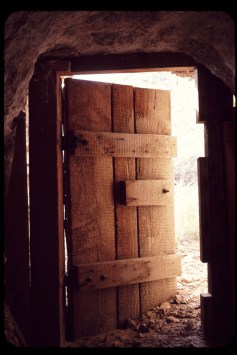
Stable Door in Bethlehem

Stable Door in Bethlehem

There is a story told of a very religious couple, touring the Holy Land during December, who decided that it would be a very meaningful experience for them to spend Christmas Eve in Bethlehem, the birthplace of Jesus. Arriving in Bethlehem they searched high and low for accommodation but nothing was available at any price. Finally they pulled up in front of the Sheraton Hotel and the husband got out of the car telling his wife: ‘Stay here, Sweetie … let me see if I can do something for us?’ He enquired at Reception if there were any rooms available, only to be told by the Manager that there were none: ‘I’m sorry sir, but its Christmas Eve, our busiest time of the year.’ No matter how much the man offered to pay, the Manager said that he had nothing. Finally, in exasperation, the man said to the Manager: ‘I bet if I told you my name was Joseph, and that the woman waiting in the car outside was called Mary, and that she had a new-born child … you would offer us a room!’ ‘Well’ stammered the Manager, ‘I … I suppose I would.’ ‘Okay,’ said the man. ‘I guarantee you that they’re not coming tonight … so we’ll take their room!’

A few years ago, Julia and I visited the Church of the Nativity in Bethlehem. The Church itself is situated at the edge of Manger Square, a large paved courtyard in front of the Church, where crowds gather on Christmas Eve to sing Christmas carols in anticipation of the midnight services celebrating the birth of the Christ-child. The Church is entered through a very low door called the ‘Door of Humility’ because you have to stoop to enter. On either side of the impressive Sanctuary there are winding stairs that lead down to the Grotto of the Nativity, an underground cave located beneath the Church that enshrines the site where Jesus is said to have been born. The exact spot is marked beneath an altar by a 14-pointed silver star set into the marble floor and surrounded by silver lamps, and another altar in the Grotto marks the site where traditionally Mary laid the newborn baby Jesus in the manger.

When Julia and I were there the Church was packed with tourists and there was a long queue of people waiting to get into the Grotto of the Nativity. Fortunately for us, we had hired the services of a local tour guide – our way of contributing to the local economy which has been badly hit since the building of ‘the wall’ separating Palestine from Israel – and he was able to bypass the queues and get us into the Grotto without too long a delay. Like many of the ‘sacred sites’ in Israel-Palestine today, the Church of the Nativity and the Grotto itself have been turned into ‘tourist attractions’ albeit with religious overtones, and one has to try and find space in one’s head to be able to ‘cut through’ all this and get back to an insignificant town, a somewhat inconspicuous dwelling, a basement-stable full of animals, the sudden birth of a child to a very young mother … and to the mind-blowing, significance of what really happened here in Bethlehem 2,000 years ago! As Ralph Sockman suggests, ‘The hinge of history is to be found on the door of a Bethlehem stable!’

Bethlehem (which means ‘House of Bread’) is a small town six miles south-west of Jerusalem, nearly 2,500 feet above sea level. Its population was not great at the time Jesus. In Old Testament times David lived in Bethlehem until he was anointed by the Prophet Samuel to be King. David was a shepherd in his youth on the hills surrounding this small town. After King David’s time Bethlehem faded into insignificance. Only the Prophet Micah seems to have foreseen that this town would one day be the venue for the  most important birth in human history: ‘But you, O Bethlehem Ephrathah, are only a small village in Judah. Yet a Ruler of Israel will come from you, One whose origins are from the distant past’ (Micah 5:2). An inn in Bethlehem was therefore an unlikely place for the birth of God’s Son. A Bethlehem inn in those days was no Sheraton Hotel … but the situation may well not have been quite as bad as some interpretations of the ‘birth narrative’ suggest?

The Lectionary Gospel Reading for Christmas Day reminds us of the unusual circumstances of Jesus’ birth. Luke tells us that ‘At that time the Roman emperor, Augustus, decreed that a census should be taken throughout the Roman Empire (this was the first census taken when Quirinius was governor of Syria).  All returned to their own ancestral towns to register for this census. And because Joseph was a descendant of King David, he had to go to Bethlehem in Judea, David’s ancient home. He travelled there from the village of Nazareth in Galilee. He took with him Mary, his fiancée, who was heavily pregnant. And while they were there, the time came for her baby to be born. She gave birth to her first child, a son. She wrapped him snugly in strips of cloth and laid him in a manger, because there was no lodging available for them’ (Luke 2:1-7).

We know the Christmas Story so well that we don’t even have to re-read the biblical narrative to re-tell the story … or so we think? Mary and Joseph travelled from Nazareth to Bethlehem and were turned away from the village inn by the innkeeper. They took refuge in a barn, where baby Jesus was born and laid in a manger. When we do re-read the biblical narrative, however, we see that actually Luke neither quotes nor mentions an innkeeper? I would suggest that in actual fact the story does not refer to an inn but rather to a house! The word translated here as ‘inn’ in the Kings James Bible is not the normal word for ‘inn’ in Greek – which we find Luke using in the story of the Good Samaritan for example (Luke 10:30-37). Rather the word indicates a ‘guest room’ – which we find Luke using in his account of Jesus meeting with his disciples for the Last Supper (Luke 22:7-13). The probability, therefore, is that what we have here is a reference to the ‘guest room’ in Joseph’s family home in Bethlehem.

Mary and Joseph went to Bethlehem planning to stay in the family home, along with the rest of the family, some of whom would also have travelled there from elsewhere, for the census. Arriving at Joseph’s ancestral home, however, they found it already full of other family members who had arrived earlier. The exact reason why space was not made for a heavily pregnant woman is unknown. It may have been because the rest of the family ‘had a problem’ with Mary being pregnant without actually being married to Joseph? Or it may have been because they were not expecting Mary to actually give birth quite so soon? Or it may have been because the house was full of elderly members of Joseph’s family, who had priority.

Whatever the circumstances it appears that the only available space in the family home, where Joseph and Mary could possibly stay at that time, was in basement rooms where the animals belonging to the resident family were also sometimes housed.  In the ancient world (as well as in primitive modern cultures) animals were regularly stabled in homes at night. A small number of flock animals were housed, not in attached exterior sheds, but inside the house in one of the basement or lower ground floor rooms. Here, animals, tools and agricultural produce were stored. Here, too, food was prepared and possibly consumed. The family sleeping quarters were on a higher floor (an ‘upper room’). By being inside, the animals were protected from the elements and theft. In addition, their presence provided body heat for cool nights, access to milk for the daily meal and dung as a critical fuel source. Mangers are animal feeding troughs, and it would be in this room, where the animals were stabled, where one would expect to find them. Consequently, Mary and Joseph did not find space in the living quarters of the ancestral family home. Instead, they stayed downstairs in the domestic stable, still within the ancestral home, where a manger or two was located. Here (as the Christmas narrative unfolds) we learn that they were visited by the shepherds, and maybe the ‘Wise Men’ some time later.

What is of real interest, and mind-boggling significance, about this whole story, however, is not so much the circumstances surrounding the birth of Jesus, but the astounding fact that here we have recorded the birth of One who is no other than the promised Christ-child himself! As Matthew records, in his version of the events, the birth of One who was to be given two significant names, indicative of just who he was, and why he had come! When Joseph, very understandably, hesitates about going through with marriage to Mary, an angel appears to him in a dream and reveals that all that is happening is in fulfilment of God’s eternal plans and purposes (Matthew 1:18-25). Furthermore, the angel tells him that the child is to be called ‘Immanuel, which means God with us’ (v.23) and ‘Jesus, for he will save his people from their sins’ (V.21). This child, born in a stable in Bethlehem 2,000 years ago, is no ordinary child then. He is both God and Saviour! He is God – not a God who is totally ‘other’, distant from us – but ‘God with us’ in human form. If we want to know what God is like, all we have to do is look at Jesus. He is Saviour – born in a manger in order to die on a cross in order to save us from the power of Satan, sin and death, and from an empty and wasted way of life! As John, reflecting much later on the birth of Christ, tells us: ‘For God loved the world so much that he gave his one and only Son, so that everyone who believes in him will not perish but have eternal life. God sent his Son into the world not to judge the world, but to save the world through him’ (John 3:16,17). Thus it has rightly been suggested, with reference to Jesus Christ, that ‘History’ is in fact ‘His Story’! And therefore it is equally true that ‘The hinge of history is to be found on the door of a Bethlehem stable!’

Although a committed Baptist-Christian, one of the things I like about Anglican Worship, is that Anglican-Christians stand and say together one of the Creeds in response to the sermon. I have used this from time to time in our own Baptist Worship, and would like to see it used more often. I am not suggesting that we always do this, or that we always use one of the historic Creeds. There is, however, something to be said for writing new ‘creeds’ which sum up the essence of the Service and Sermon on any particular Sunday. To stand and say such words out loud in such a way, in the presence of God and each other, helps to affirm the truth of that which we have just engaged with, and somehow cements it in our hearts and lives. So here, in response to what I have sought to say in this particular blog, is a ‘Christmas Creed’:

  • I believe in Jesus Christ and in the beauty of the Gospel begun in Bethlehem
  • I believe in the One whose Spirit glorified a little town, and whose Spirit still brings music to persons all over the world, in towns both large and small.
  • I believe in the One for whom the crowded household could find no room, and I confess that my heart still sometimes wants to exclude Christ from my life today.
  • I believe in the One whom the rulers of the earth ignored and the proud could never understand; whose life was among the common people, whose welcome came from persons of hungry hearts.
  • I believe in the One who proclaimed the love of God to be invincible.
  • I believe in the One whose cradle was a mother’s arms, whose modest home in Nazareth had love as its only wealth.
  • I believe in the One who looked at persons and made them see what God’s love saw in them.
  • I believe in the One who by love brought sinners back to purity, and lifted human weakness up to meet the strength of God.
  • I confess my everlasting need of God: the need for forgiveness for our selfishness and greed; the need for new life for empty souls; the need for love for hearts grown cold.
  • I believe in a God who gives us the best of himself.
  • I believe in Jesus, the Son of the Living God, born in Bethlehem this night, for me and for the world.

Jim Binney

Leave a comment

SAYING ‘YES’ TO LIFE! (Advent 4)

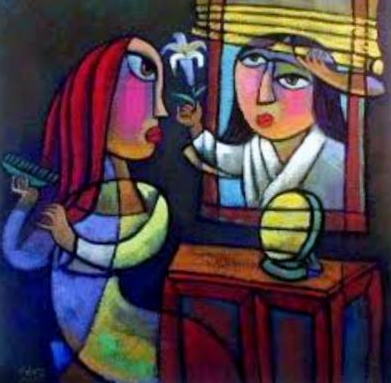
The Annunciation

The Annunciation

I recently came across a series of unintentionally humorous statements children had written in response to questions put to them in their Religious Education lessons in school. Here are a few of them: Noah’s wife was called Joan of Ark. The Fifth Commandment is ‘Humour thy father and mother’. Lot’s wife was a pillar of salt by day, and a ball of fire at night. Salome was a woman who danced naked in front of Harrods. Holy acrimony is another name for marriage. The Pope lives in a Vacuum. Paraffin is next in order after Seraphim. The patron saint of travellers is St. Francis of the Sea Sick. Iran is the Bible of Moslems. A Republican is a sinner mentioned in the Bible. The natives of Macedonia did not believe, so Paul got stoned. It is sometimes difficult to hear what is being said in church because the agnostics are so terrible. My favourite however, and very appropriate for this time of year, is the response one child gave to a question about the meaning of the Annunciation: When Mary heard she was to be the mother of Jesus, she went off and sang the Magna Carta.

This coming Sunday is the Fourth Sunday in Advent. Traditionally, on this particular Sunday, the Church thinks about ‘the Faith of Mary’ the Mother of Jesus, although actually the whole of Mary’s story is perhaps even more about ‘the Grace of God!’ Whichever way we look at it, however – the Faith of Mary or the Grace of God – the whole story is absolutely amazing. This is clearly brought out in the Lectionary Reading for the Gospel for the Third Sunday in Advent this year, which highlights the Annunciation – the angelic announcement to Mary that she would bear the Christ-child: ‘In the sixth month of Elizabeth’s pregnancy, God sent the angel Gabriel to Nazareth, a village in Galilee, to a virgin named Mary. She was engaged to be married to a man named Joseph, a descendant of King David. Gabriel appeared to her and said, “Greetings, favoured woman! The Lord is with you!” Confused and disturbed, Mary tried to think what the angel could mean. “Don’t be afraid, Mary,” the angel told her, “for you have found favour with God! You will conceive and give birth to a son, and you will name him Jesus. He will be very great and will be called the Son of the Most High. The Lord God will give him the throne of his ancestor David. And he will reign over Israel forever; his Kingdom will never end!” Mary asked the angel, “But how can this happen? I am a virgin.” The angel replied, “The Holy Spirit will come upon you, and the power of the Most High will overshadow you. So the baby to be born will be holy, and he will be called the Son of God. What’s more, your relative Elizabeth has become pregnant in her old age! People used to say she was barren, but she has conceived a son and is now in her sixth month. For the word of God will never fail.” Mary responded, “I am the Lord’s servant. May everything you have said about me come true.” And then the angel left her.’ (Luke 1:26-38)

Mary, the mother of Jesus, is a very important figure in the Story of Jesus, particularly the birth narratives of course. It is probably true to say that whilst Mary is given too prominent a place in Roman Catholic, Orthodox and Anglo-Catholic Churches, she is virtually ignored in the majority of Protestant, Evangelical, Reformed, Pentecostal and Charismatic Churches. This is a sadness because we have much to learn from Mary, not least from her willingness to say ‘Yes’ to God and to life, in response to God’s gracious dealings with her. One of the benefits of following the Lectionary Readings, or Church Calendar, is that it forces us all to think seriously about Mary (and what we have to learn from her) at least once in the course of the Church Year.

Our English name ‘Mary’ comes from the Greek ‘Maria’ which is itself based on the original Aramaic name ‘Mariam’ or ‘Miriam’. She is commonly referred to as the ‘Virgin Mary’ in accordance with the belief that she conceived Jesus miraculously through the Holy Spirit without having sexual relations with a man. The Gospel of Luke begins its account of Mary’s life with the Annunciation, when the angel Gabriel appears to her and announces her divine selection to be the mother of Jesus. According to other Gospel accounts, Mary was present at the Crucifixion of Jesus, and is also depicted as a member of the early Christian Community in Jerusalem. According to certain Apocryphal writings, Mary never died but was ‘assumed into Heaven’ – this is known as the ‘Assumption’.

Mary has been venerated since Early Christianity, and is considered by millions to be the most meritorious of all the ‘saints’. Some professing Christians from Roman Catholic, Eastern Orthodox, and Anglo-Catholic Churches believe that Mary, as the mother of Jesus, is the ‘Mother of God’ and, as such, is our ‘co-redemptrix’ in God’s great work of salvation. There is, however, significant diversity in the Marian beliefs and devotional practices within the major Christian traditions. The Catholic Church holds distinctive Marian dogmas; namely her status as the mother of God; her Immaculate Conception; her perpetual virginity; and her Assumption into heaven. On the other hand, many Protestants minimise Mary’s role within Christianity (based on the argued brevity of biblical references). What is really needed is a genuine re-examination of the place of Mary the mother of Jesus, in the Christian Story, in the light of Scripture. Certainly the view of Mary, as propagated by those who adhere to the cult of ‘Mariology’, is far, far removed from the picture we have of her in our Gospel Reading for the Fourth Sunday in Advent.

Luke paints a picture for us of a young, devout Jewish girl (probably only about 15 years of age), betrothed to an older Jewish carpenter, who lived in the Palestinian town of Nazareth. Mary was just an ordinary Jewish girl. There was nothing that special about her other than the fact that she had ‘found favour with God’ (v.30). We are not told that she was more devout than any other woman, nor that she possessed greater faith. We are simply told that ‘God was with her’ (v.28) … and that he had a very special, and unique, task for her. Mary had been chosen to give birth to the Christ-child, the Promised Messiah, the One who would not only redeem Israel but bring salvation to the whole world! The angel Gabriel appears to Mary and tells her: ‘You will conceive and give birth to a son, and you will name him Jesus. He will be very great and will be called the Son of the Most High. The Lord God will give him the throne of his ancestor David. And he will reign over Israel forever; his Kingdom will never end!’ (vs.30-33).

The whole episode is so amazing that it is beyond our ability to adequately grasp just what was happening here? No wonder then that Mary was ‘confused and disturbed’ (v.29)? Here we have something that is quite beyond the experience of anyone of us. Think, for a moment, of the most amazing experience of your life so far? Well, this was way beyond that for Mary! What is perhaps even more amazing, however, is Mary’s response to this incredible news. She does not dismiss it as an hallucination. She does not refuse to accept God’s choice. She does not ‘run away’ from it. She simply says ‘Yes’ to God and to life! Mary responded, ‘I am the Lord’s servant. May everything you have said about me come true’ (v.38).

At some time or another, in our journey through life, God’s call comes to each one of us. In fact his call often comes more than once? Firstly, of course, he calls us to himself – to commit our lives to him, in Christ, as Saviour and Lord. ‘Come to me, all of you who are weary and carry heavy burdens, and I will give you rest’ (Matthew 11:28), says Jesus to each one of us. But then, secondly, God calls us to his service. As the Apostle Paul reminds us in his Letter to the Ephesian Church: ‘For we are God’s masterpiece. He has created us anew in Christ Jesus, so we can do the good things he planned for us long ago’ (Ephesians 2:10). As the old saying has it: ‘We are saved to serve!’ Furthermore, this ‘service’ is unique to us (as Mary’s call was unique to her). As the old hymn says, ‘There’s a work for Jesus, none but you can do!’ But what is our response to God’s call to us? Is it the same as Mary’s: ‘I am the Lord’s servant. May everything you have said about me come true!’

I am often asked, ‘What is the thing, that you are most grateful to God for saving you from? Is it ‘sin’, or ‘death’, or ‘Satan’, or ‘Hell’?’ My answer is always the same … and it is primarily none of the above (although all these things are included). The thing that I am most grateful to God for saving me from, is ‘an empty and wasted way of life’! As the Apostle Peter tells us in his First Letter, ‘God paid a ransom to save you from the empty and wasted way of life you inherited from your ancestors’ (1 Peter 1:18). One of the most wonderful things, for me, about becoming a Christian is that it enabled me to stop frittering my life away. I didn’t know where I had come from, why I was here, or where I was going? All the plans I had made for my life were, in reality, just ‘guess work’ on my part, however much I tried to convince myself that they were ‘purposeful’? But committing my life to Christ enabled me to discover, and participate in, God’s particular plan for my life … which in turn enabled me to play my part in God’s much bigger plan for the whole world! Life is not just about us – ‘What’s in it for me?’ It is about God! It is about ‘other people’! It is about how we can play our part in God’s ‘great scheme of things’!

Girolamo Savonarola was one of the great preachers of the 15th Century. He preached in the great Cathedral of Florence, Italy, which contained a magnificent marble statue of the Blessed Virgin Mary. Early on in his ministry he noticed an elderly woman praying before this statue of Mary. He began to notice that it was her habit to come every day and pray before the statue. Savonarola mentioned this to an elderly priest who had been serving in the cathedral for many years: ‘Look how devoted and earnest this woman is. Every day she comes and offers prayers to the blessed Mother of Jesus. What a marvellous act of faith?’ The elderly priest smiled knowingly, and replied: ‘Do not be deceived by what you see. Many years ago when the sculptor needed a model to pose for this statue of the blessed Mother, he hired a beautiful young woman to sit for him. This devout worshiper you see here everyday is that young woman. She is worshiping who she used to be!’ What a contrast between the self-centred attitude of the one, and the selfless attitude of the other?

What do we have to learn from this story Luke recalls in his Gospel concerning Mary the mother of Jesus, and her response to this extraordinary call from God to her? We learn the value, and the importance, of selflessly saying ‘Yes’ to God and to life!

Mary, Mary,
What else did the Angel tell you?
While you nurtured his message
And pondered the wild potential
Of a womb. Did you envision those
Who would come after, the generations
That would Balkanise your heart,
Stamp your image on their banners
And lead you into battle;
That the wind would carry your name
From a German soldier’s lips
As he lay dying on the Eastern front.
A Polish captain would wear your medal
Up the heights of Monte Cassino?
Do you grow weary of false sightings
And forced tears, the rote of rosaries,
The bargains of Novenas?
Oh, Lady of Guadalupe,
Madonna of Czestochowa,
Queen of Patriarchs,
Mystical Rose,
Do you sometimes long to cry out
To the complaining Daughters of Eve,
To the rapacious Sons of Adam:
“Stop. Be silent. Listen. Hear me.
I’m Miriam, the Jewish girl from Nazareth
Who said ‘Yes’ to life!”

~ Alice Tarnowski

Jim Binney

Leave a comment

ROAD BUILDING FOR GOD (Advent 3)

Road Building for God

Road Building for God

There is a lovely road behind our cottage. It is a back road that takes you past the old barn (where they recently filmed the latest re-make of Thomas Hardy’s ‘Far From the Madding Crowd’), through gorgeous farmland and woodland (where you often see the local Hunt out riding, or a Pheasant Shoot taking place), along by the old Swannery (the world’s only managed colony of mute swans) and the 14th century St Catherine’s Chapel (where single ladies still go today to pray for a husband), and into the beautiful village of Abbotsbury (steeped in centuries of history). Until recently, however, this road has been virtually impassable. In recent years it had deteriorated alarmingly. Huge potholes had appeared, sections of the road were liable to flooding, and temporary repairs had only succeeded in creating huge mounds in the middle of the road in various places that would  rip the exhaust system off your car if you were foolish enough to drive over them. Although this back road had been our favourite route into Abbotsbury, we had stopped using it. While we away in Paris for two weeks early in November, however, the local council finally did something about it. We returned to find that all the potholes had been filled properly, the huge bumps in the road flattened, the areas liable to flooding levelled, and virtually the whole length of the road re-surfaced, so that we can now travel along it safely and enjoyably.

This coming Sunday is the Third Sunday in Advent. Traditionally on this particular Sunday the Church thinks about the ministry of John the Baptist as ‘The Forerunner’. A ‘forerunner’ is  a somewhat ancient term, defined in the dictionary as ‘one who goes before and indicates the approach of another’. It was used in days gone by to describe the work of a herald who rode ahead, to a particular town or place, to announce the imminent arrival of a King. Thus the Lectionary Reading for the Gospel for the Third Sunday in Advent this year (as for the Second Sunday) relates to the ministry of John the Baptist once again: ‘God sent a man, John the Baptist, to tell about the light so that everyone might believe because of his testimony. John himself was not the light; he was simply a witness to tell about the light. The one who is the true light, who gives light to everyone, was coming into the world … This was John’s testimony when the Jewish leaders sent priests and Temple assistants from Jerusalem to ask John, “Who are you?” He came right out and said, “I am not the Messiah.” “Well then, who are you?” they asked. “Are you Elijah?” “No,” he replied. “Are you the Prophet we are expecting?” “No.” “Then who are you? We need an answer for those who sent us. What do you have to say about yourself?” John replied in the words of the prophet Isaiah: “I am a voice shouting in the wilderness, ‘Clear the way for the Lord’s coming!'” Then the Pharisees who had been sent asked him, “If you aren’t the Messiah or Elijah or the Prophet, what right do you have to baptize?” John told them, “I baptize with water, but right here in the crowd is someone you do not recognize. Though his ministry follows mine, I’m not even worthy to be his slave and untie the straps of his sandal.” This encounter took place in Bethany, an area east of the Jordan River, where John was baptizing.’ (John 1:6-8, 19-28 NLT)

I particularly like the way the New Living Translation draws out that aspect of John the Baptist’s ministry as being a powerful prophetic voice speaking God’s Word to the people of his day with real power and authority (that we looked at on the Second Sunday in Advent), and immediately combines it with that other key aspect of his ministry – pointing away from himself to Jesus Christ. As we read here: “I am a voice shouting in the wilderness, ‘Clear the way for the Lord’s coming!'” (v.23)! Here we see John the Baptist’s role as being, in one respect at least, that of a Herald. His role was not just to be the ‘disturbing voice of God’ in order to shake people up out of their spiritual apathy and indifference (as we saw on the Second Sunday in Advent), but it was also to prepare the way for the Lord. We can picture in our mind’s eye, an ancient herald approaching a town, perhaps on market day, with the main street thronged with people and crowded with stalls, all blocking the path of King on his way to the castle or manor where he would be staying. We can imagine him blowing a loud blast on his trumpet and in a ringing voice announcing the imminent arrival of the King. This gave the people the opportunity to remove the obstacles and clear the way for the King so that he had smooth passage into their town. In much the same way we can envisage John the Baptist as the Herald of Christ, with his loud ringing prophetic voice (rather than a trumpet), announcing the imminent arrival of King Jesus, the Christ, the Messiah, the King of kings! His role as Herald was to prepare the way for Jesus to enter unobstructed into the place his hearers inhabited, and where Jesus was intent on taking up residence.

Back in the late 1970s, when I was an Associate at the Gospel Tabernacle in Slough, where W T H Richards was the Senior Pastor, there was a very jolly Christian woman who was a member of the church, named Audrey Dellow. She was a very fine musician and quite often played the organ at the Royal Chapel in Windsor for Sunday Morning Worship, as well as playing the organ in the Gospel Tabernacle at our Sunday Evening Gospel Service. I once remarked to her that surely this was ‘Going from the sublime to the ridiculous?’ to which she replied, with a laugh, that actually it was ‘Going from the ridiculous to the sublime!’ As well as being an excellent musician, Audrey displayed a remarkable talent for reaching other people for Christ. She was a gifted personal evangelist who had a seemingly natural winsome ability to get alongside people and talk to them about Jesus in a way that affected them deeply in such a way that many  made a genuine commitment of their lives to Christ. The Gospel Tabernacle was numerically a large church in those days, with a congregation of around 500-600 people. W T H Richards told me one day that, in his estimation, Audrey had been God’s instrument in winning at least half of them to Christ and bringing them into the church?

Stories about Audrey abound. I don’t think I ever saw her in church without someone she had brought along to the Service with her. One Sunday, when I was preaching, she brought along about a dozen choirboys from the Royal Chapel, Windsor … and three of them committed their lives to Christ that night! If she had not managed to persuade someone to come to church with her in advance, she would drive around in her car looking for someone to invite. Apparently one evening she saw a couple of youths standing around on a street corner. Imagine their surprise when suddenly a VW Beetle pulls up alongside them, a rather jolly, plump middle-aged woman (complete with hat on her head) jumps out and says, ‘Hey! Are you two doing anything tonight?’ They were so shocked at being propositioned in such way, that before they knew it they were in her car and on their way to church … and one of them committed his life to Christ that night! She even joined the Slough ‘Lonely Hearts Club’ on one occasion. They all went round the circle saying why they were lonely, When they got to Audrey she confessed that actually she wasn’t that lonely after all, since she had come to know Jesus as her Saviour and Friend, but since they were lonely she thought she would come and tell them about Jesus? One lady started coming to the church as a result, and she also came to know Jesus for herself … and found a husband as well (but that is another story)?

Now not everybody is a gifted personal evangelist like Audrey Dellow … and, furthermore, I don’t believe that we are all called to be ‘evangelists’. It is clear that the ‘gift’ of being an ‘evangelist’ is indeed a gift of the Risen and Ascended Christ to his Church (Ephesians 4:7-13), but that gift is at the discretion of Christ and is not given to every Christian. Perhaps, like me, you have suffered down through the years, through hearing countless sermons and talks on the subject of ‘Winning Others to Christ’ which have simply condemned us for not winning lots of other people to Christ, made us feel worse rather than better, and loaded us with guilt? But whilst we are not all called, as Christians, to be ‘evangelists’, we are all called to be ‘witnesses’. Amongst Jesus’ final words to his disciples was the exhortation: ‘You will receive power when the Holy Spirit comes upon you. And you will be my witnesses, telling people about me everywhere’ Acts 1:8).

To be a ‘witness’ means ‘to bear testimony’ to the genuineness of something or someone  – in this case to bear testimony to the Person and Work of the Lord Jesus Christ. To openly ‘confess’ Christ to others – in life and word. We don’t have to do this is a ‘preachy’ way? We don’t have to ‘corner people’ and ‘beat them over the head with a Bible’? We can do this in an honest, genuine, winsome, attractive, meaningful way! Luke tells us that it was because the Early Church essentially ‘walked the walk’ as well as ‘talked the talk’ that they ‘enjoyed they enjoyed the good will of all the people, and each day the Lord added to their fellowship those who were being saved’ (Acts 2:47).

At its simplest, ‘bearing witness’ to Jesus means ‘being a herald’ for Jesus. It means endeavouring to play our part in ‘preparing the way’ or ‘clearing the road’ for Jesus to find his way into the hearts and lives of other people. In some ways we could perhaps be a bit more proactive in seeking to draw people in. I think of ‘Teatime Rita’ (which was my ‘nickname’ for her), a girl in my home church back in the 60s who used to invite various friends and acquaintances round for ‘tea’ on a Sunday … and then bring them to church with her in the evening. I know quite a few who came to know Jesus for themselves as a result of Rita’s ‘ministry’. I think of a nine year old boy I knew, who was so concerned about the people who lived in his village, that he wrote a personal letter to each of them, telling them of Jesus and inviting them to the local chapel. Perhaps it was because the invitation came from a nine year old, but many of them came … and some stayed. I think of an elderly, widowed, Christian lady I know who is warm and friendly and chats to everyone. Her ‘mission field’ is her large front garden. Perhaps it is because people feel sorry for her, being on her own, but they often stop for a chat when she is working in her garden. She usually invites them in ‘for a cup of tea’ … and it is amazing how the conversation over the tea table so often turns to the things of Christ?

Of course ‘preparing the way’ for Jesus is more basic than even this. The basic ‘Commission’ Jesus Christ left us with is not initially to ‘Go and Make Disciples’ (Matthew 28:18-20) but to ‘Be Salt and Light’ (Matthew 5:13-16). As individual Christians, and as Church, we have to ‘earn the right to be heard’! John Wesley’s advice to ‘Do all the good you can. By all the means you can. In all the ways you can. In all the places you can. At all the times you can. To all the people you can. As long as ever you can!’ is good advice we all need to take on board. As Church we need to engage with the local community in ways that make a real difference. Food Banks, Debt Counselling, Pre-Schooling, Mothers and Tots (or whatever you want to call it), Parenting and Marriage Courses, Sheltering the Homeless … the opportunities and the challenges are endless. Whichever way you look at it we really do have to ‘walk the walk’ if people are to listen to us ‘talk the talk’! And by engaging with people in this way, we prepare a way, clear a path, build a road for Jesus to enter into the hearts and lives of others in a meaningful and significant way. It isn’t easy work … but it is so worthwhile!

Road building is rough work
hard labour, muscles strained
hands calloused, back near breaking
even with lifting gear, hard hat, protective boots.

Site clearance is dirty work
and dangerous
removing rotten structures,
risking unsafe ground
uncovering long-forgotten corruption,
the stink too strong to breathe
of waste and dereliction.

God you cry out to us
to clear the site, build the road
because you are coming
and you will come
along the road we build.

Give your people, we pray
the will and stamina for the job.
Give us the courage, to tackle the clearance
of debt and exploitation
which corrupt communities and nations.
Give us the grit and determination
to straighten out the crooked structures
which make it hard for the poor and the weak
to journey to freedom –
And help us to shout aloud that you will come
along the road we build.

~ Heather Pencavel

Jim Binney   

Leave a comment

VOICE FROM THE MARGINS (Advent 2)

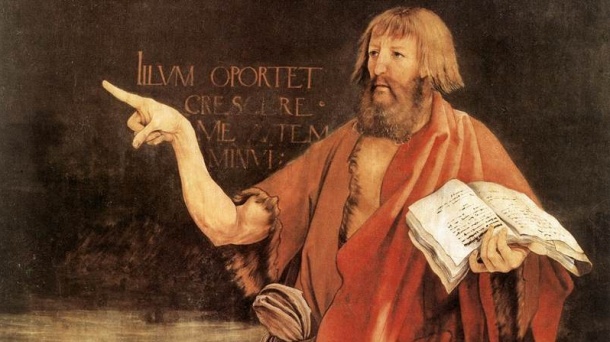
John the Baptist

John the Baptist

I really, really would like to be more like Jesus! The trouble is that I am perceived in the eyes of many to actually be more like John the Baptist? It is not so much to do with my appearance or diet – I am actually quite a ‘snappy dresser’ (no camel hair for me) and give me a ‘Full English Breakfast’ any day (rather than locusts and honey) – but rather it is to do with what I call ‘the marmite factor’. Let me try and explain.

‘You are just like marmite, you are … people either love you or hate you!’ The person who  said this to me was a young man who recently had started to attend the church where I was the Senior Pastor. He was in a relationship with one of our girls in the church, and she had dragged him along to worship with her.  He appeared to be enjoying being part of our church family although it was clear that some of our church members didn’t really approve of him. He has not made any personal commitment of his life to Christ as far as anyone could tell (and therefore he shouldn’t really be getting ‘so involved’ in church life). He was ‘going out’ with a girl who was a professing Christian (and was therefore bound to ‘lead her astray’). He had ‘tattoos’ (a sure sign that he was living a ‘retrograde life’). And he was into ‘martial arts’ (obviously he was possessed of a ‘violent nature’). Actually, I really liked him … and was glad that he wanted to be part of us! Perhaps he too suffered from the ‘marmite factor’? It takes one to recognise one, they say.

He was, of course, obviously very discerning! I am ‘just like marmite’. People do either ‘love me or hate me’ even though I am actually the most inoffensive of people. It has always been the case. Somehow I cannot avoid being ‘the elephant in the room’. I can sit in a corner, and say nothing at all, and still people will ‘react’? I suppose being 6′ 4″ tall, and weighing around 16 stone, it is probably hard to ‘sit quietly in a corner’ somewhere … but even so the way people re-act to me is decidedly odd. By nature I am actually a quiet, shy person (despite my size) and really, really don’t want to be the centre of attention. Nevertheless this is just the way it is. It has especially been the case since my ‘conversion’ at the age of 16, and especially so after my ordination into the Baptist Ministry when I was 25. Somehow or other, I seem to have the ability, for better or for worse, to force people to ‘get off the wall’. In many ways I have got used to it now. I have come to see that it always happens, whether I like it or not, and to some degree have learned to live with it. When I was first ordained into the Baptist Ministry, Barney Coombes prophesied over me: ‘Thus says the Lord: If you are faithful, and preach and teach that word which I will give you … you will lose people! But for everyone you lose, I will give you two others!’

That prophecy has been fulfilled time and again over the 40 plus years I have been in the Ministry. In that time I have pastored a number of churches – most of them were either small struggling causes or dying churches, when I was called there. By the grace of God every single church has grown numerically and spiritually during my time there … but not without cost. In every situation people have left, often citing me as the reason for them leaving, but for everyone that has left two more have come, so that the overall effect has been that those churches have grown considerably. It is always sad when somebody leaves a church – especially if they blame me for them leaving. In many of these cases the reason for them leaving has not really been because of me. What has actually happened is that often times, through me, God has put his finger on something that they needed to deal with … and they have not been prepared to do this? The reward, however, has been the number of people who have responded to my ministry – more than double those who have left – and whose lives has been turned around as a result. I guess that it just the ‘marmite factor’ at work once again.

Speaking of the ‘marmite factor’ leads us to the traditional theme for the Second Sunday in Advent. Traditionally the theme for the Second Sunday in Advent is ‘The God Who Speaks’. Some churches dedicate this Sunday as ‘Bible Sunday’ and use it to speak about the importance of the Bible and the way God speaks to us through Scripture. More generally it is used the draw our attention to the message of the Prophets of old and how they foretold the birth of Christ. In particular the emphasis is on what we might call ‘the prophetic voice’ – that voice that speaks God’s word to us with unmistakable power and authority. The Lectionary Reading from the Gospel this year particularly draws our attention to the life and ministry of John the Baptist – someone who has been described as ‘the last of the Old Testament Prophets’.  One of the significant things about following the Christian Year, and making use of the Lectionary Readings, is that it forces us to consider Biblical passages, and people, and stories that otherwise would often be neglected. Thus during Advent Season we find ourselves thinking about the Second Coming of Christ (as we do on the first Sunday in Advent), or John the Baptist, or Elizabeth and Zechariah, or Mary the Mother of Jesus, and so on. In many so called ‘Bible Believing’ churches these Bible passages, people and stories are often sadly ignored … and we are the worse for it.

John the Baptist is a very important figure in the Story of Jesus. He too suffered from the ‘marmite factor’ even though Marmite hadn’t even been invented at that time (as far as we know)? The Lectionary Reading for the Second Sunday in Advent this year introduces us to this amazing prophetic figure who paves the way for the Jesus: ‘This is the Good News about Jesus the Messiah, the Son of God. It began just as the prophet Isaiah had written: Look, I am sending my messenger ahead of you, and he will prepare your way. He is a voice shouting in the wilderness: Prepare the way for the Lord’s coming! Clear the road for him! This messenger was John the Baptist. He was in the wilderness and preached that people should be baptized to show that they had repented of their sins and turned to God to be forgiven. All of Judea, including all the people of Jerusalem, went out to see and hear John. And when they confessed their sins, he baptized them in the Jordan River. His clothes were woven from coarse camel hair, and he wore a leather belt around his waist. For food he ate locusts and wild honey. John announced: Someone is coming soon who is greater than I am – so much greater that I’m not even worthy to stoop down like a slave and untie the straps of his sandals. I baptize you with water, but he will baptize you with the Holy Spirit! (Mark 1:1-8 NLT).

It is clear that John the Baptist’s ministry was very effective! People flocked to hear him and submit to his baptism. So what was it about John that made such an impact on the people around him?

John the Baptist was someone who lived his message! Not only by his words, but also through his whole life, John was a protest against the contemporary life style of his day. We see this in a number of ways. To begin with we see that his was ‘a voice from the margins’. He was a man who spoke from experience of the desert, the wilderness. Clearly he was someone who had given himself the chance to hear the voice of God … and it was from this intimacy with God that he spoke powerfully and called others back to God. His appearance, dressed as he was in ‘clothes woven from coarse camel hair, and with a leather belt around his waist’ (v.6), reminded others, not of the fashionable orators of the day, but of the ancient Prophets who lived simply and spoke powerfully about what God requires of us all. Even the simple fare he ate – ‘the food of the poorest of the poor’ one commentator suggests as the correct understanding of ‘locusts and wild honey’ (v.6) – demonstrated that here was someone who ‘walked the walk’ as well as ‘talked the talk’. Here was no ‘health and wealth’ preacher, but someone who in many ways ‘was the message’, and because of this people listened to him.

John the Baptist’s message was effective because he told people what, in their heart of hearts, they already knew to be true! He spoke words that resonated with what in the depths of their souls his hearers were waiting for. When John  came with a message of ‘repentance’ and ‘forgiveness’ (v.6) he was speaking God’s ‘now word’ to the people. Here was a word that was ‘bang up to date’. Here was a message that didn’t condemn people out of hand, nor simply repeat the crippling ‘legalism’ of the Scribes and the Pharisees, nor even attempt to impress people with the ‘intellectual niceties’ or ‘pseudo-cleverness’ of so many of the ‘orators’ of the day.  Here was a message that challenged people on one hand – they needed to ‘repent’ or ‘turn back to God’. But it was also a message of hope – if they turned back to God (and demonstrated that they really meant business with God by being baptised) they would experience the ‘forgiveness of their sins’! And because John spoke God’s ‘now word’ right into the hearts of the people, the people recognised that John had indeed come from the very presence of God, and to hear him was to know it.

John the Baptist’s message was effective because he was completely self-effacing!  John’s own verdict on himself was that, in and of himself, he was not even fit for the duty of a slave. At the heart of his message was Jesus, not John himself. Speaking of Jesus, John tells us that ‘ Someone is coming soon who is greater than I am – so much greater that I’m not even worthy to stoop down like a slave and untie the straps of his sandals’ (v.7). The Palestinian roads at that time were very dusty in the sun, and wet and muddy in the rain. It was the duty of a slave to remove the sandals of the Master of the house, or any guests who might visit. John saw himself, in comparison to Jesus Christ, as not even worthy of being his slave? As the Apostle John records, speaking of Jesus, John the Baptist declared: ‘He must become greater and greater, and I must become less and less’ (John 3:30). John the Baptist asked nothing for himself but everything for the Christ he proclaimed. As William Barclay suggests: ‘[John’s] obvious self-forgottenness, his obvious yieldedness, his complete self-effacement, his utter lostness in his message, compelled people to listen to him.

John the Baptist’s message was effective because he pointed to something and someone beyond himself! John baptised people by fully immersing them in the waters of the River Jordan as a sign that they had genuinely repented and turned back to God. But in almost the same breath he told his hearers that although he drenched people in water, one was coming after him who would drench them in the Holy Spirit (v.8). Whilst water can cleanse the body, only God the Holy Spirit can really cleanse our hearts and lives and give us the power to live for God. And it was only Jesus who could ‘baptise us with the Holy Spirit’ (v.8). John’s primary aim was not to occupy centre stage, but to point others to Jesus and enable them to connect with him. People listened to John because he didn’t draw attention to himself, but pointed away from himself to Jesus – the one who people really needed!

So, as I said at the beginning of this blog, I really, really would like to be more like Jesus! Sadly, I seem to have the ‘marmite factor’ instead, and today I am, in many ways, reduced to being ‘a voice from the margins’? But, on the other hand, if I can’t be like Jesus (however hard I try), I suppose that being a little bit like John the Baptist is not a bad second choice? Maybe, after all these years, I am at long last learning to be who I am? At the very least I have always tried to speak the Word of God with power and authority, and point others to Jesus at the same time … after all, he is so much better at changing people than I am anyway!

Jim Binney

Leave a comment

CHRISTMAS IS COMING … ARE YOU READY? (Advent 1)

The Second Coming of Christ

The Second Coming of Christ

It is less than 30 days to Christmas … are you ready? We certainly are not! We have only managed to buy a few presents so far. We still have to get a lot more, and some suitable wrapping paper. We still have to buy our Christmas cards, write our annual Christmas Letter to family and friends, and post them all. We still have to put the Christmas decorations up, and order all the food for the celebration … and so much more besides?

‘Christmas’ or ‘Christ’s Mass’ is, of course, the annual religious and cultural festival commemorating the birth of Jesus Christ celebrated generally on the 25 December each year by billions of people around the world. A feast central to the Christian Liturgical Year, it closes the Advent Season and initiates the ‘Twelve Days of Christmas’ that end with ‘Twelfth Night’ when traditionally we remove all the decorations. Christmas is a civil holiday in many of the world’s nations and is celebrated culturally by an increasing number of non-Christians.

‘Advent’ is that season in the Church Calendar when, traditionally, the Church prepares its people for the arrival of Christmas, the coming of Jesus to earth when he was born as a baby at Bethlehem around 2,000 years ago. ‘Advent’ is a term from the Latin word adventus meaning ‘arrival’. Advent begins on the Sunday nearest to the 30 November and concludes at midnight on Christmas Eve when we celebrate the birth of Christ as we move into Christmas Day itself.

I am a great believer in the Church following – at least to some degree – the pattern laid down in the Lectionary. The Lectionary is a collection of Scripture Readings appointed for Christian Worship on any given day or occasion during the Christian Year that have been developed over the centuries. Typically, the Lectionary will go through the Scriptures in a logical pattern (normally following a three-year cycle) and include selections which were chosen for their appropriateness to particular occasions. Within Christianity, the use of pre-assigned, scheduled readings from the Scriptures can be traced back to the early church, and the concept seems to have been inherited from Judaism (where a similar concept for reading through the Law and the Prophets on a regular basis was followed). Thus, for example, we find Jesus himself reading from, and then commenting on, the set passage for the day in question from Isaiah 61 in the Synagogue in Nazareth (Luke 4:16-21).

Following the pattern laid down in the Lectionary is, of course, more popular amongst Anglicans, Roman Catholics, and Methodists than amongst Baptists or Pentecostals or Independent Churches. For many ‘Bible Believing Churches’ the idea of following a set of pre-determined Bible Readings rather than being ‘led by the Spirit’ in the choice of Bible Readings and ‘sermon topics’ is anathema. The actual reality, however, is that in the course of any given year those churches that follow the Lectionary actually read far more of the Bible than those who profess to be ‘Bible Believing’ churches? They also cover a much broader range of subjects and doctrine in the process, and have a much better over-all understanding of the Christian Faith. This can easily be proved statistically. If you belong to a Bible Believing church that does not follow the Lectionary, simply make a list of the various passages from the Bible that have been read publically Sunday by Sunday in your church in the course of any one year and then compare that list with the Biblical passages covered by the Lectionary during the same period.

Even if you do not want to follow the specific passages laid down in the Lectionary ‘religiously’ I would still want to argue a case for following the ‘Christian Year’ – building the worship and teaching programme of the local church around the various significant Seasons and Festivals of the Christian Year.  The Christian Year follows the life of Jesus. It begins with Advent Sunday (which, in reality, is the Christian Church’s ‘New Year’s Day’). It could be argued that the most important day of the Christian Year is Easter Sunday – the day on which Jesus came back to life – but before that Festival, and indeed after it, there are other special Seasons and Festivals that in their own way are equally important. Advent Season prepares the way for Christmas (when we think seriously about the Incarnation itself), and Christmas leads us into the Season of Epiphany (when we consider the remarkable way in which Jesus made himself known to ordinary people like us). Epiphany is followed by Lent – a Season that enables us to prepare ourselves for Easter and incorporates significant days such as Palm Sunday, Maundy Thursday, Good Friday and Easter Saturday prior to the Season of Easter itself in which we can explore the wonderful truth that Jesus has indeed risen from the dead, and all that that implies. Easter Season takes us into the Festival of Pentecost – which marks that first great outpouring of the Holy Spirit upon the Church – and the Season of Pentecost enables us to think seriously about the Person and Work of the Holy Spirit and his ability to transform individual lives and the Church as a whole. Along the way we are able to pause and consider other significant matters such as Ascension and Trinity Sunday … and so eventually we return towards the end of the Church Year once again to Advent.

Speaking of Advent, brings us back to the subject covered in this first Advent blog in 2014. Each of the four Sundays in Advent has a different theme that reflects upon the fact that Jesus came into the world in Palestine 2000 or so years ago. Traditionally, the First Sunday in Advent echoes the theme of ‘The God Who Comes’ – the God who came to us in the Person of Jesus Christ when he was born in Bethlehem’s manger, the God who comes to us today in the Person of Jesus when we truly believe on him and commit our lives to him, and the God who will come again to judge the living and the dead when Jesus fulfils his promise to one day to return again in all his glory.  Thus, although during Advent, Christians across the world prepare for the celebration of the arrival of the Lord into the world through the birth of his Son, Jesus Christ, Advent is also a time to look forward to when Jesus will come a second time, and it is this particular slant this is often emphasised on the First Sunday in Advent. Thus the Lectionary Gospel Reading this year is taken from the Gospel of Mark and centres in on Jesus’ teaching concerning his Return at the End of the Age, and the ‘signs of the times’ that will prepare us for this: ‘At that time, after the anguish of those days, the sun will be darkened, the moon will give no light, the stars will fall from the sky, and the powers in the heavens will be shaken. Then everyone will see the Son of Man coming on the clouds with great power and glory. And he will send out his angels to gather his chosen ones from all over the world – from the farthest ends of the earth and heaven. Now learn a lesson from the fig tree. When its branches bud and its leaves begin to sprout, you know that summer is near. In the same way, when you see all these things taking place, you can know that his return is very near, right at the door. I tell you the truth, this generation will not pass from the scene before all these things take place. Heaven and earth will disappear, but my words will never disappear. However, no one knows the day or hour when these things will happen, not even the angels in heaven or the Son himself. Only the Father knows. And since you don’t know when that time will come, be on guard! Stay alert! The coming of the Son of Man can be illustrated by the story of a man going on a long trip. When he left home, he gave each of his slaves instructions about the work they were to do, and he told the gatekeeper to watch for his return. You, too, must keep watch! For you don’t know when the master of the household will return – in the evening, at midnight, before dawn, or at daybreak. Don’t let him find you sleeping when he arrives without warning. I say to you what I say to everyone: Watch for him!’ (Mark 13:24-37).

Someone has calculated that whereas the Old Testament contains over 350 prophecies concerning the First Coming of Christ (everyone of which has been fulfilled with the birth of Jesus), the Bible as a whole contains five times as many prophecies (over 1,500) concerning the Second Coming of Christ!  These, of course, are yet to be fulfilled, but the ‘signs’ are there for all to see, and we all need to be ready! It is clear that when Jesus Returns it will not be as a baby born in a manger in order to eventually die on a Cross all over again. As our Bible Reading from the Gospel of Mark implies, when Jesus Returns at the End of the Age it will be as King of kings, and Lord of lords, with all his angelic train, coming to usher in the Day of Judgment, to judge the living and the dead, to right all wrongs, and to take all those who have truly committed their hearts and lives to him – and demonstrated this by living lives dedicated to the glory of God and the good of others – to be with him in Glory. His First Coming made this possible for us, and his Second Coming will make it a reality for us!

Back in the late 1970s I was the Pastor of a Pentecostal Church in the Welsh Valleys. Historically this particular church was nicknamed by the locals as the ‘Second Comers’ because of their emphasis on the doctrine of the Second Coming of Christ, particularly in their early days. The founding Pastor of the church, Leonard Jenkins was an extraordinary man, and there are many fascinating tales about him and his ministry. Apparently one Sunday he was preaching on the Second Coming of Christ, and his text was taken from the Gospel of Matthew: ‘And they will see the Son of Man coming on the clouds of heaven with power and great glory. And he will send out his angels with the mighty blast of a trumpet, and they will gather his chosen ones from all over the world – from the farthest ends of the earth and heaven’ (Matthew 24:30,31).  Each point in his sermon concluded with the words: ‘And the trumpet will sound … and the Lord will return … are you ready?’ He worked the congregation up to a certain pitch with an eloquence that only a Welsh preacher possesses … and he finished his sermon poignantly and powerfully with the (by now) oft repeated words: ‘And the trumpet will sound … and the Lord will return … are you ready?’ Unknown to the congregation, Leonard had hidden away his grandson (who was learning to play the trumpet at school) at the back of the gallery of the church. On cue, when Leonard had uttered his final words of the sermon: ‘And the trumpet will sound … and the Lord will return … are you ready?’ his grandson blew a great blast on his trumpet! Apparently the response was amazing. Half the congregation jumped up on the pews, looking to Heaven, with arms outstretched, crying out, ‘We are ready, Lord! We are ready!’ … and the other half of the congregation were trying to hide under the pews?

Christmas IS coming … whether we like it or not! Christ came the first time 2,000 years ago in order to make a way back to God for lost, sinful people like us. The very term ‘Christ-mass’ dates back to the Middle Ages and is indicative of the Eucharist or Communion Service with which the Church celebrated the birth of Christ at midnight as Christmas Eve moved into Christmas Day, in an act of recollection of all that Jesus did for us on the Cross and an opportunity to re-dedicate our lives to God in response to that First Coming of Christ. At the same time it is also a looking forward to the Second Coming of Christ. That time when Jesus will return, not this time to be born in a manger or die on a cross, but (as we have already noted) coming as King of kings and Lord of lords, to judge the living and the dead, and take those that love him home to be with him in Glory! My friends, Christ(mas) IS coming … are you ready?’

Jim Binney

Leave a comment

A MATTER OF DEATH AND LIFE (Pottering in Paris 6)

Resurrection and Life

Resurrection and Life

Today is my 71st birthday and Julia is taking me to the Cimetière du Père Lachaise to celebrate it? This is not as bizarre as it sounds because this cemetery is one of Paris’ main ‘tourist attractions’ with many famous and/or rich people buried there. We take the Metro right across Paris from Montmartre and find our way to the main entrance. Once again we are making good use of my brother-in-law Jack’s wonderful Time Out Book of Paris Walks.   The cemetery is very large, with thousands of graves mostly packed in very close to each other. The specific walk we are following is called a History in Marble, written by Alistair Horne, is very informative and amusing. He tells us that this cemetery has been called ‘the grandest address in Paris’ and we can well believe it looking at some of the many grand mausoleums contained here. It would be quite impossible to visit every grave, so Horne takes us to the graves of significant people, or the graves of people with interesting and fascinating and often amusing stories attached. We decide that, even with Horne’s help, there are still too many graves to visit. Having read through the walk beforehand we have made a list of those that we do want to see (for a variety of reasons) and set off to find them. The weather is beautifully warm and dry once again, and there are lots of other ‘tourists’ wandering around as well. We have a helpful map of the cemetery showing where the graves on Horne’s walk are situated, and we have brought another picnic lunch with us because the cemetery also has some wonderful open spaces with seats and flowered gardens and great views over Paris.

The first significant grave we come to is that of those two unhappy soul mates, Héloïse and Abélard. The story of the love between Héloïse and Abélard is one of the best known romances of the middle ages. Abélard was one of the great French philosophers and logicians of his day. Being one of the great teachers of the time, he was hired to teach Héloïse, a rich young noble woman. Héloïse and Abélard started an affair which led to an illegitimate child and a secret marriage. When Héloïse’s uncle found out about the affair, he had Héloïse placed in a convent and Abélard castrated. Although the two lovers were forced to spend the majority of their lives apart, the letters the two sent to each other over the course of the rest of their lives are justly famous. Abélard died in 1142 and Héloïse some 20 years later. It is suggested that Josephine Bonaparte was so moved by their tragic story that, in 1817, she had their bodies re-buried together in the Cimetière du Père Lachaise, so that, whereas they were separated in life, they might be joined together in death. A tradition of modern lovers leaving letters at the tomb of these two great, though doomed, lovers has arisen. Even today their ornate tomb is a place where those ‘frustrated in love’ leave messages expressing prayerful hope for the future.

On the way to Héloïse and Abélard’s tomb we pass the final resting places of two colourful characters in French history, both with somewhat ‘saucy’ stories attached to their lives? The first is that of Félix Faure, President of France from 1895 until his death in 1899, made famous by the amorous exploit which brought him to this his final resting place. His presidency is famous for the Franco-Russian alliance and the Dreyfus affair. It is his death, however, that has spread Faure’s name outside of France. In the middle of the Dreyfus case, President Faure was allegedly hard at work in his office, when suddenly the shrieks of a woman in great pain were heard from behind his office door. Rushing into the President’s office, orderlies were confronted with the terrible sight of a naked President, dead of a heart attack, gripping ‘with the fixity of death’ the hair of a buxom redhead in an equal state of undress! The sculpture on top of his grave shows Faure draped in a Tricolour like a sheet, while his hand is gripping the flagpole as if it were his lover? It has been suggested that the inscription on his grave should read ‘mort en brave’ – the conventional wording for a French hero killed in action!

Secondly, tucked in under the exterior wall is the grave of Rachel Felix, the beautiful and disreputable actress of Louis Philippe’s era (King of France from 1830-48), party to what must be one of the most laconic exchanges of love letters on record. After seeing her on stage, the Prince de Joinville sent round a card: ‘Where? When? How much?’ to which she replied with an equal economy of words that would have delighted any male chauvinist: ‘Your place! Tonight! Free!’ True to form, her tomb bears simply the inscription ‘RACHEL’.

A short distance away is the more recent grave of 1960s ‘rock star’ Jim Morrison,  lead singer of The Doors. His tomb is remarkably simple, but it remains one of the most popular in the cemetery. He was born the same year as me so it was quite poignant. Morrison died in 1971 in Paris, of a suspected drug overdose and was buried in an unmarked grave in Père Lachaise. When the cemetery placed a simple marker on the site it was stolen. The same thing happened to a bust of Morrison placed on a simple gravestone. His grave is a place of pilgrimage today for ‘a motley crowd of devotees’ (according to our guidebook), and later in the day this is confirmed to us when a clearly ‘drugged up’ French guy stops us and asks for directions to Jim Morrison’s grave. Julia gives him directions in her best ‘Franglais’. He can’t stop looking at her. Clad in her new yellow beret and yellow scarf, with her ash blonde hair glowing in the autumn sunlight, he clearly thinks that she is an ‘angel’ sent by God to give him directions to the place of his pilgrimage! In 2008 it was reported that the cemetery had been forced to hire a guard to ensure that visitors to Morrison’s grave did no more damage to it or other tombs? Today the grave is a bizarre place, fenced off by the authorities because devotees were rolling ‘spliffs’ and making love on his grave? Many visitors leave gifts on Morrison’s grave, but many also write poems or other messages around the gravestone. One of the most bizarre things is the mass of graphitized chewing gum stuck on nearby trees. Significantly, a simple block of stone marking Morrison’s grave bears the inscription in Greek: ‘Each according to his own daemon.’

Two of the graves, with more amusing effigies attached, can also easily be found. The first belongs to a pair of unfortunate balloonists, Croce-Spinelli and Sivel, two men who (as depicted by the bronze sculpture that surmounts their tomb) lie together hand in hand. This is not because they were a gay couple (as far as anyone knows) but because this intrepid couple went so high in their balloon that they died from lack of oxygen? The second grave, that caused us some amusement, belongs to Victor Noir. Noir was a well-known journalist shot down in 1870 by an enraged Prince Pierre Bonaparte, a cousin of the Emperor. His death, at the age of 22, provided a cause célèbre and his internment provoked a huge Republican demonstration which administered one of the final blows to Louis-Napoleon’s Empire. The body of Victor Noir was moved to the Cimetière du Père Lachaise in 1891 and the life-sized bronze statue that marks his grave, is portrayed in a realistic style as though he had just fallen on the street, dropping his hat which is depicted beside him. For some unexplained reason, his tomb has become a fertility symbol. The sculpture has a very noticeable protuberance in Noir’s trousers. This has made it one of the most popular memorials for women to visit in the famous cemetery. Myth says that placing a flower in the upturned top hat after kissing the statue on the lips and rubbing its genital area will enhance fertility, bring a blissful sex life, and a husband within the year. As a result of the legend, those particular components of the otherwise verdigris statue are rather well-worn and shiny. In 2004 a fence was erected around the statue to deter superstitious people from touching it. However, due to protests from the ‘female population of Paris’ it was torn down again.

Another popular tomb in the Cimetière du Père Lachaise is that of Frederic Chopin,  the master of the solo piano. His work still dazzles audiences today, and is the bane of anyone learning to play the piano. Chopin grew up in Warsaw but settled in France in later life. It was in Paris that Chopin died, after a long battle with lung disease. His body was buried in the Cimetière du Père Lachaise, though his heart was removed for burial in his homeland. His grave is usually adorned with many bunches of flowers, and potted geraniums (mysteriously renewed year in and year out by anonymous admirers), and is notable for the statue surmounting it – the muse of music, Euterpe, weeps as she contemplates a broken lyre.  Chopin’s tomb is often used as a ‘dead letterbox’ by clandestine lovers. We notice a note tucked away while we are there, but it is in Italian and poorly written, so we cannot make out what it means?

The most popular tomb (apart from Jim Morrison’s) in the Cimetière du Père Lachaise  is undoubtedly that of the writer, Oscar Wilde. Wilde died in France in 1900 after leaving England to avoid the shame of his conviction for ‘gross indecency.’ His legendary wit is said to have extended to his death bed, where he is supposed to have quipped, ‘My wallpaper and I are fighting a duel to the death. One or other of us has to go.’ Wilde’s tomb, with an angel displaying its genitalia, was defaced soon after it was put in place (suffering a similar fate to Abélard). Although it was immediately repaired, the damage was repeated. A tradition developed whereby visitors would kiss the tomb after applying lipstick to their mouth, thereby leaving a ‘print’ of their kiss. In 2011 a glass barrier was erected to make the monument ‘kiss proof’ … so now the  screen is covered in lipstick where women (presumably women) kiss the glass?

Another popular tomb is that of  Édith Piaf (who died in 1963) the French cabaret singer who is widely regarded as France’s national diva, and one of France’s greatest international stars.  Her music was often autobiographical with her singing reflecting her life, with her specialty being chanson and ballads, particularly of love, loss and sorrow. There is a coach load of Piaf admirers around the grave as we arrive. As we leave, after taking a photograph or two of the grave, they start to sing La Vie en Rose – one of Piaf’s well known songs. If such a thing were possible, poor Édith must have been turning in her grave at the sound of it – their singing is dreadful!

The Cimetière du Père Lachaise is probably one of the greatest collections of dead human talent in the world. Posted at the entrances are maps pointing visitors towards the most famous graves, but on every path there are monuments which make you stop and stare. It might seem a bit of a macabre way to spend a day, but because there are so many famous tombs, and such artistry in the graves, it becomes something like a visit to a museum. Time does not permit me to mention all that we saw, or write about so much that caused us to stop and think. In this blog I have simply highlighted a few of the memorable graves we saw and the extraordinary people buried there. Photos of these and other graves we saw can be found in the photo album section of my Facebook Page under ‘Paris 2014: Cimetière du Père Lachaise’.

Perhaps the most memorable and eye-catching tomb, however, especially for Julia and myself as Christians, is that of  Georges Rodenbach, the 19th century, Belgian writer and poet. He is not well-known today. His most famous work is his novel, Bruges-la-Morte. Various tombs in the Cimetière du Père Lachaise contain those wonderful words of Jesus (spoken first to Martha, but relevant for us all): ‘I am the resurrection, and the life: the person who believes in me, though they were dead, yet shall they live … and whoever lives and believes in me shall never die’ (John 11:25,26). These words of Jesus remind us both of his own Resurrection from the dead – which broke the power of sin and death over us for ever – and the fact that death is not the end for any of us.  Although all of us will one day die (apart from those who are alive when Christ’s ‘Second Coming’ takes place), we will all also be raised from the dead. True, we will then have to stand before God and give account of ourselves, but for those who truly believe on the Lord Jesus Christ, and who have faithfully sought to serve him and others throughout their lives, this will be a time of great joy rather than fear. Georges Rodenbach’s tomb powerfully portrays this moment. It shows a bronze figure dramatically breaking out of the grave, in anticipation of all that Jesus promises to those who take him at his word. Yes, indeed, it really is a matter of death and life!

Low in the grave He lay,
Jesus, my Saviour,
Waiting the coming day,
Jesus, my Lord!

Up from the grave He arose,
With a mighty triumph o’er His foes,
He arose a Victor from the dark domain,
And He lives forever, with His saints to reign.
He arose! He arose!
Hallelujah! Christ arose!

Vainly they watch His bed,
Jesus, my Saviour;
Vainly they seal the dead,
Jesus, my Lord!

Death cannot keep his Prey,
Jesus, my Saviour;
He tore the bars away,
Jesus, my Lord!

~ Robert Lowry (1826-99)

Jim Binney

Leave a comment

UP THE TOWER AND DOWN THE RIVER (Pottering in Paris 5)

The Eiffel Tower from the River Seine

The Eiffel Tower from the River Seine

Today we are going to climb the Eiffel Tower, and take a boat trip down the Seine – the river that runs through the heart of Paris. We take the Metro into the centre of Paris – we are quite the experts at Metro travel by now – and find our way to the Champ de Mars. The Eiffel Tower is the iconic iron lattice tower (named after the engineer Gustave Eiffel, whose company designed and built it) that dominates the Paris skyline. Erected in 1889 as the entrance arch to the 1889 World’s Fair, it was initially criticised by some of France’s leading artists and intellectuals for its design, but has become both a global cultural icon of France and one of the most recognisable structures in the world. The tower is the tallest structure in Paris and the most-visited paid monument in the world!

We have both been here before – I first came more than 50 years ago – but neither of us has actually climbed the tower. Last time we came, 11 years ago, the crowds wanting to go up the tower were so great that we decided not to even attempt to queue. But this time we are determined to climb it. The tower has three levels for visitors, with the third some 276 metres or 906 feet above the ground level. Fortunately, the queues are reasonable – one of the benefits of visiting Paris in November – although we are told that the highest level is closed because it is too windy. After about 20 minutes queuing we purchase our tickets for level two. We then join another queue where there is a sign telling us that it will be another 20 minutes before we get to another sign telling us that it will another 20 minutes before we board the lift that takes us to the second level? Eventually we squeeze into a packed lift and take the scary journey to the second level. The views of Paris are spectacular and we take lots of photographs. The weather is once again warm and sunny (even though we were told that it would be wet and cold for the whole of our two week holiday when we were back in the UK) and we can see for miles and miles. After we have been up on the second level (which seems pretty high to me) for some time, it is suddenly announced that access to the highest level is now open. There is a mad rush for the pay booths where, for another few euros, you can purchase tickets for the single lift to the very top of the Eiffel Tower. There are crowds already queuing for this lift and, looking up at the top of the tower from the second level, the top viewing platform looks a long way up. We ‘chicken out’ and decide to stay where we are. My fear of heights (strange for one so tall) is heightened (if you will excuse the pun), rather than assuaged, by a rather panicky woman (not Julia by the way) who grabs hold of me, crying out in desperation, ‘How can I get down? How can I get down?’ Eventually Julia and I descend back down to street level. It has been quite an experience. We are pleased to have done it. We have lots of photos to remind us. I do, however, wistfully look back up to the top level of the Eiffel Tower and wish that I had had the courage to go right to the top after all!

After a break for lunch – another lovely picnic by the River Seine – we buy our tickets for the hour long river cruise down the Seine to Notre Dame, round the island in the middle of the river where the cathedral is situated, and back again to the Eiffel Tower. We board the boat and go up to the top deck where we will be able to see everything clearly. We have done this trip before so we have come prepared with warm clothing, scarves, gloves and wooly hats! The weather is warm but we know how cold it gets on these river cruises up here on the top deck. There are quite a number of ‘brave souls’ like us on board, and up here on the top deck. Some of them somewhat ‘scantily dressed’ given the warm weather. We wonder how long it will be before some of them leave us and head back down to the heated insulated cabin below with its hot coffee available (for an inflated price, of course)?

We loved this trip down the River Seine last time we did it, which is why we are keen to do it again. There is an interesting and informative commentary describing all the historic buildings we pass by and the lovely bridges we pass under. Some of the views you get from the river are found nowhere else – especially the view of Notre Dame, looking back at it, as the boat turns round for our return journey. We pass some of the fabulous riverside residences belonging to the rich and famous, see some of the fascinating statues and buildings along the banks, and note the various ‘lovers bridges’ festooned with numerous locks (where lovers have written their names on padlocks, locked them in place on the railings of the bridge, and then thrown the key into the river as a sign of their eternal love for each other). We have chosen exactly the right time of the day for the cruise. We started in bright sunlight on the way out, and the light is just beginning to change for our return creating a lovely atmosphere to see Paris. The river cruise is over far too quickly. Only Julia and myself, and a few other hardy souls, remain on the top deck. The ‘scantily dressed’ tourists have long forsaken the sites of Paris from the Seine for the warmth and highly priced coffee of the lower deck. We both wish that we could have gone further on this fascinating journey down this magical river.

Reflecting on our day, later that evening, I find myself thinking of the prayer of the Apostle Paul for the people of Ephesus (and for us?), ‘And I pray that you, being rooted and established in love, may have power, together with all the Lord’s holy people, to grasp how wide and long and high and deep is the love of Christ, and to know this love that surpasses knowledge—that you may be filled to the measure of all the fullness of God’ (Ephesians 3:17-19). Yes, I do wish that I had climbed higher up the Eiffel Tower? As our guidebook says, ‘People say it doesn’t matter if you only go as far as level two … but it does!’ Yes, I do wish we had been able to go even further down the River Seine? There is so much more to be seen. On the other hand, we did go up the Eiffel Tower at least some way! We did go down the River Seine so far! Lots of people don’t even manage to do either? And yes, we have grasped something of the width, and length, and height, and depth of the love of God … but we long to go higher and further!

Jim Binney

2 Comments

GUIDEBOOKS AND GOD (Pottering in Paris 4)

image

On hearing that Julia and I were going to Paris for two weeks, my brother-in-law, Jack, kindly lent us his treasured copy of the ‘Time Out Book of Paris Walks’ on the strict understanding that we would return it to him in due course! I can understand why he wants it back because it is really rather good. It incorporates 23 walks around Paris that ‘explore every aspect and allée of the French capital’. Each walk is described by a different Parisian or Francophile drawn from a variety of backgrounds – novelists, historians, journalists and comedians – all united by their passion for this wonderful city. The various walks are described in a comprehensive, interesting, and often amusing way and we have enjoyed every one we have attempted.

Today we are following the ‘The Sacred and Profane’ walk, written by Liz Jensen, that has the wonderful sub-title ‘Sex, Art and Death in Pigale and Montmartre’. Irresistible or what? According to our guidebook our route ‘takes in three of life’s great themes: sex, art and death’. It is more or less a circuitous route that begins at the Metro Station in Pigalle (the sleaze district of Paris), takes us along the Boulevard de Clichy, past the red sails of the Moulin Rouge (the sequin-infested home of cabaret and the cancan), up through the Cimetière de Montmartre, back along the Boulevard de Clichy again and up through the Rue Lepic (with its wonderful food shops) in the general direction of Montmartre and the Sacre Couer (with its artists square and amazing church), before taking us back down to the Metro Station in Abbess (surely one of the prettiest stations in Paris) with its cluster of bars, cafes and bistros.

We walk down to Pigalle, from our studio flat in Montmartre, and fortify ourselves with a coffee in a cafe opposite the Moulin Rouge. Coffee in these cafes costs a fortune in Paris (tourists beware) but we allow ourselves this luxury once in a while when we are out and about. As we are sitting in the cafe, drinking our coffee, Julia is reading to me from Jack’s book about the various things we are going to see en route. She is particularly taken by Liz Jensen’s hilarious description of what to expect if we choose to visit the Musee de l’Erotisme. We are both cracking up with laughter, when two American girls on the table next to ours (overhearing our conversation) tell us that they have just been to this particular museum, and it is really very good. I ask them, that since I am nearly 71 years of age, recovering from major heart surgery, and a Baptist Pastor to boot, if they would recommend it for me? I mean it as a joke, but my comment turns out to be a real ‘conversation stopper’. On reflection I think it was the ‘being a Baptist Pastor’ bit that did it? I forget that ‘Baptist Pastor’ to many Americans means something very different to what it means to us in the UK.

After our coffee we begin our walk. Some the sites suggested in the guidebook we are already familiar with. We know the Moulin Rouge, the Artists’ Square in Montmartre, the Sacre Couer, the Abbess Metro Station, quite well by now. There are, however, many other things – lovely things, interesting things, fascinating things – mentioned in our guidebook that we would have completely missed if we had not been following this super little book of Paris Walks. The cobblestone alleyway marked ‘Cite Veron’, off to the right just past the Moulin Rouge, that houses a small art theatre and a host of pretty, secluded little apartments with shady courtyards and a sleepy village atmosphere, in stark contrast to the ‘urban touristorama’ a stone’s throw away. The salmon coloured marble tomb of Emile Zola, complete with verdigris bust, in the Cimietrie de Montmartre. The replica of the Moulin du Radet, immortalised by many artists including Picasso and Renoir, high above the Rue Tholoze with its fascinating history. Jean Marais’ witty, joyful, surreal sculpture of a man walking out of a wall (based on Marcel Ayme’s 1943 short story) in the Place Marcel-Ayme. The small Montmartre Vineyard planted right in the middle or urban sprawl. So I could go on – many fascinating things that we would not have either known of, or seen, but for the information to be found in our guidebook.

Sadly, some of the places mentioned in our guidebook no longer appear to exist. Recommended cafes and restaurants have changed hands – some into ‘fast food’ outlets – and no longer offer the ‘reasonably priced tasty lunches’ or the ‘stupendously good’ baguettes. We were really looking forward to finding the wonderful little, quirky hat shop, called the Têtes en l’Air,  where allegedly one could ‘buy a mad confection to balance on your head should you wish to draw attention to yourself’ whilst on the walk, but this too appears to have sadly disappeared altogether. Such changes, of course, are inevitable. ‘Constant change is here to stay!’ as they say. However good a guidebook may be, what they have to teach us inevitably change with the times. The other Tuesday Julia and I went all the way across Paris to visit the Cluny Museum – which our guidebook told us was open every day of the week – only to find that it now closed on a Tuesday.

Both Julia and I love guidebooks. We read them even when we are not due to visit the places mentioned in them, although sometimes reading about a certain place inspires us to go and visit when previously we had not planned to do so. Our experience of walking ‘The Sacred and Profane Walk’ started me thinking about God and the Bible. After all the Bible does have a lot to say about ‘sex, art and death’! I have often heard the Bible described as ‘God’s Guidebook’ for life, and I suppose that in some ways it is. The Apostle Paul writes to his young protege, Timothy, and reminds him that ‘All Scripture is God-breathed and is useful for teaching, rebuking, correcting and training in righteousness, so that the servant of God may be thoroughly equipped for every good work’ (2 Timothy 3:16,17). No illustration is perfect, however. Even when interpreting the Parables of Jesus – earthly stories with a heavenly meaning – we are meant to take the central thrust of the story in question, not attribute weird and wonderful significance to every detail in the particular story. So to describe the Bible as ‘God’s Guidebook’ has its limitations as well as its blessings.

The Bible, like our guidebook, certainly contains many lovely, wonderful, interesting, fascinating, life-changing truths. Truths that we will otherwise completely miss if we don’t read it. However, we also need to recognise that much of the Bible has to be interpreted in its cultural setting. Much of the Old Testament is written about a primitive bronze-age people whose understanding of God was really quite limited, and whose approach to life mirrored this. The New Testament Letters were written to people whose culture reflected many of the biases of the day with regard to women, slavery, and so on. Even in the Gospels we see Jesus struggling to communicate the real and radical nature of God and the Gospel to people who were obsessed with religious legalism. I have no problem with the divine inspiration of Scripture – most of the problems we have are with the interpretation of Scripture. Where are the eternal, unchanging truths of Scripture? And where are the cultural interpretations that change from age to age? This question is vitally important … because how we answer it determines whether we become dogmatic, legalists who turn people away from God, or relevant, Spirit-endued, lively ambassadors of the Living Christ!

Jim Binney