Do you have a favourite Christmas film? It may be a version of Dicken’s A Christmas Carol (with Alastair Sim as Scrooge, of course), or Irvin Berlin’s White Christmas (starring Bing Crosby and Danny Kaye, or The Sound of Music (which is not strictly speaking a Christmas film but is on TV every Christmas nevertheless), or … well 101 other possibilities … there are so many to choose from!?
My favourite Christmas film is It’s a Wonderful Life (considered by many to be the best film ever made). It is the story of George Bailey (played by James Stewart in the film), a man who has spent his entire life giving of himself to the people of Bedford Falls. He has always longed to travel but never taken the opportunity in order to prevent rich skinflint Mr. Potter from taking over the entire town. All that prevents Potter from doing so is George’s modest building and loan company, which was founded by his generous father. But on Christmas Eve, George’s Uncle Billy loses a substantial amount of the business’s assets while intending to deposit it in the bank. Potter finds the misplaced money and hides it from Billy. When the bank examiner discovers the shortage later that night, George realizes that he will be held responsible and sent to jail and the company will collapse, finally allowing Potter to take over the town. Thinking that his wife, their young children, and others he loves will be better off with him dead, he contemplates suicide. But the prayers of his loved ones result in a gentle angel named Clarence coming to earth to help George (with the promise of earning his wings). He shows George what things would have been like if he had never been born. The whole story turns on a moment when George (contemplating suicide by jumping off the town bridge) – realises that God had a plan and purpose for his life after all – prays: ‘I want to live again! I want to live again! I want to live again! Please God, let me live again!’
What has all this to do with the Christmas Story, you may well ask? Well, at Christmas we celebrate the birth of Jesus Christ. This particular birth, however, was not simply the gift of yet another new life born into our world but the gift of someone very special – the birth of God’s ‘one and only Son’ (John 3:16). At his birth the angelic messenger announced that this special child would have two particular names – “Immanuel (meaning ‘God with us’)” and “Jesus, because he will save his people from their sins” (Matthew 1:21,23). There is a famous Renaissance painting by Lorenzo Lotto called The Nativity which shows Jesus in a manger with a shadow of a cross over it. We must recognise that Jesus came in order to die on the cross in order to atone for the sins of humanity and open up a new and living way back to God for sinful people like us. We must move beyond the concept of Jesus as a baby and see the Passion as well as the Incarnation (John 3:16,17).
Moreover, this remarkable gift of God in Jesus – to the manger and the cross – made it possible for all who will turn to God in Christ to experience what the Bible calls ‘eternal life’ or ‘abundant life’ (John 10:10). The most famous verses in the Bible tell us that ‘God so loved the world, he gave his one and only Son, that whoever believes in him will not perish but have eternal life. For God sent his Son into the world, not to condemn the world but so that the world might be saved through him’ (John 3:16,17). What is more, this eternal or abundant life that is available to us in and through Jesus, is (as someone once put it) ‘a lived for others life’. When the Apostle Peter reflected on what he was most grateful to God for saving him from in Christ, he did not say ‘the power of Satan or sin or death’ (although all that was also true) but rather, ‘an empty or wasted way of life’ (1 Peter 1:18). New life in Christ not only satisfies us, but enables us to make a real contribution in this broken and hurting world in which we live.
I spoke at a wedding a little while ago, and after the Service a young man in his mid-30s came to me and asked me a question: ‘Did you say that in order to truly find God for myself … to find God’s plan and purpose for my life … I need to genuinely commit myself to Jesus Christ?’ I confess I was somewhat hesitant in my response … I didn’t want to put off someone who was genuinely seeking God … but in the end I confessed. ‘Yes!’ I said, ‘that’s exactly what I said … if you want to find God for yourself, if you want to get into the centre-stream of God’s plan and purpose for your life … you need to lay your all on the altar for Jesus!’ There was a moment of hesitation … and then this young man said, ‘Good! That’s what I have been looking for!’ He then told me his story. Apparently, although brought up in a Christian home, he had rejected the Christian message in his late teens, determined to make his own way in life. ‘I had a plan, he told me, ‘I determined to go to university, get a good degree, get a good job, earn a lot of money, find a nice girl and get married, have two children, buy a nice house … set myself up for the rest of my life!’ ‘And’ I said, sensing that there was more to come. ‘And’ he said, ‘I have done all of that … I have achieved everything I set out to achieve, and there is still something missing … and I didn’t know what it was until today!’
J B Phillips suggests that ‘There is a God-shaped space in our lives which only God himself can fill!’ There is a well-know prayer of Saint Augustine which says: ‘You have made us for yourself O God, and the soul finds no rest until it finds its rest in you!’ The great thing about the Christmas Story is that, in the birth of Jesus Christ, George Bailey (and all the George Bailey’s of this world’ can find life – eternal and abundant life, life with a purpose, life with a capital ‘L’ (as the late Lindsay Glegg used to say)! So, this Christmas, choose life, choose Jesus!
A few years ago Julia and I took part in the BBC programme Cash in the Attic. Very popular at the time, the programme purported to find various antiques hidden away in people’s homes which could be then sold at auction and raise money that the participants could then spend on holidays or hobbies or whatever. At the time we were both Ministers at Beckenham Baptist Church in Kent, and we were raising money to build a large Community Garden at the rear of the church. The idea was to create a beautiful and peaceful space that could not only be used by the church but also by the community – a place for reflection and prayer as well as fun.
Someone donated a sapphire ring with the suggestion that we could auction it and put the money towards the Community Garden Fund. This inspired me to contact the BBC, tell them what we were doing, and suggest that they do a programme based on our church, a programme about people attempting to raise money for a charitable cause and not just to fund a foreign holiday. The BBC liked the idea, both the church and the community bought into it, people donated various antiques, and we even discovered various antiques of our own squirreled away in various parts of our church buildings. We ended up with a great programme (that you can still find on You Tube) and raised a lot of money for the project. Although we were told unofficially by the programme producers ‘not to talk about Jesus … the BBC don’t like too much of that’ we ended up having a number of deep conversations with both the presenters and the programme staff about the difference Jesus can make in a person’s life. The programme culminated with a great open air concert at the church in which we were able to display just what a multitalented bunch of people we had in Beckenham. ‘Wow!’ said one of the cameramen, ‘I didn’t think Christianity could be like this!’
A major part of the programme was the actual auctioning of the antiques, in our case filmed at Chiswick Auctions. The BBC filmed the auction element of two programmes on the same day. The other programme filmed the same day as ours featured a nice Jewish couple. I got into conversation with the nice Jewish lady who, when she found out that I was a Christian, asked me if I had been to Jerusalem. ‘Yes’ I replied. ‘Did you pray at the Wailing Wall?’ she asked. ‘Yes’ I replied. ‘What did you pray for?’ she asked. ‘I prayed for my son’ I replied, ‘he has a heart condition and I prayed God’s blessing on him!’ ‘I prayed for my son, as well’ the nice Jewish lady said, ‘he was still single, and living at home, so I prayed that the good Lord would find him a nice Jewish girl to marry.’ ‘Did God answer your prayer?’ I asked. ‘Yes …’ she replied hesitantly. ‘What is she like?’ I asked, sensing her hesitancy. ‘She is a right shrew’ the nice Jewish lady replied, ‘she is very, very religious … insists that we all keep every jot and tittle of the Jewish Law … its dreadful!’ ‘Well,’ I said, ‘that’s partly why I am a Christian and not a Jew.’ ‘What do you mean?’ the nice lady asked. ‘Well,’ I responded, ‘our Bible tells us that as Christians “we are no longer under the Jewish Law but under grace” (Romans 6:14).’ She looked at me with a puzzled look on her face. ‘Grace! Grace!’ she said, ‘What’s all this grace business?’ Good question … and I was able to spend a few minutes explaining to her not only that Jesus was indeed the Promised Jewish Messiah, but also the difference coming to know him as Saviour and Lord makes.
Today is the Fourth Sunday in Advent, and traditionally the theme for this particular Sunday is ‘The God of Grace’, and we often think specifically of the role of Mary the Mother of Jesus in the Advent/Christmas story. Luke tells us that when the angel revealed to Mary that she was to be the mother of God’s Son, he greeted her with the words, ‘Hail Mary, full of grace, the Lord is with you’ (Luke 1:28). ‘Grace’ is one of the most wonderful words in the Bible, in the Christian Faith. It signifies the unmerited favour of God freely given to weak, sinful people like us. We cannot buy it, we cannot earn it, it is the free gift of God. It is that which carries all the various blessings of God to us – ‘one blessing after another’ (John 1:16 RSV). It was God’s grace, and grace alone, which enabled Mary to go through all that she had to go through in order to fulfil her calling to be the mother of God’s Son.
‘Grace’ is at the very centre and core of the whole Bible. ‘Grace’ is the most important concept in the Bible, Christianity, and the world. ‘Grace’ is the unmerited favour of God. It is the love of God shown to the unlovely … the peace of God given to the restless. ‘Grace’ is God reaching down to people who are in rebellion against him. ‘Grace is the love that cares and stoops and rescues!’ (John Stott). It is most clearly expressed in the promises of God revealed in Scripture and embodied in Jesus Christ!
Mary was not the only one full of grace. John tells us that at that first Christmas God, in the Person of his ‘one and only Son’, came among us – ‘moved into the neighbourhood’ (The Message) – ‘full of grace and truth’ (John 1:14-16). Indeed Jesus came ‘full to overflowing’ (which is what the word means). So much so, in fact, that we are the beneficiaries of this amazing grace – we have all received ‘grace in place of grace’ or ‘one blessing after another’ (RSV). Common Grace that keeps us all alive – the very air that we breathe. Special Grace that comes to us in the Person of Jesus Christ that enables us to become spiritually alive!
Moreover, God’s grace is available to all who will turn to God in and through Jesus Christ. Joseph Smith (in a sermon entitled Standing Close to the Lightning Strike) suggests that God’s grace is like lightning and transforms whoever it strikes. ‘Martin Luther found that out. Walking through the forest one day, praying and working through spiritual torment, literally, the lightning did strike close by. And he felt that as the summons of God. Luther came closer, and when God sent the lightning strike, it was grace. It was what he needed to turn his life around.
John Wesley found it out. Serving as a missionary in the Georgia penal colony, he was a miserable failure. He sailed home in distress, not sure what he would do with the rest of his life. But in a little chapel in Aldersgate Street in London, listening to someone comment on the Scripture, Wesley says that he “felt his heart strangely warmed, and did know that Christ was his saviour.” Wesley came closer, and when the lightning struck and God got his attention, he found that it was grace, all grace, and hope.
Jim Vaus found it out. As a professional criminal, working for the Cohen gang in New York City, Vaus chose to steal, swindle, maim, or even kill to get what he wanted. But there was a nagging feeling inside that it meant nothing. The things that do not satisfy. The FBI arrested Jim Vaus and he was sent to prison. But in prison he heard the gospel, and knew that it was for him. The last I knew, Jim Vaus, ex-criminal, ex-con, was running a youth ministry in a place aptly called Hell’s Kitchen. The lightning struck, and it was grace.’
‘Grace! Grace!’ What’s all this grace business?’ Well, it is something very special that is available to all of us in Jesus Christ. True, we can read all about it in the Bible, hear about it in Church, learn about it from countless testimonies, biographies and autobiographies … but so much better to turn to God in Jesus Christ and experience it for ourselves!
One of our Regional Ministers (a kind of Baptist ‘Bishop’) was meeting with the leadership team of a reasonably large Baptist Church in his area who were in a time of ‘Pastoral Vacancy’. During the preamble to the meeting proper the casual conversation had covered some of the enquiries fielded by the church in recent days: a woman who had wanted her baby ‘done’ and who had been told bluntly that ‘Baptists don’t baptise babies’ and that she needed the C of E ‘for that kind of thing’; a man whose fiancée had been divorced and who wondered if they could get married at the Baptist Church, and who was told in no uncertain terms that this particular church ‘didn’t marry divorced people’ and that he should either try the ‘liberal’ Methodist Church down the road or, even better, just go to the Registry Office; the rather tearful elderly lady, who lived down the road from the church and whose husband had died that week, wondering if it would be possible to hold the funeral service at the church, who was told that ‘since neither of them had attended the church she should look elsewhere.’
The Regional Minister made no response to this sad sequence of events until later in the proper meeting when he was told that one of the difficulties facing this church (and any prospective Minister going there) was a ‘lack of opportunities to reach out missionally to the local community’? At this point the Regional Minister ‘exploded’. ‘Lack of missional opportunity!’ he queried. ‘A young mother wanting to give thanks to God for the birth of her child, and asking for a ‘blessing’? A man wanting to get married in church, albeit to someone who had had a previous broken marriage? An elderly lady wanting to hold her late husband’s funeral in your church even though she has never visited you before? Were these not all ‘missional opportunities’? The very least you could have done is to have met these needy people and talked with them?’
In my previous two ‘blogs’ (in this short series of three) I explained that the kind of ministry Julia and I have been involved in down through the years has primarily meant going to declining churches and helping them (under God) find a new direction, find a future, when there appeared to be none. For the most part these churches knew that they needed to change and believed that God had a new direction and purpose for them, but they were unsure as to what that direction and purpose was. We did not come with any pre-conceived ideas but simply with the intent to prayerfully explore the way forward together with the church leadership and congregation. What developed from this prayerful process (quite unplanned by us) was three vital questions we all needed to answer (individually and corporately as church). What kind of God… and so what? What kind of Church… and so what? What kind of mission… and so what? It was important not to rush through in seeking to answer these questions. We needed to take our time and work through them, prayerfully and sensitively, seeking to know ‘the mind of Christ’ (Philippians 2:5).
Having previously considered the first two of these questions: What kind of God… and so what? and What kind of Church… and so what?’ we now move on to the third question: What kind of Mission… and so what? Having spent time looking up, and then looking in, we now need to spend time looking out.
Some years ago the Baptist Union of Great Britain rightly began urging member churches to ‘move from maintenance to mission’. To some degree this was born out of a sense of desperation given the steady rate of numerical decline amongst the ‘historic’ churches in the UK (including many Baptist Churches). Whether or not this has now become part of our Baptist DNA, or disappeared entirely from the agenda of most Baptist Churches, is a matter of debate. I guess we still pay ‘lip service’ to the idea but I am not at all sure how ‘active’ we are in this direction?
Hopefully there was a ‘higher’ (more Biblical and theological) reason behind this call to the churches to engage in ‘mission’ other than desperation at declining numbers. The Missio Dei (mission of God) is a prominent theme in Scripture – indeed some Christian scholars such as Christopher Wright suggest that to unlock the Bible’s grand narrative we need a ‘missional hermeneutic’ i.e. we need to read the Bible from a missional perspective rather than simply get our ideas about mission from the Bible. For Wright, the whole Bible is all about ‘the mission of God’ and how we need to see the ‘big picture’ of God’s mission and how again and again the familiar stories and teachings confirm and clarify that the Missio Dei is the major theme of the Bible.
Quite rightly the mission of God has, for a good number of years now, been understood in broad terms as being holistic in nature covering our physical, mental, social, emotional and environmental needs as well as our spiritual needs. In recent years, however, there has been a renewed emphasis on the spiritual need in recognition that the bottom line is that we are all ‘rebels against God’ (Romans 3:23) – by nature as well as action – who need (in the words of Jesus) to ‘turn away from our selfish rebellious ways, and turn back to God and his far better way’ (Mark 1:14,15). We live in a badly broken and hurting world (our fault not God’s) and the blunt fact of the matter is that the only way to change society is to change the hearts of individual men and women.
I sometimes wonder, however, if our emphasis on the priority of being ‘converted’ has actually worked against us in many ways. It has sadly become indelibly associated with a certain ‘brand’ of Christianity promulgated particularly by ‘evangelical churches’ in the USA. In contemporary US public life, ‘evangelical’ has become heavily politicised, polarised, and – outside the movement itself – often carries negative associations. This shift is well‑documented in recent research and reporting. Several major surveys show that the term has taken on meanings far beyond its theological roots and has become closely associated with particular political stances, especially through its strong identification with supporters of Donald Trump. Many Americans now hear ‘evangelical’ as a political bloc rather than a theological belief. Traditions most strongly linked with evangelicalism (e.g., Pentecostalism, Southern Baptist Convention) tend to score more negatively in public perception than mainline denominations.
This negativism and suspicion of ‘evangelicalism’ has spread to many other parts of the world. This doesn’t mean evangelicals are universally disliked but outside the movement, the word has accumulated cultural baggage. One of the ‘spin offs’ of all this is that, because of the many US evangelicals despite their claims to be Christian do not demonstrate the fruitfulness of a genuine Christlike character (Matthew 7:15-20), their emphasis on the need for ‘conversion’ lacks authenticity. Intriguingly, although the concept of conversion is deeply biblical, the actual word ‘conversion’ itself is not used in most modern translations. Scripture instead uses a cluster of verbs and images that together express what Christians mean by ‘conversion’ which together indicate lives transformed as a result of individuals coming into a meaningful relationship with God through a personal encounter with Jesus Christ… an experience which transcends every Christian denomination.
Having said all this however, we must not limit the Missio Dei just to evangelism (as important as that is). Thus, we rightly tend to speak of integral mission these days rather than holistic mission – a term coined in Spanish as ‘misión integral’ in the 1970s by members of the evangelical group Latin American Theological Fellowship to describe an understanding of Christian mission which embraces both social responsibility and evangelism. The word ‘integral’ is used in Spanish to describe wholeness (as in wholemeal bread or whole wheat). The concept of integral mission is nothing new – rather, it is rooted in Scripture and wonderfully exemplified in Jesus’ own ministry.
Another way of talking about this is what we call ‘Incarnational Mission’. Incarnational mission is the conviction that the church participates in God’s mission by embodying Christ’s presence within a particular place, culture, and community. When Jesus commissioned his disciples to continue his mission he told them to carry on doing what Jesus himself had always done: ‘As the Father sent me, so I am sending you’ (John 20:21). And what did Jesus do? He ‘went around doing good’ (Acts 10:38).
Incarnational mission, however, is not simply doing things for people but identifying with them – sharing life, listening deeply, and allowing the gospel to take flesh in local realities. At its core Incarnational Mission echoes God’s movement toward the world. Rooted in the incarnation itself, the fact that ‘the Word became flesh and dwelt among us’ (John 1:14). Incarnational Mission begins with God’s self-giving presence, not our strategies. It is about being embedded in the rhythms, hopes, and wounds of a community. Geography, relationships, and shared life matter. It is also about mutual transformation. We (as individuals and as a church) are changed by the encounter as much as the community is. Incarnational mission resists a one‑directional approach. We are not there to do something to our community but rather to be something within our community. Being ‘salt’ and ‘light’ and ‘yeast’ (Matthew 5:13-16; 13:33). Thus the Gospel we seek to share is expressed in ways that make sense within the cultural, social, and economic realities of a place. Incarnational mission differs from other models of mission in that it doesn’t rely on drawing people into church spaces; it begins where people already are. It is not colonial nor programmatic. It avoids importing pre‑packaged solutions. Instead, it listens for what God is already doing locally. At the same time it is always more than merely social action. Whilst it includes justice and compassion, its centre is Christ’s presence embodied through his people.
Right from the very beginning – God searching for Adam and Eve when they were hiding from God among the trees in the Garden of Eden (Genesis 3:8,9) – God has been seeking to draw rebellious men and women back to himself and to a way of living that glorifies God and makes us a blessing to others around us. It is important for us to understand that the Missio Dei is God’s mission – not something that we ‘do’ for God – and that God graciously invites us to share in his mission with him! Because this mission to reconcile men and women to God, and in turn for them to be used by God to fulfil his plans and purposes, is fundamentally God’s mission it cannot fail. Our involvement in the Missio Dei is a privilege not a chore. ‘Mission’ only becomes a chore when we wrongly see it as ‘something we are obliged to do for God’ rather than ‘something God is already doing’ and in which we are invited to share.
At the heart of the mission of God is the centrality of the Cross. As the Apostle John tells us in the Fourth Gospel: ‘God loved the world so much that he gave us his one and only Son, that whoever believes in him shall not perish but have eternal life. For God did not send his Son into the world to condemn the world, but to save the world through him’ (John 3:16,17). Biblically, ‘salvation’ is rather a broad term covering material as well as spiritual needs, and is applied corporately as well as personally at times. Hence, the emphasis on the different facets of holistic or integral mission: physical, mental, social, emotional, environmental and spiritual. For me, Mary Bowler Peters (1813-56) sums it up poignantly in a line from one of her hymns: ‘Ours is such a full salvation’!
My conviction, therefore, is that we need to deliberately change our priorities both as individual Christians and as local churches. We need to move from maintenance to mission, from being self-preservation societies to missional communities, from seeing mission simply in terms of leaving the church doors open during Sunday Worship hoping outsiders will somehow wander in to being community hub churches ministering to the holistic needs of our community 24/7.
When Julia and I went to Abbey Baptist Church, Reading, in 2018 we went to a numerically small church, made up of around 20-25 mainly elderly, white-British, middle-class, educated, home-owning people, situated at the centre of a large, bustling multicultural town. Despite having a nice building, a lot of money in the bank, and sharing their building with three other culture specific churches, they were fighting a desperate rear-guard battle for survival… a white-British enclave in the midst of a sea of multiculturalism. They knew they had to change… the problem was how to change.
The amazing story of how (under God), over the following few years, Abbey embraced change and transitioned into a thriving cross-cultural, all-ages, church of between 150-200 is too long to record here. Sufficient to say that this small group of elderly people grasped the nettle and bought up the various opportunities for integral and incarnational mission that came their way. Engaging (with a few other churches) in Bed4Night (a night shelter for the homeless); partnering with secular organisations such as Reading Red Kitchen and Care4Calais in feeding, clothing, accommodating Reading’s numerous refugees and asylum seekers; setting up an English Language Conversation Café for those wishing to learn/improve their English language; providing a warm/safe space where it was ‘OK not to be OK’ for anyone and everyone; revamping Sunday Worship to accommodate the scores of people from a variety of cultures who started to attend the church… these are just a few of the innovations that Abbey engaged with. And whilst the majority of these activities were not blatantly ‘evangelistic’ scores of people began to attend the church, were converted, baptised, and became members of the church in the process.
At the heart of it all was a lively, committed, Christian church who (unlike the church mentioned at the beginning of this blog) bought into the opportunities that (under God) came their way. A church which today (even though Julia and I have now ‘retired’ and relocated) continues to grow both numerically and spiritually (under new leadership) as a result of engaging authentically with the Missio Dei.
Philip Yancy tells of a Christian man, who worked with street people in Chicago, who was approached by a prostitute in a desperate situation. She didn’t know he was a Christian… just that he was someone who might be able to help. She was sick, she was a drug addict, she was homeless, she had a two-year-old daughter she couldn’t even afford to buy food for. With tears running down her face she confessed that in her desperation she had even gone so far as to sell her little girl for sex to pay for drugs. The man was horrified but tried not to let it show. He asked if she had ever thought of going to church for help? The woman looked at him in sheer amazement: ‘Church!’ she said, ‘Why would I ever go there? They would just make me feel even worse than I already do!’
In my previous ‘blog’ (in this series) I explained that the kind of ministry Julia and I have been involved in down through the years has primarily meant going to declining churches and helping them (under God) find a new direction, find a future, when there appeared to be none. For the most part these churches knew that they needed to change and believed that God had a new direction and purpose for them, but they were unsure as to what that direction and purpose was. We did not come with any pre-conceived ideas but simply with the intent to prayerfully explore the way forward together with the church leadership and congregation. What evolved from this prayerful process (quite unplanned by us) were three vital questions we all needed to answer (individually and corporately as church). What kind of God… and so what? What kind of Church… and so what? What kind of mission… and so what? It was important not to rush through in seeking to answer these questions. We needed to take our time and work through them, prayerfully and sensitively, seeking to know the mind of Christ (Philippians 2:5).
In my first blog in this series we considered the first of these questions: What kind of God… and so what?. In this second blog I want to move on and consider the second question: What kind of Church… and so what?’ This is an obvious follow-up to the first question because the kind of local church we are ultimately will stem from the kind of God we believe in. Thus, if we see God as ‘other’ to ourselves, or as somewhat hard and judgemental, or as primarily a God of justice, or as gracious and loving… then we will most probably mirror that image as a local church.
For me the question, ‘What kind of Church… and so what?’ is a key question, not least because there is so much confusion about exactly what the word ‘church’ means. Many today understand ‘church’ as a building but this is not the biblical understanding of the word. The word ‘church’ comes from the Greek word ekklesia which literally means ‘called-out ones’. The root meaning of ‘church’ is not a building, but a people. It is ironic that when you ask people (even some professing Christians) where the local church is they usually point, or direct you, to a building, but when the Apostle Paul, for example, speaks of the ‘church’ he means ‘people’ not a building. Thus, in his Letter to the Romans, he refers to ‘the church that meets in [Priscilla and Aquila’s] house’ (Romans 16:5) – a clear reference to a group of people that may meet in a building but are clearly not the building itself.
Now the primary purpose of this blog is not to provide an ‘in depth’ biblical or theological study about the ‘Church’. Theologians helpfully wax eloquent about the ‘universal church’ and the ‘local church’, the ‘church triumphant’ and the ‘church militant’, and so on. If you are interested in following up on the various definitions of the ‘church’ you can find plenty of information on the internet. My purpose in this blog is to concentrate on the local church and share some ad hoc reflections on what kind of local church we need to be to both fulfil the purpose and plan God has for his church, and ‘scratch where people itch’ today.
Perhaps the first thing to say is to acknowledge that, like it or not, we are ‘stuck’ with the church! An academic friend told me recently that he had read a very interesting (and some would say ‘controversial’) PhD dissertation, the thesis of which was along the lines that ‘in order to fulfil the Missio Dei we have to leave the church’. In essence, the writer was suggesting that ‘the church’ (as it is perceived, understood, and functions today) actually gets in the way of mission, evangelism, outreach, etc. rather than enhancing and enabling it. I am sure that such a view would elicit a great deal of sympathy from many church members, especially those in pastoral charge of a local church, who have consistently struggled with the inability of churches to change and adapt. However, we cannot ‘junk’ the church because it is intrinsically attached to Jesus Christ himself. We are told in various places in the New Testament that ‘Christ is … the head of the church, which is his body’ (Colossians 1:18) and we cannot separate the head from the body. Moreover Paul also tells us that ‘Christ loved the church and gave himself up for her’ (Ephesians 5:25). The solution to the problem of the ineptitude of the church, therefore, is not to desert the church (like rats on a sinking ship) but to continue to prayerfully and wholeheartedly work for the renewal of the church.
I would suggest also that we need to recognise that some of our ‘well-worn’ traditional convictions about the church actually ‘don’t hold water’. I recall somebody once saying to me (some years ago now): ‘If you discover your theology doesn’t work … change your theology!’ I have found that very helpful down through the years. One aspect of our sinful human nature is our tendency to pride and stubbornness. This particularly reveals itself in an unwillingness to accept change, especially the older, and more set in our ways, we get. As a theological student back in the 1960s I was invited to preach in a country chapel out ‘in the sticks’ somewhere or other (I cannot recall exactly where now). Before the Service I found myself left in the vestry with an older man (somewhere in his 80s) who proudly told me that he was a ‘Life Deacon’ and had been a Deacon in the same church for over 50 years. Seeking to make conversation I congratulated him on his length of service and commented that he ‘must have seen a lot of changes in the church during that length of time’. ‘Indeed I have,’ he replied, ‘and I opposed every single one of them!’ No doubt that particular Life Deacon has been ‘promoted to glory’ by now (I hope he likes it) but I suspect the attitude still prevails in many churches? As the Baptist ‘light bulb joke’ goes: ‘How many Baptists does it take to change a light bulb? Change! Change! Who said anything about change?’ The simple fact of the matter is that ‘constant change is here to stay’!
One major change that we need to implement immediately, I would suggest, is a conscious decision to move away from seeing the local church as some kind of ‘self-preservation society’ to seeing the local church as a ‘missional community’. As the late Archbishop William Temple once famously said: ‘The Church is the only society that exists for the benefit of those who are not its members.’ I want to say more about this in the next blog in this series – ‘What kind of Mission… and so what?’ – but for now I simply want to ‘flag up’ the vital need for us to change the way we ‘do church’. Essentially this means that we need to look up and out rather than in and down. For this to happen there needs to be a sea-change in our corporate (as well as individual) thinking. I was recently in conversation with a church who run a successful Messy Church programme on a Saturday afternoon once a month. They regularly get around 30-40 non-church parents and children to this event. Instead of rejoicing and being encouraged by this, however, they were full of moans because none of these non-church families came to church on a Sunday morning. The church people could not get their heads round the fact that for these families Messy Church was their church. Instead of seeing the potential of ‘doing church’ differently, and trying other alternative ways to engage meaningfully with non-church people, they were still stuck in the mindset that to be a ‘proper Christian’ you must go to church on a Sunday morning at 10.30 a.m.
A natural corollary to this is that we need to recognise the existence of the phenomena of what some are calling ‘the gathering church’. The twin concepts of ‘the gathered church’ and ‘the scattered church’ is not a new one to Baptist-Christians. The idea of the local church ‘gathering’ together for worship, teaching, prayer, and mutual encouragement and envisioning (my understanding of the primary purpose of the regular Baptist church ‘business’ meetings), in order to then fulfil the Missio Dei by being ‘scattered’ throughout the world to infiltrate and engage it with the gospel is not a new idea and remains a treasured one to Baptist-Christians in particular, especially given our commitment to ‘congregational government’ within the local church. Back in my youth (c.1960s) the concept of ‘the gathered church’ was very clear cut. ‘Belonging’ followed on from ‘believing’ and therefore an individual confessed Christ as Saviour and Lord, usually through ‘Believer’s Baptism’, and was then admitted to membership of the local church. We therefore knew (or thought we did) who was ‘in’ and we knew who was ‘out’?!
In recent years, however, we have seen an interesting sea-change taking place in a number of churches (probably reflecting a growing recognition that we all have a ‘spiritual’ side to our nature, and that we are not just physical, mental, social and emotional creatures), where people are ‘joining’ churches in the hope of finding ‘something’ in the company of others who are on the same journey. Many times, new members of the congregation have said to me something like: ‘I am not sure about everything you people believe, and I don’t know what you are on about a lot of the time, but I like it here – there is something going on here I feel drawn to, and I need to know what it is?’ It is suggested that this is a major reason behind the success of such things as the Alpha Course, Messy Church, and so on – people wanting to explore the Christian Faith in the company of other ‘seekers’ like themselves in the hope of finding that ‘something’ they are looking for together? Instead of ‘belonging’ following on from ‘believing’ (as with ‘the gathered church’ model), ‘believing’ stems from first ‘belonging’ (hence, ‘the gathering church’ model). Perhaps this phenomenon offers another way of interpreting Karl Rahner’s (1904-84) ‘anonymous Christians’ view, i.e. that there are those ‘out there’ who, at this moment in time, are not yet Christians but who will in the future become Christians … they just don’t know it yet!? The existence of the ‘gathering church’ means that, local churches, need to ‘buy into’ this phenomenon and create opportunities – such as running Alpha Courses, Messy Church, Pub Theology Groups, etc., etc. – for these friends to make use of in their search, rather than try and ‘squeeze them into our traditional mould’.
This brings me to a final suggestion about changing the way we ‘do church’ which is that every local church needs to be an ‘inclusive church’ not an ‘exclusive church’. This, I would suggest, is the problem with the way we have often interpreted or understood ‘the gathered church’ model in that it has tended to make us ‘exclusive’ rather than ‘inclusive’. We have made it difficult for people to join rather than easier, and often we have done so in a hard, harsh, legalistic, judgmental way?! Hopefully things are changing. Julia and I have made a concerted effort in recent years to get the various churches we have pastored to move away from the formal interview/report to the church meeting approach to a more ‘user-friendly’ approach which is deliberately more ‘relational’ than ‘institutional’, but we have often still suffered from the intervention of ‘barrack room’ lawyers who see the church constitution as more important than the Bible?! Don’t get me wrong, church constitutions are important because we do need ‘rails to run on’, but we need see the church constitution as ‘the servant of the church and not its master’! We do need to be discerning as to whom we welcome into church membership, but our emphasis must be on seeking to be as inclusive as possible – welcoming, encouraging, enabling new converts to enter into the fellowship of the church and grow in their discipleship in relationship with the rest of us.
Now, of course, from God’s viewpoint, the concept of ‘the gathered church’ – a ‘called out’ body of people – is absolutely valid. After all ‘the Lord knows those who are his’ (2 Timothy 2:15). From our point of view, however, it is a completely different matter. At best, we can only make an educated guess as to whether someone who professes to be a Christian is genuine. The truth of the matter was then (back in the 1960s), and is now most probably, that some who we think are ‘in’ are actually ‘out’, and some that we think are ‘out’ are actually ‘in’. I have known professing Christians, who have fulfilled all the outward requirements required for ‘church membership’ – profession of faith, baptism, regular attendance at worship, involvement in church activities etc. – but who had very little of the ‘Spirit of Christ’ about them, if truth be told. Conversely, I have known others who outwardly had fulfilled little of the requirements for ‘church membership’ but who were very ‘Christlike’ in their talk and behaviour. No wonder Abraham declined to pass judgment on the people of Sodom and Gomorrah recognising that only God, and God alone, had the ability to make such judgment calls – ‘Shall not the Judge of all the earth do right?’ (Genesis 18:25).
With God there is always a way out, a way back, a way up, a way forward, and for several years now we have tried to instil into our various churches an understanding that it doesn’t matter too much what someone has done in the past (or even what they are doing in the present). It is not our business to change people – only God can do that – and that is more likely to happen when those people are in fellowship with a loving church, where the Word of God is faithfully taught, and where the Spirit of God is moving, than by us trying to put them right in a moralising, legalistic way! I think of one young couple who were ‘living together’ and who started attending church. No one tried to ‘put them right’ but simply made them welcome. They were trying to find their way to God and over the next few weeks and months we saw them slowly start to change – commitment to Jesus Christ, followed by conviction of sin, a determination to put their lives in order, marriage, baptism, church membership, and finally service overseas. This is just one story of many I could share to illustrate the principle I have just outlined.
I began this blog, sadly with a rather negative story about the local church, so let me end with a more positive one to show how a ‘good church’ can make a difference, sometimes immediately! Dorothy was a High School teacher whom I met whilst speaking at an Assembly at a local school some years ago. In the Staff Room afterwards she was very sceptical about what I had had to say about ‘knowing God’, and particularly about the Church. She told me bluntly that all churches were out of date, boring, and ‘rubbish’. ‘Well … you have obviously never been to my church’ I replied. She looked quizzical, so I told her bluntly that she couldn’t condemn ‘all churches’ in the way she had without visiting them. Feeling ‘in the flow’ I challenged her to come to my church – by which I meant the church where I was the Pastor at that time (not that the church belonged to me). Somewhat cheekily I challenged her to come for three Sundays running and, if she hadn’t been converted in that time, then she could justly criticise my church. If I am honest I didn’t really expect her to come but the following Sunday there she was sitting in the pews at the morning service. After the service she asked to see me… and told me that I had got it completely wrong. Now it was my turn to look quizzical? ‘You said that it would take three Sundays for me to become a Christian but actually it has only taken one… will you please pray with me because I want to commit my life to Jesus Christ!’
There is a lovely story told about Dr Ida Scudder (1870-1960), a pioneering American medical missionary whose work transformed healthcare for women in India. Her legacy is especially tied to the Christian Medical College (CMC), Vellore, where she founded what would become one of the most respected medical institutions in the world. She championed women’s access to healthcare and women’s medical education at a time when both were rare in India. She innovated rural healthcare through roadside dispensaries, bringing medical care to remote villages and inspired generations of doctors, nurses, and public health workers across India and beyond. One day a female Hindu patient asked Ida to pray with her because she wanted to become a Christian. When Ida asked why she wished to commit her life to Jesus Christ, the lady replied, ‘Because your God is so kind and loving… and you are just like your God!’
In this mini-series of ‘blogs’ I am re-visiting three questions that I have written about and spoken about many times before. Questions that we need to prayerfully ponder, both as individuals and as local churches, on a regular basis. Too many of us are still referencing personal and corporate ‘mission statements’ from way back that are well past their ‘sell-by date.’ Like the cassette tapes in the original ‘Mission Impossible’ series, ‘mission statements’ and the like need to automatically self-combust after three years max.
Julia and I have spent virtually our entire time as ordained and accredited British Baptist Ministers taking on numerically small, often struggling, churches, helping them (under God) to find a new direction. For the most part these churches knew that they needed to change, believed that God had a new direction and purpose for them, but were unsure as to what that direction and purpose was. We did not go to those churches with any preconceived ideas but simply with the intent to prayerfully explore the way forward together with the church leadership and congregation. Most of these churches had finally hit ‘rock bottom’ having exhausted all the usual means of achieving ‘self-revival’ – conducting endless inward looking ‘surveys’ to elicit the views of their members, calling a young Minister with young children to revive the non-existent youth and children’s work, engaging with the latest ‘quick fix’ programme promulgated in the popular Christian media – none of which actually achieved anything of value.
More by luck than judgment (sorry ‘divine providence’), over the years, Julia and I have alighted upon a process, a pathway, a way of prayerfully and corporately discerning God’s way forward believing that God has an ongoing plan and purpose for every individual and every local church (Jeremiah 29:11; Romans 8:28; Ephesians 2:10). Basically, it revolves around exploring the three questions – referred to above – that we need to ask ourselves, ponder thoughtfully and prayerfully, and take sufficient time to answer objectively. ‘What kind of God… and so what?’ ‘What kind of Church… and so what?’ ‘What kind of Mission.. and so what?’ In some cases we took up to a year to explore each of these questions in depth. Here, in this blog, I want to consider the first question (and come on to the other questions in succeeding blogs).
So, ‘What kind of God (do we actually believe in)… and so what?’ This is the first, and most important, theological question that we need to consider because – both as individuals and as local churches – our perception, our understanding, of God will dictate both our belief system and our consequential behaviour, life-style, ministry, mission, etc.
Thus, if we see God as just ‘other’ to ourselves – up there, out there, distant from us – then the likelihood is that we ourselves will be exclusive, separate, distant from others (and even reality). If we see God as somewhat hard, harsh, judgemental – a God whose primary purpose is to punish us for our sins and short-comings – then the likelihood is that we too will be like that as well. Our ‘gospel’ will be a ‘message of condemnation’ (as one preacher once proudly described his own ministry to me), and we will come across as hard and harsh and judgemental in our dealings with others. Equally, if we see God primarily as a God of justice – and justice issues are really important – we can become rather pedantic, always appealing to ‘the letter of the law’ rather than the ‘prevalence of grace’. However, if we see God as gracious and loving, kind, merciful and forgiving – a God who has already made a way for us to both find him and our God-given purpose in life through Jesus Christ (John 3:16,17) – then we too will have a Gospel that truly is ‘good news’ to share and a loving, gracious kindly way of living to back that up!
It is interesting that the Bible never argues ‘the case for God’ but simply states the existence of God as a ‘fact’. The opening verse of the Bible simply tells us, ‘In the beginning God …’ (Genesis 1:1). What follows (Genesis 1:1-2:4) is a poetic narrative (most probably designed for liturgical use in the worship services of God’s Old Testament people), the main theme of which is the wonderful truth that God and God’s creation are eternally bound together in a distinctive and delicate way. This is the presupposition for everything else that follows in the Bible. Only a foolish person leaves God out of the equation of life (Psalm 14:1; 53:1).
Recognition of the reality of God is not just a matter of faith, however. Faith and conduct, belief and behaviour, are inextricably linked. We cannot divorce the two sides of the question we began with: ‘What kind of God?’ and ‘So what?’ Jesus began his public ministry by announcing (with his coming) the arrival of God’s Kingdom upon earth in a new way (Mark 1:14,15). A way that involved turning away from essentially a self-centred lifestyle to a God-centred lifestyle. Turning away from what we want to what God wants of us. And what does God want of us? The Prophet Micah gave us the answer centuries ago: ‘God has told you, people, what is good and what he wants of you – to do justice, to love kindness, and to walk humbly with your God’ (Micah 6:8). All this is practically spelled out for us by Jesus in his Sermon on the Mount (Matthew 5:1-7:29). The real test of all this is not the ability to spout some formulaic nonsense about ‘having given our heart to Jesus’ but living a life full of God-given meaning, purpose, kindness, compassion, accountability, and responsibility in the light of God’s revelation of himself to us in Jesus. As Jesus told us (on more than one occasion) ‘By the fruitfulness of your lives, you will be known’ (Matthew 7:15-20).
So, ‘What kind of God (do you, and your church, really believe in)… and so what?’ Can it be said of us, and our church, ‘Your God is so kind and loving… and you are just like your God!’ As Dr Sherwood Wirt poignantly reminds us, ‘There is no point in talking about strong churches and weak churches, big churches and little churches, warm churches and cold churches. Such categories are unrealistic and beside the point. There is only a loving church or an unloving church.’
A year before Julia and I retired from the Baptist Ministry and returned to live in Bewdley, Worcestershire, we spent a weekend in the town to reacquaint ourselves with the area. One evening at a local pub a small group of fellow customers, on discovering that we were ordained Baptist Ministers, began to regale us with theological questions. Notably, their concerns differed from those discussed by the Church;. For example, although ‘gay marriage’ was a major topic in many churches in Reading (where we lived) at the time, it wasn’t mentioned that night, as the group saw it as a settled issue in society.
Instead, rather than focusing on issues that dominate church debates (such as ‘gay marriage’) we discovered that people in the pub were wrestling with much more personal and universally human questions. They wanted to know whether life has meaning or purpose, how to cope with loss and suffering, what forgiveness really looks like in everyday life, and how to build a sense of belonging and community. There was genuine curiosity about what happens after death, how to live ethically in a complex world, and even whether faith remains relevant in modern society. These conversations revealed that, for many, the ‘big questions’ are less about doctrine and more about daily living, relationships, and the hope for something deeper beneath the surface of ordinary existence. We came away enlightened and challenged… and with a real conviction that this was the environment where ‘theology’ needed to be discussed, explained, questioned, clarified, ‘pub theology’ if you like, and perhaps where we ourselves really needed to be.
But surely linking a word like ‘theology’ to what otherwise promises to be a potentially interesting discussion group is to kill the whole thing stone dead before it has even started? Well, yes it could… if those facilitating the group adopt a dogmatic, draconian approach. But no it won’t if the group is based on openness, curiosity, possibility, and maintains a ‘level playing field’ when it comes to participation. The word ‘theology’ comes from two Greek words ‘theos’ (God) and ‘logos’ (word, discourse or reason), and simply means reflecting on questions about the nature of God, the meaning of life, and how our beliefs shape the way we live. As Chris Shannahan rightly suggests, ‘theology can be a force for liberating social change’ (Life on the Breadline: Theology, Poverty and Politics in an Age of Austerity).
Jesus came to change society not simply bring personal salvation. Jesus didn’t arrive merely to rescue isolated souls; he inaugurated a new reality – a public, social, world‑reordering Kingdom, a ‘social revolution’ if you like. Jesus’ announcement: ‘The Kingdom of God is at hand’ (Mark 1:14) wasn’t a private spiritual whisper. It was a public declaration that God’s reign was breaking into the world, confronting the powers, healing what was broken, and reconstituting a new kind of community. The ‘Sermon on the Mount’ (Matthew 5:1-7:29) isn’t a private piety manual. It’s a constitution for a new society – a people shaped by mercy, justice, reconciliation, and love for one’s enemies. His table fellowship created a new social reality. Jesus didn’t just save individuals; he formed a community that crossed boundaries of ethnicity, class, gender, and perceived purity. This is why the early church looked so strange to the Roman world. His confrontation with the powers was political (though not partisan). Crucifixion was a Roman punishment for those who threatened the social order. Jesus wasn’t executed for offering private forgiveness; he was executed because his Kingdom challenged the world’s kingdoms. Personal salvation is part of the story, but not the whole story. The New Testament never pits personal transformation against societal transformation. Instead, it insists that personal salvation is the doorway into a new communal and cosmic reality. N.T. Wright puts it well: ‘Salvation is not about escaping earth for heaven, but about heaven transforming earth – starting with people, but never ending with them’ (Surprised by Hope). Jesus didn’t come to offer a private spirituality but to inaugurate God’s public, world‑renewing Kingdom – a transformation that reshapes people and the society we inhabit.
At its heart, ‘doing theology’ is all about trying to make sense of God, the world, and our place within it. Every one of us, whether we realise it or not, already engages in theological thinking. The only question is whether our conclusions are wise, and life‑giving, or just inherited, and possibly harmful. We all ‘do theology’ far more often than we realise. Theology isn’t something reserved for academics, clergy, or people with shelves full of religious books. It’s something every human being engages in simply by trying to make sense of life, meaning, and what it means to be human.
We do theology whenever we interpret our experiences. Every time we says things like, ‘Everything happens for a reason!’ ‘Life is unfair!’ or ‘I feel like someone’s watching over me!’ we are making theological claims. We are interpreting the world through assumptions about God, purpose, justice, or the lack of them. Even the atheist in his/her denial of God is expressing a theological statement.
We do theology when we make moral decisions. Ethics is theology in motion. Whenever we ask ourselves, ‘What’s the right thing to do?’ or ‘How should we treat people?’ or ‘What kind of community do we want to be? We are drawing on some subliminal understanding of what is ‘true, honourable, right, pure, lovely, and admirable’ (Philippians 4:8). That’s theology, even if it’s not labelled as such.
We do theology through the stories we tell. People make sense of their lives when they say things like, ‘This is who I am!’ or ‘This is where I’m going!’ or ‘This is what matters to me!’ Theologically everyone is living out some version of a ‘gospel’ – a story about what will save them and what will give them life.
We do theology when we ask the big questions. Even the most committed secularists ask themselves questions such as: ‘Why is there suffering?’ ‘What is a good life?’ ‘What happens when we die?’ ‘What does it mean to be human?’ These are theological questions at their core. They’re about ultimate reality, purpose, and hope.
We do theology when we use our imaginations. Art, music, poetry, humour, even the way we dream dreams about the future – all of these express a vision of what is real and what is possible.
We do theology in community. Every family, workplace, pub, or neighbourhood tends to have its own ‘liturgy.’ What it celebrates. What it condemns. What it values. What it fears. These shared patterns shape people’s beliefs about what matters. Here in Bewdley, for example, the recent contextual research and neighbourhood plan consultations (conducted by the Wyre Forest District Council between 2023 and 2024) raised a number of concerns. Ensuing conversations about an ageing population; an imbalance in housing needs; the scarcity of local employment opportunities; the social, economic, and wellbeing pressures on young people; the inadequacy of the current shop landscape favouring tourists rather than residents; or environmental resilience are not just policy questions. They’re theological questions about what kind of world we believe is possible and what kind of people we want to become.
We do theology simply by living. Ultimately, theology isn’t just what we think, it’s what we embody. Our habits, spending, relationships, anxieties, hopes… all reveal what we truly believe about God, life, the universe, ourselves, everything.
If everyone is already ‘doing theology’ then the task of the church isn’t to ‘introduce’ theology but to help ‘shape’ the way people make use of theology. To help people see the world truthfully, to connect their everyday instincts with God and his Kingdom, and to create spaces (such as pub theology gatherings) where people can articulate what they believe and discover where it leads.
Pub theology is one of those wonderfully simple ideas that ends up opening big doors. At its core, it is the practice of gathering in a pub (or any relaxed, third‑space environment) to talk about faith, life, meaning, justice, doubt, and community – without the pressure, formality, or hierarchy that often comes with traditional church settings. Essentially it offers ‘a table not a pulpit’. Everyone sits as equals. No one is ‘teaching’ unless the group wants that. It offers ‘open conversation’. People bring questions, stories, disagreements, and things they are simply curious about. It offers a ‘hospitable space’. The pub becomes a modern-day version of Jesus’ table fellowship – open, messy, human. The pub is also a ‘bridge for those who won’t walk into a church.’ Many people who feel allergic to institutional religion will happily talk about God over a pint.
The idea of engaging in meaningful conversations about faith and life outside formal religious settings is hardly a novel concept. Throughout history, pubs, cafés, and public houses have served as gathering places where people from all walks of life have debated philosophy, theology, and the pressing issues of their day. From the lively discussions in eighteenth-century coffee houses to the fireside chats in traditional British pubs, the tradition of exploring big questions over a drink is woven into the cultural fabric of many communities.
The informal setting of a pub often enables people to be more honest and vulnerable than they might be in a church environment. There’s less fear of judgement and more room for authentic dialogue, allowing doubts and differing perspectives to be voiced without anxiety. Over a shared drink, barriers break down and conversations flow more naturally, fostering genuine connections that often transcend mere theological debate. Such encounters remind us that grappling with questions about faith and meaning is not just an academic exercise, but an invitation to journey together in the messiness and beauty of real life.
Pub theology is not a replacement for what goes in within the Church as we know it. It is more like a pressure valve or bridge or doorway. So church theology and pub theology can be juxtaposed thus: structured, liturgical, communal worship as against open, conversational, exploratory; clear roles (Priest, Pastor, congregation) as against a flat structure where everyone contributes; a focus on proclamation as against a focus on dialogue; sacred space as against ordinary space made sacred by presence and conversation; insider‑friendly as against intentionally outsider‑friendly. The two can complement each other beautifully. Pub theology often becomes a place where people process faith before they’re ready for formal community or where long‑time believers rediscover curiosity.
So, what makes for a good pub theology gathering? I would suggest: a simple prompt or question (e.g., ‘What does hope look like in 2026?); a facilitator who guides without dominating; a commitment to listening; a mix of perspectives – believers, doubters, atheists, the spiritually curious; a willingness to let the conversation go where it needs to. In addition I would also suggest that pub theology fosters trust in casual settings, encourages open faith conversations, connects people within a community, and reveals the Kingdom of God as an inclusive table. It’s one of the most accessible ways to embody the church’s mission without the baggage of ‘churchiness.’
Pub theology is championed by those who recognise the value of open, informal conversations about faith, life, and meaning beyond the confines of traditional religious settings. It appeals to individuals who may feel uncomfortable or disconnected from institutional religion, yet are eager to explore questions of belief in a relaxed, hospitable environment. These advocates include people from all walks of life – believers, doubters, atheists, and the spiritually curious – who appreciate the equal footing that pub theology offers, where everyone’s voice is welcome and no one assumes the role of teacher unless invited by the group.
The real challenge for us is ‘Where do we go from here?’ with all this. For a small town (population c.9.25k) Bewdley has a good number of churches, each contributing to the spiritual life of the community and reflecting its rich heritage. Yet, the town is also home to even more pubs than churches – a testament to its history as a Georgian river port and its longstanding role as a gateway to the surrounding region. The abundance of churches and pubs in Bewdley highlights the dual threads of tradition and social gathering that run through its local culture, offering spaces for both formal worship and informal conversation. Despite their respective useful contributions to the local community none of the churches in Bewdley are numerically large, indeed most are slowly declining with the majority of their members being over 70. I suspect that this picture could be duplicated in many places across the UK. It is therefore vital that we engage in new forms of outreach that ‘scratch where people itch’ such as pub theology.
I agree with John Franke (reflecting on Bryan Berghoef’s intriguing book on Pub Theology) that ‘Some of the best theological conversations happen over a beer at the pub’ which he attributes to ‘something of the relaxed and relational dynamic that makes these discussions so pleasurable while at the same time wrestling with serious theological questions.’ Currently there is no single national Pub Theology Network in the UK, although a growing number of UK churches and communities are facilitating pub theology style gatherings that share the same ethos of open, hospitable conversation. A quick search of the internet may reveal one near you if you are intrigued by the concept or interested in ‘joining the revolution’. But (and it is a big challenge for some of us) if you can’t find such a group near you… why not step out of your comfort zone and start a group yourself? I’m sure your ‘local’ would welcome the extra trade!
Many, many years ago, as a small child, I was given a compass (for navigation purposes not drawing) by a relative. I was not that impressed at the time. I would rather have had a toy, or sweets, or even money to be honest. Over time, however, I got to love that compass. It came in a nice leather case with my initials on it. It had an inbuilt magnifying glass so I could see the information it provided clearly, and a button on the side so I could fix my position once I had found it. It turned out to be a most useful present which I made use of for many years until it became somewhat superseded by my iPhone (and all the other stuff that modern media provides today to guide me on my journey). Whether or not we make use of such a compass today, I would suggest that we all (individually and corporately) most certainly need to begin this new year by re-evaluating our moral compass?
A ‘moral compass’ is a metaphor for one’s ethical value system or integrity that helps us distinguish between right and wrong. Switching metaphors momentarily it functions ethically in much the same way as a plumbline or spirit level might serve a builder-decorator practically. It is often invoked in contexts of decision-making, especially when choices involve moral dilemmas. Just as a compass provides orientation in physical space, a moral compass provides orientation in ethical life much like a navigational compass points north. The phrase originated during the Enlightenment in French physician and historian Nicolas-Gabriel Le Clerc’s book La Boussole Morale et Politique des Hommes et des Empires (The Moral and Political Compass of Men and Empires) published in 1780. It entered English literature in the early 19th century, with notable uses by the American political writer John Taylor in his An Inquiry Into the Principles and Policy of the Government of the United States, published in 1814, and popularised by Charles Dickens in Martin Chuzzlewit, published in1843. Over time. However, its usage has become cross-cultural and the metaphor has been widely adopted in many languages and its meaning has evolved beyond its literary roots being used in modern political and cultural dialogue within journalism, psychology, and so on.
Several factors contribute to the formation of a moral compass, including our personal value system, those core beliefs that shape our understanding of right and wrong, such as honesty, integrity, and respect for others. Then there are our cultural influences, those societal norms and values that we have been exposed to down through the years which can significantly impact the moral framework by which we judge things. Many people also derive their moral guidelines from religious teachings or philosophical principles, which can provide a structured approach to ethics. Personal experiences, including challenges and successes, can also shape and refine an individual’s moral compass over time.
A lack of a moral compass often manifests itself as a deficiency in empathy and integrity, leading to behaviour that disregards ethical standards and the well-being of others. When someone lacks a moral compass, they may struggle to make ethical choices, often prioritising personal gain over the welfare of others which in turn more often than not leads to harmful behaviour and a complete disregard for societal norms. Individuals who lack a moral compass often lie easily and frequently, even when the truth would suffice. This habitual dishonesty undermines trust in relationships and can create a web of deceit that is difficult to unravel.
Another significant indicator is a total lack of empathy, a blatant disregard for others’ feelings. Those without a moral compass frequently show little concern for the pain or discomfort they cause others, often stepping on others to achieve their goals. People lacking a moral compass exhibit inconsistent behaviour, such as failing to keep promises or commitments. This unreliability can be a sign of deeper issues related to responsibility and integrity. Excessive charm can sometimes mask a lack of sincerity or depth in character. Individuals may use charm to manipulate others and as a cover for their own shortcomings, making it difficult to discern their true intentions. A lack of respect for personal boundaries is another red flag. Individuals may disregard others’ needs and feelings, focusing solely on their own desires.
The development of a moral compass is influenced by various factors, including genetics, upbringing, and life experiences. For instance, individuals who experience a lack of empathy in their formative years may struggle to develop a strong moral framework. Additionally, societal influences and peer pressure can also play a significant role in shaping one’s moral beliefs and behaviour. Recognizing the signs of a lack of moral compass can be crucial in navigating personal and professional relationships. Understanding these patterns of behaviour can help us make informed decisions about whom to trust and how to engage with others. By fostering empathy and integrity, we can work towards developing a stronger moral compass, benefiting both ourselves and our community.
Over the years we have all (individually, and corporately) developed some kind of ‘value system’ or ‘set of beliefs/attitudes’ or ‘world view’ by which we make the various judgment calls we make along life’s journey. It has become fashionable, if somewhat questionable, in recent years (partly courtesy of Oprah Winfrey) to individualise one’s value system, so you often hear people speaking about ‘my truth’ as though that validated the particular view they were expressing. It does not! ‘My truth’ can actually be an expression of personal bias, microaggression, or complete nonsense! Organisations such as political parties, clubs of one form or another, churches, etc., also have corporate value systems enshrined in their manifestos, constitutions or mission statements. Whether personal or corporate, however, I would suggest that our value systems need to be re-evaluated at regular intervals if they are to retain any kind of relevance and worth. Society is constantly changing and we are (hopefully) changing as we continue to mature.
There is, of course, a big difference between a value system, set of beliefs, world view and a moral compass. The particular set of values, beliefs, views which we use to govern the direction of our lives or organisation may actually be far from moral. The ideological framework that shaped National Socialism in Germany under Adolf Hitler, for example, wasn’t just a political programme, it was a world view that sought to reshape culture, society and morality according to a rigid racialized hierarchy. The subsequent Holocaust claimed the lives of millions of people targeted by Nazi Germany because of their identity, beliefs or perceived undesirability. Around six million Jews were murdered across Europe together with thousands of Roma and Sinti people, people with disabilities, Poles, Serbs, Soviet prisoners of war, Jehovah’s Witnesses, homosexuals, as well as others deemed ‘political opponents’ or ‘subversives’. Experience shows that if we want a trustworthy guide for making moral choices, it is best not to rely solely on our own instincts. After years of hanging wallpaper, I have learned that relying on a plumb line is much more precise for creating straight lines than simply trusting your eyes.
So where should we look best to find our moral compass? A question like this has real weight, yet it remains one people often rush past, even though everything else in life quietly depends on it. A moral compass isn’t something we discover like a buried artifact. It is something we calibrate – again and again – by paying attention to a few deep sources that shape who we are becoming. I would like to suggest four areas worth considering, each with a different kind of clarity.
1. Our deepest convictions, not our passing feelings. Feelings shift with sleep, stress, or circumstance. Convictions are the things that remain true even when they cost us something. A good test is to ask ourselves: What would I still stand by if no one applauded me for it?
2. A trusted tradition or narrative larger than oneself. This frequently encompasses the study of Scripture, the Kingdom perspective introduced by Jesus, and the theological paradigms I have examined in recent years. Traditions do not give us a script; they give us a horizon. They help us see beyond the narrowness of our own moment.
3. A community that tells the truth. Not a crowd that flatters us, but people who genuinely challenge us; who tell us bluntly when necessary: ‘That does not align with who you want to be.’ Moral clarity grows in relationships where honesty and grace coexist.
4. A ‘lived-for-others’ life. Sometimes the compass becomes clearer by looking at the fruit of our choices. What leads to wholeness, justice, and life for others? What leads to diminishment, harm, or self-deception? Jesus said, ‘by their fruits you will know them’ (Matthew 7:20), consummate wisdom that is as psychologically accurate as it is spiritually profound.
This is an ongoing process and we need to recognise that these various sources interact with each other within the reality of the ‘now/not yet’ tensions of everyday life. Nevertheless this framework actually has a lot to say about how moral discernment works in a world – if we take the teaching of Jesus Christ seriously – that is both redeemed and still being redeemed. So… Where do you feel your own moral compass is pointing – or wobbling – right now?
In recent years I have personally come to look to the Person, Work and Teaching of Jesus Christ as the lens through which I find my own moral compass… the lens through which I judge everything else. Mindful of the words of the Psalmist: ‘I have set the Lord always before me’ (Psalm 16:8) I make it a daily practice to do this ‘by keeping our eyes on Jesus’ (Hebrews 11:2) and ‘considering’ (Hebrews 11:3) how Jesus would see and respond to the questions, circumstances and challenges facing me right here right now. John Newton’s words (written many years ago) still carry tremendous weight:
At 80 years of age I am finally slowing down… and happily so. For me it is actually not a matter of age or health but wisdom. I’m not sure that I have ever been an activist, even when I was in my 20s, although I had much more energy then, as well as the capacity (rightly or wrongly) to ‘burn the candle at both ends.’ Thinking back over my life, especially my life as a Baptist Minister, I suspect that my mantra (borrowing football terminology) has always been ‘let the ball do the work.’ Nevertheless, I am sure that at times (probably too many times) I have allowed myself to get caught up in the ‘oughtness’ imposed upon me by others or even self-imposed driven by the misconception that a faster pace means we’ll get more done.
In our church at Abbey we have a good number of Hong Kongers. They are delightful people and I am learning a lot from them. One is studying Chinese medicine and described the difference between Chinese medicine and western medicine in terms of effectiveness as well as speed. Western medicine, she suggested, certainly worked faster but often had hidden consequences, Chinese medicine, she acknowledged, was certainly ‘slow medicine’ but was usually more effective in the long run. Having availed myself of some of her ‘cures’ I think I would agree. In much the same way slow living is not about living our lives in slow motion; it’s about doing everything at the right speed and pacing instead of rushing. Slow living is not about losing time by going slowly, it’s about gaining time by doing the things that are most important.
I am currently reading Ruth Moriarty’s excellent book, Slow Wisdom: How do Baptists discern the mind of Christ at the Church Meeting? Although written primarily for Baptist-Christians committed to a more democratic approach to governing church procedures (Baptists like to think of it as ‘theocratic’ or collectively discerning the mind of Christ) it has a lot to teach us more generally about slow wisdom. I have to confess that I have increasingly become sick and tired of the drivenness, the activism, the pragmatism, the draconian ‘five-year plan’ approach of so many Christians, leaders, churches – much of it taken from the methodology of the business world rather than from God. Over the years every Ministers’ Fellowship I have belonged to, and every church I have Pastored, has had some of these people. Fortunately they are not too many – most of us are only too aware of our own inadequacies to keep reminding others of theirs – although those who are like this seem to make such a constant noise that there appear to be far more of them that think this way (and subliminally underline the ‘correctness’ of their views) than there really are. They are constantly in our ears, and the ears of others, with their criticisms, opinions and emphasises. They remind me of that infuriating character in the Harry Enfield and Chums TV show in the 1990s whose repetitive catchphrase was ‘You don’t want to do it like that! You want to do it like this!’
Inevitably such people make others feel worse about themselves – inadequate, failures, unspiritual – and at the same time undermine the work of Pastors and Churches by their attitude and approach. One wouldn’t mind if there was convincing evidence that such an approach actually worked. Experience over the years has taught me, however, that running around frenetically like a headless chicken rarely works. Pragmatism is no substitute for prayerful waiting upon God leading to Holy Spirit inspired activity. I know a lot of pragmatic church leaders and church members but I can honestly say that I don’t see God necessarily blessing their energetic activities any more than the rest of us. There may be occasions (mostly out there in society) where, like John the Baptist, we are called to ‘prepare a way for the Lord’ (Matthew 3:3). For the most part, however, we are called to ‘follow Jesus’ (Mark 1:16-19), to implement his plans and purposes rather than present God with our ideas and schemes and ask him to bless what we have decided he needs to do?! David Bebbington, widely known for his definition of evangelicalism, referred to as The Bebbington Quadrilateral, identifies four main characteristics defining evangelical convictions and attitudes: Biblicism, Crucicentrism, Conversionism, and Activism. Whilst each of these has value, I would suggest that they can also be abused. Activism in particular, I would suggest, has become the tool of ‘Christian’ bullies to make other Christians feel wretched and undermine legitimate ministry and mission in churches.
The Psalmist exhorts us to ‘Be still and know that [God] is God!’ (Psalm 46:10). In the English dictionary ‘be still’ implies ‘not moving, being quiet’ but from a biblical perspective these two words take on a much deeper meaning. The Hebrew means ‘to stop striving, to let go, to surrender’ especially since the Psalm begins and ends reminding us that ‘God is our refuge’ and that letting go and resting in God to provide help, strength and safety is the way to go rather than striving. This way of being is echoed by Jesus himself in the dramatic story of ‘The Calming of the Storm’ (Mark 4:35-43) where Jesus stills a violent storm on the Sea of Galilee (threatening the lives of Jesus himself and his companions) with the words ‘Peace! Be still!’ (v.39). This story (also told in Matthew and Luke) portrays an extremely busy day in which Jesus, exhausted and overwhelmed from ministering to the endless crowds of people who came to him for healing, deliverance, and understanding, sought refuge in a boat to take him away from all the hubbub and unrelenting demands upon him to the other side of the lake. On the journey, a huge storm rolled in. The disciples, panic stricken, looked to Jesus for help and found him fast asleep from exhaustion. They were terrified because of the storm and woke Jesus up. According to Mark’s account, Jesus was far from happy at this sudden turn of events and, in his frustration, yelled at the storm, ‘Quiet! Be still!’ (v.39 TNIV). The storm and the huge waves, we are told, stopped immediately. A literal translation of the Greek is: ‘Be quiet! Shut Up!’ I am reminded of the analogy of the proverbial, family road trip. You know the one, with the kids in the back seat of the car saying, ‘Are we there yet? Are we there yet? Are we there yet?’ Finally the father (or mother) snaps and shouts, ‘Be quiet! Shut up!’ I confess that many a time I have wanted to say to shout at certain ‘Christians’ cursed with the bullying spirit of activism who make my life, and the life of others I love, wretched: ‘Be quiet! Shut up!’
The act of being still, being quiet, becomes more of a challenge in this hectic world we live in. The world demands us to be busy. God, however, asks us to be still so that we can receive the guidance, the peace of mind, the knowledge that we are loved, and that God-given sense of direction and purpose we all need. As we read in Isaiah: ‘They that wait upon the Lord will renew their strength. They will soar on wings like eagles, they will run and not grow weary, they will walk and not faint’ (Isaiah 40:31). Slow wisdom is important for us as individuals, and slow wisdom is important for us as church. There is a big difference between ‘knowledge’ and ‘wisdom’ although they are related. ‘Knowledge’ is the acquisition of facts and information whereas ‘wisdom’ is the ability to make best use of those gathered facts and information. The two do not necessarily corelate. Knowledge is knowing that a tomato is a fruit and not a vegetable but wisdom means you don’t put a tomato in a fruit salad. Furthermore, there is no such thing as ‘McWisdom.’
It takes time to transition from being knowledgeable to being wise. True wisdom is attained slowly. This kind of wisdom differs sharply from the kind of knowledge that characterizes the ‘Information Age.’ Information is not wisdom. Information can be looked up on Google, summarised in bullet points on a PowerPoint presentation, or stored on our iPhones. Information can be forgotten for a time and retrieved when we need it. Much of what passes for education these days is primarily the passing on of information. What do we need to know for the test? How much information can we cram into our heads long enough to pass an exam (only to be forgotten immediately afterwards)? The growing sense among educationalist that this trend is heading in the wrong direction has spawned what has become known as ‘the slow education movement.’ Based upon the Socratic approach to teaching (involving dialogue between the teacher and students, designed to stimulate critical thinking) slow education is partly a reaction to the overly compacted course content requirements which many educators are finding students cannot cover in sufficient depth in a single year.
The term ‘slow education’ derives from the broader Slow Movement, which began in the 1980s with ‘slow food’ (from the distinction between slow food and fast food or junk food) in Italy, and food journalist Carlo Petrini’s horrified reaction to a McDonald’s opening next to the elegant Spanish Steps in Rome. The parallels are obvious. Instead of hurriedly scoffing the educational buffet like ravenous customers at a fast-food restaurant, we slowly savour each dish, genuinely appreciate what’s on offer, enjoy the flavours, chew thoughtfully. That’s the quintessence of slow education… and slow wisdom is much the same, an approach that focuses on the acquisition of wisdom above the absorption of information.
Slow wisdom is important for us as individuals. Oftentimes, alongside the busyness of life run confused, fearful and anxious thoughts. I read somewhere recently that we have upwards of 50,000 thoughts a day. Those thoughts are not always helpful: I’m confused? I don’t know what to do? I’ve messed up! I’m an idiot! I can’t do it, It’s too hard! I’m too old! I’m too young! What if I get it wrong? How do we control our fearful and anxious thoughts?
When Jesus calmed the sea he immediately asked his disciples, ‘Why are you so afraid? Have you so little faith? (Mark 4:40). Quieting our minds, controlling the endless stream of thoughts and questions, resisting the various pressures to react immediately rather than engage with the processes of slow wisdom is not easy, however. It is an acquired art that begins by seeing through, and resisting, the pragmatism of this modern age and the ‘oughtness’ either self-imposed or imposed upon us by others. Having determined to do that, we now deliberately engage in the practice of slow wisdom.
One effective way to do this is by practicing meditation. For whatever reason, meditation has not been a major ingredient for Christians, particularly Evangelicals. Prayer and Bible reading are encouraged, as well as personal and intercessory prayer, but there is not much mention of meditation. Jesus, John the Baptist, and others, however, went off to meditate, took themselves away from the hectic world, and prayerfully waited upon God. Paul exhorts us, ‘Don’t let the world around you squeeze you into its own mould, but let God re-mould your minds from within, so that you may prove in practice that the plan of God for you is good, meets all his demands and moves towards the goal of true maturity’ (Romans 12:2 JBP). Like King Hezekiah (in the Old Testament) we need to learn to lay out our concerns before the Lord and then wait thoughtfully and prayerfully for wisdom from on high to be imparted (2 Kings 19:14-19).
Slow wisdom is also important for us corporately, as church. Ruth Moriarty’s excellent book Slow Wisdom, referred to earlier, has the subtitle: How do Baptists discern the mind of Christ at the Church Meeting? Baptist-Christians subscribe to ‘congregational government’ (as against the ‘’episcopal’ or ‘presbyterian’ models of church government practiced by other Christian denominations or groups) where ‘church members make decisions for their local congregation by discerning the mind of Christ together’ in church meeting (rather than have decisions imposed upon them either by Clergy or Denominational HQ). Although this approach is often far from perfect it remains (in my opinion) the ‘best worst option’ and is to be preferred to the draconian rule of a so-called ‘apostolic’ figure, a group of elders, or (worst of all) disconnected administrators at denominational HQ. Those of us who are ‘charismatic’ personalities, however, need to be especially careful not simply to impose our views and ideas on our congregations by the power of our personalities. Offer leadership and direction yes, but always make sure that there is room for the congregation to come to their own conclusions rather than simply submit to what we are suggesting (because it is the easier thing to do).
Ruth Moriarty’s book is written to help Baptist-Christians make the best of Church Meetings but intriguingly is proving to be of value of others who recognise that (whatever the particular form of church government they subscribe to) we have to take the people with us if we are to progress in any church’s journey forward. Even here, however, slow wisdom is needed. Despite its allegiance to congregational government too many local Baptist Churches are dominated by leaders or individuals to both the detriment of hearing the corporate voice or the benefits gleaned from slow wisdom. All too often decisions are either rushed (driven by pragmatic dominance) or delayed (held back by intransigent dominance), and made at poorly attended church meetings (because a significant number of church members feel they have no voice and therefore no longer attend church meetings). One of the hall marks of slow wisdom, however, is that (without standing still) it allows time for decisions to be thoughtfully and prayerfully made, decisions on issues where everyone is allowed to express a view or opinion and not simply the dominant few.
Adjusting to using slow wisdom takes time. Surprise! Surprise! The clue is in the name. We do not slip into slow wisdom overnight. Like patience it takes time to adjust especially if, by nature or nurture, we are activist or pragmatists. Nevertheless we have to learn to ‘go with the slow’ as someone once put it. Many people are intimidated by slowness or silence. Slowness or silence can force us to address issues that we might be running from. It’s easy to fill each day with busyness and then block out concerns through hours of mind-numbing television viewing, internet surfing or reading magazines. None of these activities are bad. However, if they are used to fill a void that is not being filled, over time, the toll will manifest itself in the form of lost relationships, lost opportunities and lost dreams never being fulfilled. One of the great benefits of slowing down is reclaiming the time and tranquillity to make meaningful connections with people, with culture, with work, with nature, with ourselves. There is more to life than increasing its speed. It has been suggested that ‘nature does not hurry, yet everything is accomplished.’ At the same time exercising slow wisdom means that we control the rhythms of our lives. We are in control of deciding how fast we have to go. Slow wisdom isn’t about avoiding being active – it’s about finding a better way to do it. I think it was Mae West who once suggested: ‘Anything worth doing is worth doing slowly.’ Exercising slow wisdom is not really about adopting a particular style of approach but more about a deeply personal mentality. According to the Chinese philosopher, Lin Yutang, ‘Besides the noble art of getting things done, there is the noble art of leaving things undone.’ In life, in the Christian life, in Church life, we rarely, if ever, reach a point where we think we have completed the task assigned to us… there will always be more. Slowing down – exercising slow wisdom – is sometimes the best way to speed things up.
For me, slow wisdom at its height, is the slow kind of knowledge that is gained through patiently following the Lord and his ways. Even those who claim to have been given a spiritual gift of ‘wisdom’ (1 Corinthians 12:8) have to persevere in the spiritual life and grow into the gifting they have received. There is no substitute for time. Ignatius Loyola speaks of ‘savouring’ the Word of God, going back over it again and again, deepening our understanding and taste for the Word. Over time, he suggests, this repetition and savouring will start to affect the one who takes time in the company of Jesus, the Prophets, Saint Paul, Saint John, etc. Little by little, one gains ‘the mind of Christ.’ This is an acquired taste. Wisdom is gained when we stop to taste the things of God. There are no shortcuts. In fact, if we try to bypass the slow process of slow wisdom, we are sure to miss out on wisdom altogether.
On the morning of 29 July 2024, three children were killed in a mass stabbing during a children’s event in a dance school in Southport, Merseyside, United Kingdom. Ten other people, eight of whom were children, were injured. Police arrested a 17-year-old male at the scene. A motive for the attack has not been identified, although police stated they are not currently treating the attack as terror-related. Prime Minister Keir Starmer described the incident as horrendous and shocking, and thanked emergency services for their swift response. Condolences were sent by King Charles III and Queen Camilla, as well as the Prince and Princess of Wales A vigil was held at Eastbank Street Square on the evening of 30 July, with hundreds of people in attendance. Flowers and handwritten notes were left near the scene of the attack.
Understandably the social media was full not only of the news of this tragic happening but the usual question that comes to the fore every time something like this happens: ‘Why? Why did God allow this?’ That ‘why’ question goes back thousands of years. It was asked in the Old Testament by Job and the writers of the Psalms. It was especially relevant during the 20th Century, where we witnessed two World Wars, the Holocaust, genocides in the Soviet Union and China, devastating famines in Africa, the killing fields of Cambodia, the emergence of AIDS, the genocide in Rwanda and the ethnic cleansing of Kosovo. The 21st Century didn’t start any better. There was 9/11, the Syrian slaughters, and now we have the horrendous invasion of Ukraine by Russia, the violent conflict between Israel and Hamas with the horrendous repercussions taking place in Gaza. Why all this if there’s a loving and powerful God? Why do bad things happen to good people? If God is so good and loving, why does he allow evil and suffering to exist?
Bottom line to all this is the personal pain and suffering we experience as individuals – illness, abuse, broken relationships, betrayal, sorrow, injuries, disappointment, heartache, crime and death. Perhaps right now you are asking the question, ‘Why? Why me? Why now?’ Various national surveys suggest that if people were able to ask God just one question, that question would be ‘Why is there suffering in the world?’ Even if we have never asked why our world is infected with pain and suffering, we will when they strike us with full force or come to someone we love.
If you ask me directly, ‘Why did God allow a 17-year-old male to commit such a horrendous crime in Southport?’ the only answer I can honestly give you is ‘I don’t know.’ I have never been one for trite answers, especially (as a Christian myself) trite answers from professing Christians. In my latter years I have become a great believer in ‘slow wisdom.’ By this I mean, without standing still or marching on the spot, moving steadily forward but with thoughtful, prayerful reflection rather than instant reaction to issues and questions. Transitioning knowledge into wisdom is a marathon not a sprint race. Having said that, I believe it is important to attempt to engage meaningfully with the big questions – questions such as those posed above. The Apostle Peter encourages Christians everywhere to ‘always be ready to give an answer to anyone who asks you to give a reason for the hope that is within you’ (1 Peter 3:15). In other words, the Christian Faith is ‘reasonable’ – it can be reasoned, argued, discussed, debated, articulated. I would suggest these kind of debates always need to be open ended. As George Rawson (1807-1889) puts it in a verse from one of his hymns: ‘We limit not the truth of God, To our poor reach of mind, By notions of our day and sect, Crude, partial and confined. Now let a new and better hope Within our hearts be stirred: The Lord hath yet more light and truth To break forth from His Word.’ With this in mind, although I cannot provide you with a definitive answer, let me offer a few thoughts on the ‘whys’ and ‘wherefores’ of suffering as a contribution to the ongoing debate.
Brought up on the King James Version of the Bible (as many of my generation were) I recall being confused by Jesus’ comment recorded in the Synoptic Gospels: ‘Suffer the little children…’ (Matthew 19:14; Mark 10:14; Luke 18:16). Of course, by this Jesus meant ‘Let the little children (come to me)’ not that he wanted little children to suffer in any way. Jesus did, however, have quite a lot to say about ‘suffering.’ For example he saw suffering as a part of every human life. In conversation with his disciples one day he told them bluntly, ‘You will have suffering in this world’ (John 16:33). He didn’t say you might have suffering but you will have suffering. Suffering in life is inevitable in some form or other for all of us. Nowhere does the Bible give us a comprehensive explanation concerning the question of suffering although I believe there are some points of light provided along the way. Even though we can’t understand everything about it, we can understand some things. Let me give you an analogy. When I was a small child I recall my father and I getting caught in one of those thick London fogs we used to get back in the late 1940s. No buses were running so my father and I had to attempt to walk home even though it was virtually impossible to see your nose in front of your face. But then a truck appeared in front of us and we could clearly see his taillights through the fog. He apparently had fog lamps in front, because he was traveling at a confident if somewhat slow and steady pace. We knew that if we could just follow those taillights, we’d be headed in the right direction. The same is true in understanding why there is tragedy and suffering in our lives and in our world. We may not be able to make out all the peripheral details of why – they may be obscured from our view – but there are some key Biblical truths that can illuminate some points of light for us. And if we follow those lights, they will lead us in the right direction, toward some conclusions that I believe can help answer some of our questions. It is not my intention to unpack these few thoughts fully – you can explore them more fully yourselves – but simply attempt to point you in their direction. So, what are some of those points of light? Here are three of the most important.
Firstly, God is not the creator of evil and suffering. Quite often you hear the question: ‘Why didn’t God create a world where tragedy and suffering didn’t exist?’ The answer is: He did! The Creation Narrative we find in Genesis concludes ‘Then God looked over all that he had made, and he saw that it was very good’ (Genesis 1:31). But if God is not the author of suffering or tragedy or evil or death, where did they come from? The simple, blunt answer to that question is ‘us’ human beings. We do not have to read much further in the Creation Narrative in order to discover humanity’s rebellion against God and his ways (Genesis 3). Whether you take the Creation Narrative as literal or as myth, it makes no difference to the essential message of the story. Created with the God-given gift of free will, at some point in our existence, we humans abused our free will by rejecting God and walking away from him and his ways, thus unleashing into God’s perfect creation a flood of moral and natural evil. Whilst much good remains, including great beauty and good people, our world is indelibly affected by evil – those forces that (according to the dictionary) cause ‘the suffering, misfortune, and wrongdoing that bring sorrow, distress, or calamity.’
In passing, I also want to comment briefly on the role of ‘the serpent’ (Genesis 3:1-15) in all this. Rightly or wrongly early Jewish and Christian commentators identified the serpent with Satan or the devil, and it has certainly become popular today (even in Christian circles) to blame the devil rather than ourselves for bad things. I recall seeing a cartoon some years ago showing the devil standing outside a church crying. ‘Why are you crying?’ someone asked him. ‘Its those people in there’ the devil replied pointing at the church, ‘they blame me for everything!’ Our biggest enemy, however, is oftentimes not the devil, it is ourselves. We need to stop blaming everyone or anything else for everything and start taking responsibility for our own actions.
The distinction between natural evil and moral evil is an important concept in both philosophy and theology. Moral Evil results from human actions that are considered morally wrong such as murder, theft, and lying. Moral evil is directly linked to human free will and the choices individuals make. Moral evil is the decadence, suffering, tragedy and pain that we bring upon ourselves because we choose to be selfish, arrogant, uncaring, hateful and abusive. The Apostle Paul tells us this has all come about ‘Ever since we’ve compiled this long and sorry record as sinners proving that we are utterly incapable of living the purposeful lives God wants for us’ (Romans 3:23). Natural Evil refers to suffering caused by natural events or processes that are not controlled by humans such as earthquakes, tsunamis, and diseases that cause suffering for people. Natural evil is often seen as a challenge to the idea of a benevolent and omnipotent God because it occurs independently of human actions. But these, too, are the indirect result of sin being allowed into the world. When humankind first sinned that act of rebellion against God not only affected them individually it affected the rest of God’s good creation. Nature began to revolt. The earth was cursed. Genetic breakdown and disease began. Pain and death became part of the human experience. Because of that sin nature was corrupted. The Writer of Genesis markedly tells us that ‘thorns and thistles’ entered the world (Genesis 3:18). Reflecting on this the Apostle Paul pertinently reminds us that since that time ‘the whole creation has been groaning as in the pains of childbirth right up to the present time’ (Romans 8:22). In other words, nature longs for redemption to come and for things to be set right. That’s the source of disorder and chaos.
Secondly, God has already set an unstoppable process of restoration in action in Jesus Christ. The other question you often hear is: ‘If God is all-powerful why doesn’t he do something to end evil and suffering? The answer is: He has! Even for God, however, resolving the problem of evil and suffering takes considerable time. Let me use another analogy. It takes a kitten a comparatively short time to turn a pristine skein of wool into a complicated mess of tangles and knots that takes the knitter hours or even days to untangle. In much the same way, when we humans rebelled against God, it didn’t take us very long to make a real mess of creation and society (as we have seen). A mess that we seem to compound further rather than solve generation after generation despite all our advances in science and learning. Beguilingly the Creation Narrative contains clear hints that right from the beginning God set to, to resolve the sin problem and effect a restoration – well actually a restoration plus (but more of that later) – in both his search for humankind in our lostness (Genesis 3:9) and his (somewhat veiled) promise of a yet-to-be-revealed Saviour (Genesis 3:15).
The Old Testament records a long time-line of the salvation history of Israel (foreshadowing God’s greater intention to redeem the whole of his creation) climaxing perhaps in the various Servant Songs attributed to the Prophet Isaiah, particularly that portraying God’s Promised Messiah as the ‘Suffering Servant’ (Isaiah 52:13-53:12). Although written possibly some 700 years before the birth of Jesus Christ this Song powerfully describes all that God has done for humankind through Jesus – a focus that several of the New Testament Writers (Matthew, John, Luke, Peter, Paul) unashamedly pick up on. Each Writer has something significant to say about this but it is Peter who particularly underlines the link between Isaiah’s Suffering Servant to the ‘Christ who suffered’ on Calvary’s Cross: ‘(Christ) personally carried our sins in his body on the cross so that we can be dead to sin and live for what is right. By his wounds you are healed. Once you were like sheep who wandered away. But now you have returned to your Shepherd, the Guardian of your souls’ (1 Peter 2:21-25). Intriguingly Luke suggests that it was puzzling over the meaning of this passage in Isaiah 53 that led directly to the conversion of the Ethiopian Chancellor of the Exchequer (Acts 8:26-35).
Whilst clearly the Cross-Resurrection event is pivotal in God’s recovery/restoration plan, the fruit of that act of redemption remains ongoing – that skein of messy, knotted entangled wool is still being straightened out. As the Apostle Paul reminds us ‘the whole creation still waits with eager longing for the day of its full redemption’ (Romans 8:19). In any case, God’s purpose in redeeming us was never simply to restore humanity to what we were before ‘Adam’ downgraded us so to speak. His purpose was much higher than that. His purpose was to make us more like Jesus himself – to ‘raise us up with Christ and see us seated in heavenly places in Christ Jesus’ (Ephesians 2:6). And… ultimately all suffering will cease as that redemptive process comes to its fulfilment. The Apostle John prophetically foresees a day when ‘God will wipe away every tear from our eyes. [A day when] there shall be no more death, nor sorrow, nor crying. There shall be no more pain, for the former things have passed away’ (Revelation 21:4).
Thirdly, whatever the nature of our suffering right now, God is with us in that suffering. Elie Wiesel’s renowned autobiography, Night, describes the numerous atrocities faced by concentration camp inmates during the holocaust. Like many others in these circumstances, Wiesel found it difficult to hold onto his faith in God when such cruelty surrounded him. In particular he recalls being forced to witness the gruesome execution of a child strung up on a wire noose which caused him to question the very existence of a loving God. ‘Behind me, I heard a man asking: “Where is God now?” And I heard a voice within me answer him: “Where is God? He is here… hanging on this same gallows!”’
In addition to reciting a long list of the various sufferings he has had to endure despite his faith in a loving God (2 Corinthians 11:23-28), the Apostle Paul acknowledges that throughout he found that ‘God’s grace was sufficient for his needs’ (2 Corinthians 12:9). Jesus himself promised the believer ‘Be sure of this: I am with you always, even to the end of the age’ (Matthew 28:20). Although in one sense Jesus is ascended into Heaven and seated at God the Father’s right hand (Acts 2:33) in another sense he is also present with us by his Spirit, that ‘other Comforter who will never leave you’ (John 14:16).
Having said all this, it is important for us Christians not to be too prescriptive on questions such as this. We don’t have the answer to every question and sometimes it is best to simply acknowledge this. If we had all the answers we would be God ourselves… and we are not. There is a lot to be said for retaining something of the mystery of God as well as a greater sense of humility on our part. Taking to heart the Apostle Paul’s wise words in his First Letter to the Corinthians, where he reminds us that at this moment we don’t have God’s mind or see things with God’s eyes: ‘Now we see things imperfectly, like puzzling reflections in a mirror, but then we will see everything with perfect clarity. All that we know now is partial and incomplete, but then we will know everything completely, just as God now knows us completely’ (1Corinthians 13:12).
So when we ask about specific individual events and want to know why particular things happened, we won’t get the full answer in this life. One day we’ll see with clarity, but for now things are misty. We simply can’t understand everything from our finite perspective. And… to be quite blunt about it those people suffering right now as a result of what happened in Southport don’t need a big theological treatise right now. Any academic response is going to seem trite and inadequate. What they desperately need now is the very real and comforting presence of Jesus Christ in their lives. More often than not that sense of the presence of the living God is imparted through individuals – not by them quoting scripture at those who are hurting but simply by them being there, putting an arm round the shoulder, listening without necessarily saying anything. I’m so grateful that so many churches and individuals in the immediate community in Southport are helping them experience that.
Sitting in my garden the other evening, with a nice glass of wine and some rather delicious minor munchies, listening to some Barbra Streisand, I was struck by a line from one of Streisand’s songs (Here’s to Life if you really want to know): ‘There is no ‘Yes’ in yesterday’. It perfectly summed up my response to an article I had recently read in The Telegraph (6 July) entitled: I Voted Reform Because I Want My Country Back. Written by Charlie Bentley-Astor, a recent University of Cambridge graduate, the article deeply disturbed me but I couldn’t quite say exactly why… until I heard this particular line from the song.
Written by someone who voted Reform in the recent UK General Election because she ‘wants Britain to forge its own path again,’ Bentley-Astor believes this will happen under Reform but not Labour. I quote: ‘When I think of the England to whom I pledge my life, I think of the England of my childhood. I think of birthday parties in village halls and of summer fetes. I think of woodland and hours spent fashioning swings and sling shots. I think of the shade of churches. I think of rattling buses. I think of skinned knees and cricket played under the baking sun and red telephone boxes and duck ponds… it is in these remembrances that Reform has fashioned its vision for Britain’s future.’ For Bentley-Astor a vote for Reform ‘is a testimony to a different memory of Britain – when children could play in streets in security and freedom and there was a well-turned-out policeman on every street corner.’ Although Bentley-Astor must be considerably younger than I am she reflects an opinion that I have heard from a number of people of my generation (and others). An opinion that reflects a longing for the past, for days when everything seemed different, better, more comfortable, and so on. Like George Bowling in George Orwell’s novel Coming Up for Air, they long nostalgically for days long gone, and situations that no longer exist, wistfully recalling perceived halcyon days that probably were never actually as they remembered them, and are certainly never coming back again.
I would suggest that there is a whole other side to Reform (and other right-wing parties gaining growing popularity in the Western Word), an extremely dangerous fascist side, that we all need to be aware of and not get succoured in by as many did in pre-WWII Germany. The following famous quote by Martin Niemöller, a German pastor and theologian, imprisoned for his opposition to Adolph Hitler, should be compulsory annual reading for all: ‘First they came for the Communists, and I did not speak out because I was not a Communist. Then they came for the Trade Unionists, and I did not speak out because I was not a Trade Unionist. Then they came for the Jews, but I did nothing because I’m not a Jew. Then they came for the socialists, but I did nothing because I’m not a socialist. Then they came for the Catholics, but I did nothing because I’m not a Catholic. Finally, they came for me… but by then there was no one left to help me.’
Accepting that there may be those (such as Charlie Bentley-Astor) who are genuinely attracted to Reform (and its like) by nostalgia rather than fascism, it remains that nostalgia – and in my view that is actually what Bentley-Astor’s article is all about – can be a very dangerous thing. The dictionary defines ‘nostalgia’ as ‘a sentimental longing or wistful affection for a period in the past’ or ‘a feeling of pleasure and also slight sadness when you think about things that happened in the past.’ Apparently, the term ‘nostalgia’ was coined by Swiss physicians in the late 1600s to signify a certain kind of homesickness among soldiers. Today we recognise that it encompasses more than just homesicknesss, and if we take nostalgia too far it becomes sentimental or indulgent. Whether triggered by a photograph, a memory, or a treasured possession, nostalgia evokes a particular sense of time or place. We all know the feeling: ‘a sweet sadness for what is gone, in colours that are invariably sepia-toned, rose-tinted, or stained with evening sunlight’ as someone once put it. At times such feelings can be genuinely comforting… but for the most part they are dangerous creating an illusion, a fantasy, of days that are long gone and never coming back again that hinders us from living positively in the real world.
Nostalgia is essentially the theme of George Orwell’s novel Coming Up for Air, the folly of trying to go back and recapture past glories, and the easy way the dreams and aspirations of youth can be smothered by the humdrum routine of work, marriage, and getting old. In the novel George Bowling uses money he has stashed away to fund a ‘trip down memory lane’ revisiting the places of his childhood in Lower Binfield. He recalls the pond with giant fish, the lovely old pub in the town centre, his welcoming family home, and the girl he fell in love with all those years ago. But when he arrives, he finds the place unrecognisable. The pond is now a rubbish dump, the old pub a posh hotel, his family home a teashop, and the old girlfriend so ravaged by time that she is almost unrecognizable and utterly devoid of the qualities he had once adored. The days he fondly recalled were long gone and would never return. Intriguingly the only thing that remained unchanged in Lower Binfield for George Bowling was the Church and the Vicar (read into that what you will).
The truth of the matter is that despite Harold Macmillan’s opinion that ‘You’ve never had it so good!’ the 1950s that some of my generation long to return to were actually not that good… particularly for those of us who were not from middle-class homes. I know because I lived through those years. Memory has a tendency to play tricks on us and we have a propensity to remember the good and forget the bad. Nostalgia is the historian’s biggest enemy. Cultural memory more often than not relies on past media to inform the context of the things we think we remember. This can sanitise the past and reduce it to a mere shadow of its actual self.
Jesus exhorts us to ‘Remember Lot’s wife’ (Luke 17:32) citing the Old Testament story where Lot’s wife literally became petrified as a result of hankering after the past (Genesis 19:26). The Apostle Paul’s advice is to ‘forget the past and press on into the future’ (Philippians 3:13,14). Like an Olympian runner, he does not turn back to dwell on the past. Forgetting what is behind, Paul looks resolutely forward toward the future and a final victory lap.
In July 1945, when Clement Attlee had led the Labour Party to Victory in the General Election, the Rev Dr Howard Williams (who was the Minister of Blenheim Baptist Church, Leeds, at that time, and a life-long socialist himself) caused a stir with a ‘wayside pulpit’ notice outside the church which read: ‘CHANGE OF GOVERNMENT. One lot of sinners out! Another lot of sinners in! It caused uproar in the city council and, with Williams away on holiday, the embarrassed Blenheim Baptist Church Deacons covered the poster with plain paper?! On his return Williams wrote to the Yorkshire Post explaining that all he meant was that all of us are sinners and the current crisis was not just economic and political but also moral. In any case the offending words were not original to Williams but borrowed from Studdert Kennedy, ‘Woodbine Willie’.
Nearly 80 years later we have another General Election looming. Whatever the result I have to confess that I too would rather like to put a large notice outside our church, Abbey International Baptist Church in Reading, saying much the same thing as William’s notice did… and for much the same reason. I am not one of those Christians who believes that faith and politics don’t mix. Quite the reverse. I believe every Christian should engage with politics and vigorously put forward their views. C H Spurgeon (1834-1892), a prominent Baptist Pastor of his day, had no hesitation in encouraging his people to vote Liberal (the Liberal Party of his day). Politics is important but, in and of itself, can only provide the framework of a building or the skeleton of a body. It cannot create a home or a living being… for that we have to look elsewhere.
Politics are the activities associated with the governance of a country, and in a democracy such as our own the definition of democracy as ‘the government of the people, by the people, for the people’ (Abraham Lincoln) has a lot to commend it. I would hope that every candidate standing for parliament in the upcoming General Election would ask themselves the question, ‘Why am I standing as a candidate in this election?’ Are they standing in order to genuinely benefit all the people in the communities they are seeking to represent… or do they have another agenda entirely? Agendas driven primarily by party politics or personal opinion rather than the good of the people?
According to Carnegie UK the democratic wellbeing of England is in crisis with less than half of the English public (45%) believing that democracy works well in the UK and an overwhelming majority confessing that they do not trust MPs (76%) or the UK government (73%) to make decisions that will improve their lives. Whilst distrust of those in national political life is highest, local authorities do not escape unscathed with 60% making similar judgments about councils. This lack of trust pervades every facet of everyday life with only around a fifth (18%) trusting what they see and hear in the media and fewer than one in ten (8%) trusting social media content. In contrast public services, such as doctors and transport services (71%), official statistics (61%), and even businesses used by respondents (51%) were on the whole trusted by the public.
I appreciate that many of my generation have a tendency to look back and see the past through rose tinted spectacles, but I seem to recall days (both here in the UK and across the pond in the USA) when politicians of all parties had certain standards that they more often than not adhered to. In many cases politicians were honest enough to resign at the slightest whiff of scandal and no-one considered themselves to be above the law. Admittedly these standards were based on common Judaeo-Christian ethics or values which underpinned them. Values that have been systematically eroded over the last 40 years here in the UK, and distorted beyond recognition by the evangelical right and the so-called Apostolic-Prophetic Movement in the US. Today lying has become a virtue and setting oneself above the law a way of life. If Howard Williams thought that there was a ‘crisis’ in the UK in 1945, a crisis that ‘was not just economic and political but also moral’ whatever would he think of what is going on in the UK and USA right now?
To suggest (as Williams did in his day) that the reason for this moral decay is because we are all ‘sinners’ is equally controversial. People do not like to think of themselves as ‘sinners’ indeed quite the reverse. My late mother-in-law maintained right to the end of her life that she was not a sinner because she had ‘never committed adultery or stolen anything from the corner shop’. In her mind it was those two things that constituted someone being a sinner. If we believe in sin at all, sin is what other people do, not us.
But what exactly is ‘sin’? The dictionary defines ‘sin’ as ‘the offence of breaking a religious or moral law’ but in these days – when we seem to make up our own morals as we go along – the dictionary definition is not that helpful. Actually, the Bible (bear with me here) is probably more useful in helping us to understand the meaning of sin than we might think. The Bible, by the way, is by far the most published and yet least read – and even less understood – book of all time. Many people, religious and not, find strength wisdom and inspiration from its content. Of the several different biblical words for ‘sin’ the word that is used most frequently (probably because it is the most helpful term) in the New Testament is the Greek word hamartia. Borrowed from archery it means ‘missing the mark.’ It is the most comprehensive term for explaining sin. Paul used the verb hamartano when he wrote, ‘For all have sinned, and fallen short of God’s target’ (Romans 3:23) to explain what is wrong with all of us. None of us is perfect and, despite our best efforts, we all fail to live up to our own standards leave alone God’s. Deep down we know this.
Sticking with the Bible for a moment or two longer, the biblical Creation Narrative tells us that each of us is ‘created in the image of God’ (Genesis 1:27). Whatever else this means (and it probably means a lot of things), I would suggest that it implies God has implanted a sense of ‘conscience’ within each one of us – some kind of ‘receiving set’ – by which we all subconsciously, deep down, instinctively know the difference between right and wrong, good and bad. This is why the Apostle Paul tells us that ‘since the creation of the world God’s invisible qualities – his eternal power and divine nature – have been clearly seen, being understood from what has been made, so that people are without excuse’ (Romans 1:20). This sense of knowing the difference between right and wrong, good and bad, can of course become totally depraved, deadened, over time by our refusal to listen, respond, do the right thing etc. as the pages of history (and the front pages of our newspapers today) all too often sadly illustrate. This is why Williams was correct to suggest in 1946 that, whatever the aspirations of the Attlee Government (and every other Government subsequently for that matter) it was effectively ‘One lot of sinners out! Another lot of sinners in!’
Because of our propensity to ‘miss the mark’ we need to temper our ambitions and agendas, and our language and promises, with a good dose of humility, especially those of us who are ‘platform people’ such as preachers and politicians and the like. As the Apostle Paul wisely encourages us elsewhere in his Letter to the Romans: ‘Do not think of yourself more highly than you ought, but rather think of yourself with sober judgment’ (Romans 12:3). Whatever the particular hue of our politicians (and preachers) today we could do with less arrogance and inflated egos, a greater willingness to listen rather than shout others down, coupled with a greater willingness to put the needs of others before personal material gain. As the Old Testament Prophet Micah reminded us many years ago: ‘[God] has already made it plain how to live, what to do… what [He] is looking for in men and women. It’s quite simple: Do what is fair and just to your neighbour, be compassionate and loyal in your love, And don’t take yourself too seriously – take God seriously’ (Micah 6:8).
I left school aged 16 with only one GCE (in Art if you really want to know) much to the derision of family and friends. It was a very humiliating time for me. Fortunately I was persuaded to return to school and re-do my Fifth Year, which was also a very humiliating experience. Earlier this year, aged 80, I received my official letter from the University of Winchester confirming the Examiners’ recommendation that I be awarded a Doctor of Theology and Practice. This follows a number of other academic achievements over the years including BA in Theology; M.Th. in Applied Theology; M.Phil. in Divinity. Why do I recount this tale? Not to ‘blow my own trumpet’ but to encourage those who either feel a failure in life, or believe they are now too old to achieve anything, to never give up but to ‘keep on keeping on.’
One of my grandsons is about to complete his final year at university. Another grandson is in the process of taking his GCSEs whilst his brother is in the process of selecting his options for his own GCSE subjects. How will they all fare? I don’t know but I wish them the best and pray they will achieve their potential. At the same time I am aware of all those who will not do so well and who will feel very much like I did all those years ago when I failed the majority of my GCEs. This world can be a cruel place… artificial, harsh, unforgiving, judgmental… and all too often dismissive of others who don’t quite ‘pass muster’. Admittedly the educational system in the 1950s/1960s was very much exam based which didn’t favour those of us who were blessed with a ‘good forgetery’ rather than a good memory. Remembering stuff was really difficult for me whereas researching stuff and writing it up was right on my wavelength. As a result I have really benefitted from the shift away from examinations to modular research. Having said that not everybody’s gifts are academic and I know a number of people who are the most amazing carpenters, mechanics, artists, musicians, and so on, who would never pass an academic exam but who bring amazing gifts to the table, so to speak.
To ‘press toward the mark’ is a phrase that comes from the Bible (specifically Philippians 3:13,14) and means striving for greatness and excellence in all aspects of life. It involves making conscious choices and taking intentional actions in order to achieve our goals or purposes. Paul is using a sports competition metaphor. An athlete doesn’t run aimlessly, but straight towards the finish line in order to win the prize. He or she focuses on the finishing line to win the gold medal. Pressing toward the mark means living with purpose, determination, and a relentless pursuit of our highest potential. Paul does not define here what the coveted prize will be other than to indicate that it aligns in some way with the call of God that comes to each of us in and through Jesus Christ, a call to reach upwards for that which is currently beyond us. It is perhaps important to note here that – whether or not we believe in him – God has a plan and a purpose for each one of us and that the best way to get the best out of life is to align ourselves with that plan and purpose.
God tells us, through his prophet Jeremiah, that he has ‘plans for us, plans for good and not evil, plans to give us hope and a future’ (Jeremiah 29:11). Through the Apostle Paul God reminds us that he has a purpose for each one of us in life and that ‘in everything God works for the good of those who love him, those who have aligned themselves according to his purposes’ (Romans 8:28). Whatever else being ‘created in the image of God’ (Genesis 1:27) may mean (and it probably means a lot of things) it implies inherent potential within each one of us – potential which God wants us all to achieve. So… seek to learn what God’s plan and purpose for your life is, and never give up, never give in but keep pressing on, until that potential is achieved, whatever it may be, and however long it takes… keep keeping on!
I am not suggesting that the way forward is easy. There will always be those who will tell you the opposite of this, of course – you have probably already met some of them along the way in your own journey thus far. Those with a serpentine voice (Genesis 3) that subtly casts doubt on virtually everything in the attempt to undermine you achieving your potential. The ‘tatty old prophet’ types (1 Kings 13) who, having failed to live up to their own potential, and often consumed by jealousy, seek to drag others down with them rather than encouraging them to keep pressing on in the plan and purpose of God. It was when I was in my mid-30s that I was first given the opportunity to study part-time for a Batchelor’s degree in Theology. The Elders of the church where I was the Pastor at that time refused me permission (even though it would not have cost the church anything in terms of time or money) in the belief that such theological education was unnecessary. It was another 10 years before I had the opportunity again. Over the intervening years between then and now, despite my academic progress, I have been mocked at times by contemporaries, told I was not clever enough to get a doctorate by prominent academics, and even (when I was only 65) told that I was too old for such study. Thankfully, despite the negative voices there have also been a lot of Barnabas’ (Acts 4:36) along the way who have encouraged me to keep on keeping on.
One final thing to throw into the pot at this stage – and something I think is really important – is the need to keep humble especially as you progress up the so-called ladder of achievement. Having spent the last 40 years or so mixing with the academic world I have observed that it is the habitat of a lot of oversized egos oftentimes all warring with each other for a higher place at the table (Luke 14:1-14). With this in mind there are two final passages from the Bible I would leave with you in your pursuit of your potential. Firstly, the advice of the Apostle Paul (someone deemed to have been someone of huge intellect) to the Roman Christians: ‘For by grace given me I say to every one of you: do not think of yourself more highly than you ought, but rather think of yourself with sober judgement, in accordance with the faith God has distributed to each of you’ (Romans 12:3). And in his Letter to the Philippian Christians Paul reveals the other side of the same coin: ‘do nothing out of selfish ambition or vain conceit. Rather, in humility value others above yourselves, not looking to your own interests but each of you to the interests of the others’ (Philippians 2:3,4).


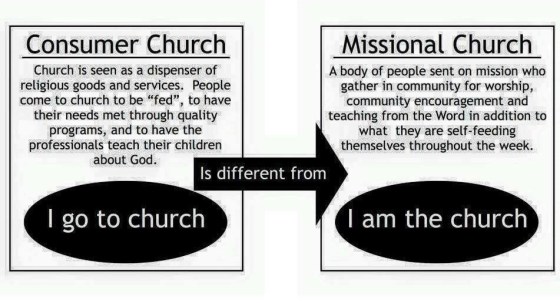







 therevdrjs