It may come as a surprise to many of us, but ‘God’s ways are not our ways nor are God’s thoughts our thoughts,’ so the Prophet Isaiah tells us (Isaiah 55:8). God doesn’t think the way we think or work the way we work.
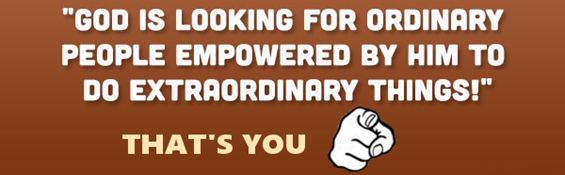
The positive spin on this for us is that it means that God uses ordinary people to accomplish extraordinary things for the sake of his Kingdom. God chooses people like you and me with all our faults and failings, weaknesses, and flaws to carry out his extraordinary plans for the world. As the Apostle Paul tells us, God chooses ‘things the world considers foolish in order to shame those who think they are wise. And he chooses things that are powerless to shame those who are powerful. God chooses things despised by the world, things counted as nothing at all, and uses them to bring to nothing what the world considers important’ (1 Corinthians 1:27-29 NLT).
What the world thinks of as important and significant is often not so in God’s kingdom and vice versa. This is illustrated by the simple, and seemingly insignificant, yet utterly delightful, episode at a wedding party in Cana in Galilee recorded in John 2:1-11. The Apostle John records that right at the start of his ministry, Jesus turns water into wine (John 2:8), the first of his miraculous signs whereby the disciples glimpsed something of his glory and believed in him. As Sister Vandana (an Indian theological writer) reminds us: ‘Water! An ordinary, everyday, familiar thing, usually taking for granted and unnoticed – except when found absent and needed. This the Lord used as an instrument to “manifest his glory … and his disciples believed in him.”’ God often uses very ordinary things and lets his glory shine out through them.’
We hear the words ‘God’s ways are not our ways’ and we decry our weakness. God, however, considers it strength because it means we are more dependent and trusting in his strength and ability to bring about what we, in our weakness and frailty, cannot (2 Corinthians 12:10). In this way his glory is revealed. What is impossible for us is possible for God (Matthew 19:26). What is totally impossible for us to do in our own strength is possible for us to do in God’s strength (Philippians 4:13). In and of ourselves we have nothing to boast about. As the Apostle Paul reminds us, ‘God deliberately chooses men and women that the culture overlooks and exploits and abuses, chooses these “nobodies” to expose the hollow pretensions of the “somebodies?” That makes it quite clear that none of you can get by with blowing your own horn before God. Everything we have – right thinking and right living, a clean slate, and a fresh start – comes from God by way of Jesus Christ. That’s why we have the saying, “if you’re going to blow a horn, blow a trumpet for God!”’ (1 Corinthians 1:27-29 The Message).
It is good for us to know that we are nobodies. To have a right perspective of ourselves, but also to have a full and profound appreciation and understanding of what God can do with a bunch of nobodies – like us! It is said of Moses (who lived to be 120 years old) spent the first forty years of his life thinking he was a somebody, the next forty years of his life thinking he was a nobody, and the last forty years discovering what God can do with a nobody!
So how do you see yourself? Do you think you are a nobody? Good, because that means that God can use you! Not necessarily in anything spectacular but, by being strengthened and equipped by the Holy Spirit, doing ordinary things extraordinarily well, and by being enabled to see our extraordinary God in all the ordinary things of life. Jesus, the perfect party guest, did not change the water in the ceremonial jars into cheap plonk but into a wine of classic vintage (John 2:10)! So, let us trust and pray that in our lives, and in the life of our church, God has ‘saved the best wine until now’ (John 2:10)!
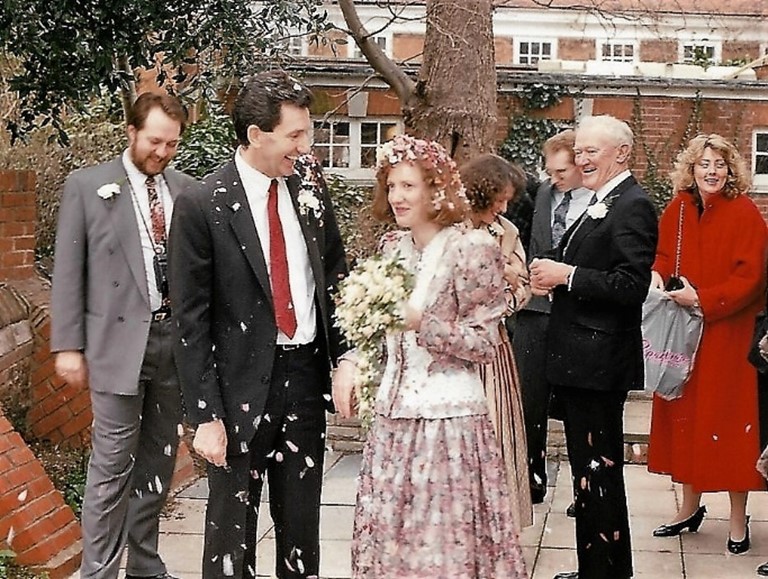
This Tuesday (2 February) Julia and I will be celebrating our 30th Wedding Anniversary. The traditional gift for 30 years of marriage is pearl, indicative of something extra special that takes time to grow – a pearl of great price that is worth sacrificing everything else in order to gain (Matthew 13:45,46). Of course, Jesus is speaking of the gift of salvation, not marriage, but blessed is the man (or woman) who finds a life partner who turns out to be a true soul mate, a companion on the journey, an encourager to keep keeping on in the way of Christ!
Speaking of weddings, one of my favourite Bible stories is the story of the Wedding at Cana in Galilee (John 2:1-11). One could wax lyrical on all that this story has to teach us but I want to concentrate on just one aspect – Jesus turning water into wine – his first recorded miracle although the word John uses here for ‘miracle’ (v.11) is not the normal Greek word for ‘miracle’ (dunamis) but semeion meaning ‘sign’. For John, all Jesus’ miracles are actually ‘signs’ – pointing to who Jesus was and to his claim upon all our lives – rather than to the miracles in and of themselves! So, what are we to make of this particular miracle, this sign of turning water into wine, this moment of bright illumination? Let me suggest three things:
Firstly, Jesus brightens up religion. The water Jesus used was not for drinking or washing dishes but for a specifically religious purpose in Judaism (v.6). It is as if Jesus is saying, ‘Let me take your old religion, good as it is, and given by God – and turn it into something even better!’ He had come to turn the water of Judaism into wine. Whether we come to him, from Judaism, or from a dry and unhelpful church background, or from one of the worlds other religions, or from a state of complete indifference, Jesus wants us to discard the bad and make the good infinitely better. He want us to move away from mere ‘religion’ (even ‘Baptist religion’?) to a living relationship with God through him.
Secondly, Jesus brightens up social occasions! It is really significant for us that Jesus was present at these wedding festivities, at all! Let’s face it, Christians can slip into a frame of mind where either we think that Jesus disapproves of any kind of ‘fun’ and we never go to ‘those kind of parties’ at all, or we go with a sense of guilt and hide our Christian ‘side’ from view. Things may have moved on somewhat from the killjoy Christianity of my youth where parties, pop music, dancing, cinema, etc. were roundly disapproved of, but there are still those Christians who are never happy unless they are miserable (and make everyone else’s life miserable if they can). The fact is the best social events are those Jesus attends, and we should both run them at home in his way, and take him with us when we go out. Jesus is the life and soul of the party!
Thirdly, Jesus brightens up marriage! How good that Jesus – a lifelong bachelor – should want to attend and enrich the wedding of two young friends. Over the years I have ‘married’ a lot of people (officiating at their weddings you understand). Many of these have gone on to be happy and successful … but sadly not all! The saddest thing for me has not been those marriages that ended in separation or divorce, but those marriages where the two people stay together (for the sake of the children, or appearance sake, etc.) but obviously don’t get on anymore and the relationship is clearly unhappy or even toxic. They may try to disguise the fact but in reality everybody knows?! Someone once described such marriages poetically as:
“Theirs was a beef stew marriage, And the case was somewhat crude –For the wife was always ‘beefing’ And the husband always ‘stewed’!”
Let me reiterate, however, that Jesus can touch any marriage – not only at the beginning, but in the middle of a marriage (when things have become ‘run of the mill’), or even in the later years of a marriage (when both parties have possibly ‘given up the ghost’ of their marriage being anything other than a ‘life sentence’) – though he may need to do so through much patience and prayer or through the mediation of people who can help.
A couple (both in their late nineties) who had been married for 70 years, were being interviewed on TV. The young reporter (in her early twenties) asked the husband what the secret of a happy marriage was? ‘Two words!’ he replied. ‘What are they?’ asked the young reporter innocently. ‘Yes, dear!’ was husband’s reply. Let me suggest a better ‘secret’ – the words of the anonymous Preacher of Ecclesiastes – ‘two are better than one, and a three-fold cord is not easily broken’ (Ecclesiastes 4:12). Husband, wife … with Jesus at the centre makes for the secret of a happy and purposeful marriage. And … even if you are not married, putting Jesus at the centre of things is still the best way to turn the all too often tepid water of life into the rich, full-bodied wine of the Kingdom!
An eight-year old boy had a younger sister who was dying of leukaemia. His parents explained that if his sister didn’t have a blood transfusion she would die, and asked her brother whether he would be willing to be tested to see whether his blood was compatible with hers. He said that was OK, and when the blood was tested, it proved to be a perfect match. Then they asked if he would be willing to give her a pint of his blood, as it was her only hope. He said he would need to think about that one overnight.
Next day the boy said that he had thought it over, and that he was happy to give his sister the blood that she needed. They took him to hospital and put him on a bed next to his sister. The nurse took a pint of the boy’s blood, and it was given to his sister. The boy lay there quietly while the transfusion was being given, until a doctor came over to ask how he was doing. There was a pause … and then the boy looked up at the doctor and asked, ‘How soon is it until I start to die?’
We are reminded of the words of Jesus to his disciples, ‘Greater love has no one than this: to lay down one’s life for one’s friends’ (John 15:13). Although Jesus would have been speaking in Aramaic (the common man’s Hebrew), John (writing his Gospel in Greek) uses the Greek word agape to convey the sense of meaning behind what Jesus was saying. In his little book, The Four Loves, C S Lewis discusses the different Greek words translated love in English. When the Bible describes God’s love for us, and the love God wants us to have for others, it is often this Greek word agape that is used. Agape love is found everywhere in the New Testament. When Jesus said, ‘Love your enemies’ (Matthew 5:44), Matthew uses the word agape. When Jesus said we were to ‘love one another’ (John 13:34,35) the word used by John is agape. When Jesus exhorted us to ‘Love God (with all you’ve got) and love your neighbour as much as you love yourself’ (Mark 12:30,31), Mark used the word agape. When the Bible says, ‘God is love’ (1 John 4:8) it uses the word agape. The New Bible dictionary defines agape love as ‘that highest and noblest form of love which sees something infinitely precious in its object’.
It has been suggested that the Fruit of the Spirit, listed by Paul in Galatians 5:22,23, are not several different fruits but simply different facets of the one fruit – love! ‘Joy is love singing; peace is love resting; patience is love enduring; kindness is loves touch; goodness is loves character; Faithfulness is loves habit; meekness is love for getting itself; self-control is love holding the reins.’ The Gospel is most certainly possessed of incredible power – ‘the power of God that brings salvation to everyone who believes’ (Romans 1:16) – but it is essentially the power of love!
We hear a lot today (in certain quarters) about the need to see ‘signs and wonders’ (Acts 2:43) on our streets once again (as per New Testament days). For some this is the solution to all our problems, particularly in the face of declining numbers and evangelistic failure. Now I believe in ‘signs and wonders’ – especially those that ‘confirm’ God’s word (Mark 16:20) – I have seen them for myself, and experienced them personally, many times. But their perceived absence is not the reason for our alleged ineffectiveness, and they are not the solution to our problems. My own conviction is that the Sermon on the Mount (Matthew 5-7) is at the heart of the teaching of Jesus, at the heart of the Gospel message, and if we made living that out our priority we would be far more effective in our witness (both as individuals and as Church) … and genuine ‘signs and wonders’ would follow as a result!
We need to be clear about one thing concerning agape love. All too often today love is seen only as an emotion or feeling. Certainly, there is emotion involved in love, whether it is love for others or love for God. But love is more than an emotion, love is not just a feeling – love is an act of the will, love is doing. True love is love which acts. That is the way God loves us. The Bible tells us that ‘God so loved the world that he gave us his one and only Son’ (John 3:16). The Apostle John exhorts us: ‘Dear children, let us not love with words or speech but with actions and in truth’ (1 John 3:18).
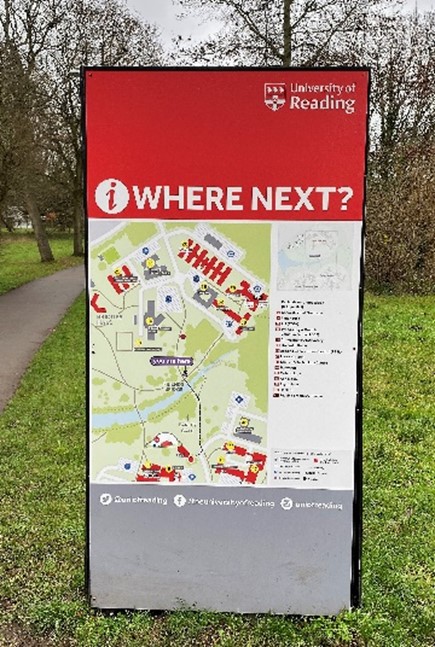
Julia and I are fortunate to live just across the road from the extensive grounds of the University of Reading (which is open to the public) with its wonderful lake, amazing trees, the Harris Gardens, the university library, bars, and eateries (which as students at the University of Winchester, we can also use), and even a great little Co-op Store … all within walking distance. On Boxing Day we enjoyed a lovely walk around the lake and I was inspired and encouraged by a university notice board (they are scattered all over the complex) with a nice map and the inscription ‘Where Next?’. Designed to help students and visitors alike to find their way round the university grounds, the map/sign set me prayerfully pondering ‘Where Next?’ as far as 2021 is concerned.
2020 is just about gone (‘Good Riddance’ I hear you say) and 2021 is almost upon us … but what does this New Year hold in store for us? Much the same as 2020, I fear, although we hope and pray (in the words of Mary Peter’s lovely hymn) for ‘a bright tomorrow’. Initially I suspect we will see a further rise in Coronavirus cases (despite a major rollout of the various vaccinations on offer), the appearance of various mutant strains of the virus, and the NHS under even greater pressure. Sadly, I anticipate that (despite the implementation of the Brexit agreement) there will be growing economic hardships, more businesses going broke, more redundancies and greater unemployment. I also suspect that there will also be more ‘crises’ around the corner that none of us are anticipating at the moment.
Now by nature I am not normally a negative person. I have been described as ‘Not just a glass half full man, but a glass overflowing man!’ so it really goes against the grain for me to appear seemingly to be ‘a prophet of doom’. On the other hand I don’t want to be a false prophet like those in Jeremiah’s day who ‘filled [people] with false hopes … speaking out of their own minds, not from the Lord … promising peace and that nothing will harm you’ (Jeremiah 23:16-18). Sadly, there is a lot of false prophecy going around today – even in Christian circles – as witnessed to by the various false prophesies that Donald Trump would win the 2020 American Presidential Election. Having said all this … we are not without hope for the future!
Despite all the negatives of 2020 I have been inspired and encouraged by a lot of things over this last year. The selflessness of so many extra-ordinary, ordinary people, who have given themselves selflessly in the service of their fellow human beings through the NHS, the Food Banks, the Service Industries, and so on. The numerous charitable organisations here in Reading, and elsewhere, who have continued to care for the broken, the hurting, the needy in our society, despite all the difficulties and inconveniences. For me these are the true heroes that should be recognised in the New Year Honours list! I am sure we will see lots more examples of such selfless service in 2021.
So, is there any word of hope to bring to you as we stand on the cusp of another year? Well, yes there is! Julia and I have been pondering that lovely verse at the end of Isaiah 40 which tells us that ‘those who wait on the Lord shall renew their strength; they shall mount up with wings like eagles, they shall run and not be weary, they shall walk and not faint (Isaiah 40:31 NKJV). Here, we find a wonderful guarantee from God promising us renewed strength, the ability to rise above our problems, energy to keep going, and (what we might call) ‘stickability’ … if we will but ‘wait upon the Lord’!
The Hebrew word qavah translated as ‘wait’ here in the NKJV actually has a number of meanings – as the various different translations of the Bible suggest – each of them giving us another inspirational facet of what it means to truly trust in God, whilst at the same time suggesting various helpful directions in which we might positively apply ourselves in this time of national and (for some of us) personal crisis in which we find ourselves.
Firstly, we can pray! Qavah can mean ‘to wait upon’ hence the exhortation to ‘wait upon the Lord’ (NKJV) i.e. to wait prayerfully on the Lord. The concept encouraged here is intercessory prayer where we spend significant time waiting on God for him to reveal his will, his plan, his purpose to us. Something akin to Hezekiah who, when under threat from Sennacherib, simply laid the threatening letter he had received out before the Lord and invited God to read the letter and let Hezekiah know how to pray into the situation and how to act in response to the situation (2 Kings 18:13-19:37). Something akin to John’s exhortation to wait upon God over every matter in order to get the mind of God on the situation and then … and only then … ask God to do what he has revealed he wants to do in the first place (1 John 5:14,15). We need to be using this time of enforced lockdown to really pray … to pray for the Church and for the World as we have never prayed before!
Secondly, we need to be patient! Qavah can mean ‘to wait for’ hence the exhortation to ‘wait for the Lord’ (NRSV) i.e. to wait patiently for God’s plan and purpose to be fulfilled. We live in an ‘instant age’ – everything from instant coffee to instant answers – we are so impatient; we don’t want to wait for anything! The simple fact of the matter, however, is that God never does anything in a hurry. His timing is always perfect. Paul tells us, concerning the birth of Christ, that it was ‘when the set time had fully come, God sent his Son,’ (Galatians 4:4 NRSV). God is doing something right now through all this Covid-19 stuff and the fall out from that. We have to be purposeful, yes, in playing our part in making a positive difference wherever we can – doing the ‘salt’ and ‘light’ and ‘leaven’ stuff (Matthew 5:13-16; 13:33) – but we also have to ‘keep in step with the Spirit’ (Galatians 5:25), waiting patiently for God to do his stuff in his own time.
Thirdly, we need to rest trustfully in God!Qavah can mean ‘to rest trustfully in’ hence the exhortation to ‘trust in the Lord’ (GNB). We think of that story in the Gospels when Jesus and his disciples were caught in the midst of one of those violent storms that can suddenly spring up on the Sea of Galilee (Mark 4:35-41). The disciples were in a panic, fearing the worst, but Jesus was peacefully asleep in the stern of the boat, resting on a cushion secure in Father God! Whatever 2021 may bring us we too can rest content in Father God, secure in the knowledge that ‘our times are in God’s hands’ (Psalm 31:15) and that ‘in everything God is working for the good of those who love him, those intent on living out his plans and purposes’ (Romans 8:28).
Fourthly, we can face the future confidently!Qavah can mean ‘to hope with absolute certainty in’ hence the exhortation to ‘hope in the Lord’ (TNIV). Our English word ‘hope’ is all too often used very negatively – ‘I hope I pass my exams (even though I didn’t do any work for them)?’ or ‘I hope I lost weight over the Christmas (even though I’ve stuffed myself every single day over the holidays)?’ I recall a man in my home church, in response to a call from our Pastor to engage in a particular evangelistic endeavour, saying ‘We’ll have a go Pastor, with fingers crossed and looking to Heaven!’ Presumably just in case one or the other didn’t work. Qavah is much more positive, however, endowed as it is with a much greater sense of certainty. It is the equivalent of the New Testament word for ‘hope’, elpis, which led Martin Luther to translate the phrase ‘the God of hope’ (Romans 15:13) as ‘the God of the guarantee’! Which brings me back to almost where we began this blog … with the words of Mary Peter’s wonderful hymn (my very favourite at this moment) and inspiring words to end with:
Through the love of God our Saviour, All will be well; Free and changeless is His favour; All, all is well. Precious is the blood that healed us; Perfect is the grace that sealed us; Strong the hand stretched out to shield us; All must be well.
Though we pass through tribulation, All will be well; Ours is such a full salvation; All, all is well. Happy still in God confiding, Fruitful, if in Christ abiding, Holy through the Spirit’s guiding, All must be well.
We expect a bright tomorrow; All will be well; Faith can sing through days of sorrow, All, all is well. On our Father’s love relying, Jesus every need supplying, Or in living, or in dying, All must be well.
To be Janus-faced means possessing two different natures or characters. Often associated with being deceitful, two-faced, or insincere, it is important to note that the first definition of the term simply implies two characters which is not a negative attribute but simply a dichotomy – the ability to look in two directions at one and the same time.
Janus was a Roman god. He was the patron of doorways, transitions, beginnings, and endings. He was depicted as having two faces, symbolizing his ability to simultaneously look to the past and to the future. The name Janus came from the Latin word ianua, which means an entrance gate. The month of January is named for Janus. This period between Christmas and the New Year is a strange time. In normal circumstances the majority of us are not at work during this period – most firms give their staff an extended break between Christmas and the New Year because it is simply not economical for people to be at work during this period. My son, who works in quality assurance, sometimes has to work during this period but, according to him, it is a complete waste of time because virtually all of the businesses he tries to contact during this period are not working. So, the majority of us find ourselves in a kind of vacuum for a few days – the Christmas celebrations are over and the New Year celebrations have not yet begun. Time, I would suggest, to pause, reflect, think … and put on our Janus face!
Looking back, 2020 has, in many ways, been an awful year – a missing year in many ways – with the outbreak of Covid-19, an enforced lockdown for most of the year, an unexpected pandemic that has left chaos in its trail. Sickness, death, redundancy, unemployment, economic hardship, etc., etc. It seemed to come right ‘out of the blue’ and we are none the wiser where it came from (unless you are one of these weird conspiracy theory nutcases). So what are we to make of 2020? What can we learn from it?
Well, way back in March – when we were forced into lockdown – I welcomed the opportunity of having ‘time on my hands’. Fortunately, Julia and I are in a reasonably secure position. Julia has a steady job (whoever would have thought that being a Baptist Minister would guarantee financial security?), I have a regular pension, we have a nice house to live in, we have all we need. Instead of rushing around like a headless chicken (the wont of Baptist Ministers trying to keep up with all the demands placed upon us from one source or another – forget the misnomer that we only work on Sundays), I suddenly found that I had more time to prayerfully wait on God and search the Scriptures.
Needless to say, my initial prayers were along the lines of, ‘So, what’s going on here, Lord? What’s this all about?’. And I got answer straight away! I don’t go along with all this nonsense about God never answering our prayers. God will always give us an answer … the problem is that oftentimes we don’t like the answer God gives us so we pretend he hasn’t answered us! Anyway, God showed me straightaway what all this was about … basically two things!
Firstly, God wants his world back. The Bible tells us that ‘God so loved the world that he gave us his one and only Son, that whoever believes in him will not perish but have eternal life’ (John 3:16). Systematically, down through recent generations, governments, political and economic institutions of one kind and another, our world has been ripped away from being the kind of world God wants it to be. Materialism, selfishness, greed, corruption, environmental destruction, social and racial injustice, and so on and so forth, has corrupted our world and our society. Scriptures such as ‘the Lord has told you what is good, and this is what he requires of you: to do what is right, to love mercy, and to walk humbly with your God’ (Micah 6:8), and ‘I hate all your show and pretence – the hypocrisy of your religious festivals and solemn assemblies. I will not accept your burnt offerings and grain offerings. I won’t even notice all your choice peace offerings. Away with your noisy hymns of praise! I will not listen to the music of your harps. Instead, I want to see a mighty flood of justice, an endless river of righteous living’ (Amos 5:21-24) take on a new relevance for us today. Sadly, it is virtually impossible to find leaders of Godly character anywhere in our world today – men and women in the political sphere, the City, the financial institutions, the media, the world of business and commerce, economists, or captains of industry, etc. who put God and the good of the people before personal achievement of personal financial gain. And … as in the day of Noah … God has had enough!
Secondly, God wants his Church back! The Bible tells us that ‘Christ loves the Church and gave himself up for her’ (Ephesian 5:25). During the last umpteen years we have seen the Church of Christ riven asunder with split after split – usually over personalities rather than doctrine – and the rise of personality cults, sectarian divisions, legalism, moralism, heavy shepherding, and control issues, bullying dominance, misogyny, and discrimination, and so on – so that in many cases today’s Church seems to be a million miles away from the Christ of the Gospels. Even today – after nine months of lockdown and severe restriction on corporate gatherings for worship – so many Pastors and Church Leaders remain desperate for a return to the ‘old normal’ because they are seeing their ‘control’ of their people (and their source of finance) ebbing away. And God is sick of it all. He wants his Church back!
2020 is ending on a bad note. Despite the heroic efforts of the scientists, the NHS workers, the hospitals, and surgeries, and so many others, the pandemic is getting worse not better. Covid-19 is changing shape, and effecting more people than ever. Our hospitals are full. Businesses are going to the wall. Redundancies and unemployment is growing. And who knows what the negative effects of Brexit are going to be (despite all the noise from the pro-Brexit media).
So, looking into 2021, with our other Janus face … what do we see? Do we see something more positive? A sudden ‘cure-all’ as a result of mass vaccinations, and us finally leaving the EU? Well, ultimately God will have his way of course. In the words of the old hymn, by Mary Peters, ‘Though we pass through tribulation, all will be well. Ours is such a full salvation, all, all is well. Happy, still in God confiding, fruitful, if in Christ abiding, holy through the Spirit’s guiding, all must be well!’ … but not any time soon, I’m afraid. There is little sign of any of the ‘movers and shakers’ in our society (or prominent leaders in today’s Church for that matter) showing any sign of repenting, turning back to God, acknowledging that they have got things horribly wrong, and that they haven’t got any answers … and that they desperately need God’s help! So 2021 is going to be much like 2020, I’m afraid … probably worse, in fact, as we lurch from one unanticipated crisis to another.
During 2020, I have found myself drawn back time and again to the Exodus narrative and the confrontation between Moses and Pharaoh (Exodus 11:1-12:26). Israel were enslaved by Egypt and, despite God pleading with Pharaoh to release the people, Pharaoh refused and instead hardened his heart. The consequence was that Egypt experienced 10 plagues, one after the other, as a sign, a warning, to Pharaoh to repent and let God’s people go. Pharaoh systematically refused and each time hardened his heart more and more until eventually he reluctantly gave in … and the people were allowed to go free … but not without great cost to Pharaoh and Egypt.
Now, we must be careful not to draw too much from this illustration. Although there are parallels here that we need to take to heart. I often hear Christians today ‘praying against Covid-19’. Can I suggest that this is actually a nonsense. Did God’s ancient people in Egypt pray against the 10 plagues? I would suggest that they too (as well as the Egyptians) suffered under the various plagues inflicted on Egypt (the only one they avoided – because of their obedience to God’s command was the last) but we have no record of them ‘praying against’ the various plagues. Instead of praying against Covid-19 we need to be praying for the ‘Pharaohs’ that dominate and control our politics, the media, the economy, the city, the financial and businesses world, and so on. The Pharaohs (whether large or small) that dominate the Church or churches. As well as praying God’s blessing on all those people of goodwill who are (whether consciously or not) endeavouring to do what is right, we need to be praying that God will break in on the ‘Pharaohs’, intervene, bring them to genuine repentance, enable them to turn once again back to God and implement his solutions, his ways, his plans, his purposes … that God will ‘turn their hearts of stone into hearts of flesh’ (Ezekiel 26:26)!
Boxing Day is the day after Christmas Day and is celebrated as part of the Christmas holidays. There are many reasons suggested as to why it was given its name. Here in the UK it was a custom for tradesmen to collect ‘Christmas boxes’ of money or presents on the first weekday after Christmas as thanks for good service throughout the year. This is mentioned in Samuel Pepys’ diary entry for 19 December 1663. This custom is linked to an older tradition where the servants of the wealthy were allowed the next day to visit their families since they would have to serve their masters on Christmas Day. The employers would give each servant a box to take home containing gifts, bonuses, and sometimes leftover food. Until the late 20th century there continued to be a tradition among many in the UK to give a Christmas gift, usually cash, to vendors although not on Boxing Day as many would not work on that day. When I was a child, 70 years ago now, it was still the custom in some religious families to exchange presents on Boxing Day (rather than Christmas Day) since Christmas Day was reserved for religious activities alone.
Whatever the reason, and whenever it takes place, I guess we all like receiving presents (and hopefully giving them as well) at Christmas. In our family we have a tradition of leaving our Christmas gifts to one another under the Christmas tree until Christmas afternoon when they are distributed by the youngest member of the family present. This year the cupboard has been somewhat bare (thanks to the restrictions imposed by Covid-19) with only a few gifts left under the tree. Usually, come Boxing Day, all the gifts have been taken and all that is left (somewhere out of the way) is a large black rubbish bag full of hastily torn off wrapping paper, although I do recall one year when a solitary gift – minus a name tag of course – was left unclaimed until Boxing Day. It was actually for the dog, I recall … so he can be excused.
Vaughn Shoemaker was a two-time Pulitzer Prize editorial cartoonist and devout Christian who prayed before creating each of his 14,000 cartoons. Among many of his memorable cartoon figures Shoemaker is most remembered for a cartoon that appeared after Christmas on the front page of the Chicago Daily News for many years. Shoemaker’s cartoon showed a beautifully decorated Christmas tree with one unwrapped gift under the tree. On the unwrapped gift were the words: ‘Eternal Life’. Underneath the cartoon were the words of John 3:16: ‘For God so loved the world that he gave his only begotten Son, that whosoever believeth in him might not perish but have eternal life’. The title of the cartoon was ‘The Untaken Gift’.
When Shoemaker first showed a sketch for this cartoon to his editors, they liked it, but expressed concern that it might offend some readers. Shoemaker stood his ground. The cartoon was then shown to the newspaper’s publisher, Frank Knox. Knox gave it one quick glance and said, ‘Let’s be sensible. If it weren’t for John 3:16 there wouldn’t be any Christmas! Run it!’ And run it they did.
Knox was right! We would not be celebrating Christmas today if God had not so loved the world that he gave us his only Son. It’s God’s gift of eternal life and joy for anyone who will believe and receive God’s only Son. It’s all there in the Bible: “But to all who received Jesus, who believed in his name, he gave power to become children of God” (John 1:12). This is good news for everyone! It is just as the angel announced to lowly shepherds on that first Christmas night: ‘Do not be afraid; for see – I am bringing you good news of great joy for all the people: to you is born this day in the city of David a Saviour, who is the Messiah, the Lord’ (Luke 2:10).
So, are you quite sure that you have collected all your Christmas gifts this year? Is there yet another gift that you have forgotten? As the late A W Tozer once said: ‘Jesus Christ came not to condemn you but to save you, knowing your name, knowing all about you, knowing your weight right now, knowing your age, knowing what you do, knowing where you live, knowing what you ate for supper and what you will eat for breakfast, where you will sleep tonight, how much your clothing cost, who your parents were. He knows you individually as though there were not another person in the entire world. He died for you as certainly as if you had been the only lost one. He knows the worst about you and is the One who loves you the most. If you are out of the fold and away from God, put your name in the words of John 3:16 and say, “Lord, it is I. I’m the cause and reason why Thou didst on earth come to die.” That kind of positive, personal faith and a personal Redeemer is what saves you. If you will just rush in there, you do not have to know all the theology and all the right words. You can say, “I am the one He came to die for.” Write it down in your heart and say, “Jesus, this is me – Thee and me,” as though there were no others. Have that kind of personalized belief in a personal Lord and Saviour.’
Very early one Christmas morning a small boy tiptoed downstairs. All night he had been dreaming of the gorgeously decorated Christmas tree groaning under the weight of presents. Imagine his shocked amazement at seeing none these things – just the same old furniture arranged in the same drab way. Yet there was a difference, an uncanny difference. It was the atmosphere – like fog, heavy, oppressive. The boy rushed out into the dark street. The same gloomy atmosphere greeted him. No smiles on the faces of passers-by, no one calling out ‘Merry Christmas’ to him – just people plodding along wearily, aimlessly. He looked at the shop windows. The bright lights and decorations of Christmas Eve had disappeared – nothing in shops now but food, clothing, implements, the essentials of living. He came to the church – at least to the vacant plot of ground where the church had once stood. No church now! No school either! Instead a prison – the biggest, grimmest prison he had ever seen. ‘What’s happened to everything?’ the boy cried out, ‘What’s wrong?’ Befuddled, the boy turned and started back for home. Suddenly he stumbled over something lying in snow. It was a man, blue with cold, lying there like a bundle rags. Urgently the boy began running to the nearby hospital for help … but even as he ran he realised that no hospital would be there! No hospital, no church, no school, no lighted shop windows, no Christmas tree, no cheeriness, no charity, no hope, no nothing! Sick at heart he trudged home, flung himself on a chair, and reached for the Bible to read the story now become a mockery. He thumbed through the Old Testament suddenly remembering that the Gospel story was in the New Testament. But this Bible ended with the Prophecy of Malachi?! After that he found nothing but blank pages – nothing but one verse of Scripture printed in a tiny footnote – the words of Jesus … ‘If I had not come!’
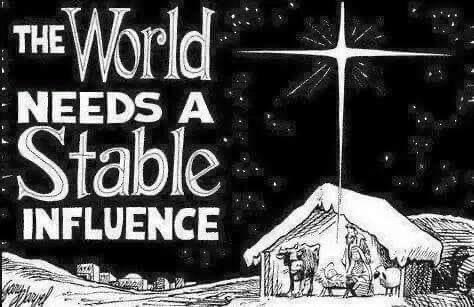
Once upon a time our nation was a Christian nation built and established on Christ-centred, Biblical principles, which were the foundations of much of our belief and behaviour, our virtues, values, and ethics. Seventy plus years ago (when I was a small child) much of this had degenerated from genuine belief and commitment to Jesus Christ to simply a ‘Christian ethic’ – the lingering influence of ‘Christendom’ if you like – but at least we had some kind of foundation as a nation and as individuals. My late father (who died in 1968) never professed to be Christian (he was ex-army having fought through WWI and then spending the 10 years in India) but even he had some kind of value system based on Christian principles that guided him (and many others of his generation) in life. In our wisdom, however, successive governments, institutions, society, etc., etc., down through the years, have eroded this (and to be honest the Church hasn’t helped to protect us as a nation from this erosion) so that today little, even of the so-called ‘Christian ethic’, remains. We have neglected and rejected Christian values and principles, and replaced them with … well, with nothing! And what is true of the UK is also true elsewhere in our world. What the world needs – and what the Covid-19 chaos is making abundantly clear today – is a stable influence!
Thankfully, Jesus Christ did come! This ‘coming’ we celebrate every Christmas! The difference his coming has made is incalculable! So much of value and worth that we enjoy today stems from that coming – not least in realms of education and medical care!?
This should not surprise us because of the special nature of the One whose birth we celebrate at Christmas! Immediately prior to his birth an angelic messenger told Joseph that the son Mary was to bear would be known by two particular names: ‘Immanuel’ meaning ‘God with us’ and ‘Jesus’ because ‘he will save his people from their sins’ (Matthew 1:21,23)!
When we look at that tiny baby lying in Bethlehem’s manger we need to recognise that this is no ordinary child but none other than God himself come among in human form! If we want to know what God is like all we need to do is look at Jesus! Seeing him not just as a tiny baby, but as a grown man who went about doing good, demonstrating through life and word what God was like and what he wants from each one of us!
And when we look at that tiny baby we need also to recognise that Jesus grew up not just to teach us what God was like, or what God requires of us, but to give his life on Calvary’s cross to remove the barrier of sin that separates us from God and open a new a living way back to God for all who will genuinely believe in him!
These words of Jesus: ‘If I had not come’ (John 15:22) were spoken to his disciples after the ‘Parable of the Vine and the Branches’ where Jesus used an everyday scene to get across the importance of us having living relationship with God – a living relationship made possible through his Incarnation and Passion. Without a living relationship with God we are like a branch cut off from the vine – incapable of fulfilling our God-given purpose in life, living a fruitful life, or making a difference in this broken, hurting, and needy world!
Having a living relationship with God, however, makes all the difference! We ‘know’ God in a personal way, we find our God-given purpose in life, and we can now make a difference right here, right now!
Cardinal Jean-Marie Lustiger (a convert from Judaism who became the Roman Catholic Archbishop of Paris from 1981 until his retirement in 2005) tells how a group of boys in Orleans, France, back in 1939 wanted a bit of fun, and so they dared each other to go inside the church and confess a made-up list of terrible sins to the priest in the confessional. One of them, Lustiger says, was a Jewish boy named Aaron, who took up the challenge. The priest, who was both wise and holy, immediately knew what the boy was up to, challenged him to go up the altar, stand before the large image of Jesus crucified, and say three times, ‘Jesus, I know you died for me. But I don’t give a damn.’ Lustiger tells us that Aaron went up the altar and shouted: ‘Jesus, I know you died for me. But I don’t give a damn!’ ‘Jesus, I know you died for me. But I don’t give a damn! he shouted (even louder) a second time. And then, for a third time, he began: ‘Jesus, I know you died for me. But I don’t give a …’ Lustiger tells us that Aaron could not go on. He fell to his knees, committed his life to Christ right there and then. The following year Aaron was baptized and took the name ‘Jean-Marie’. The rest, as they say, is history.
‘History’ they also say, rightly understood, is ‘His Story’ – the story of Jesus Christ, the difference his coming has made, and around which the rest of history revolves. What, I wonder, will history have to say about this time in which we are living? Will it be a time in which we stop trying to resolve the world’s problems with our own ideas, plans, and schemes? Will it be a time when we turn back to God, to Christ, and his ways? A time when we embrace that stable influence?
Leonard Griffith tells a remarkable story about a young doctor who had been ill for a long time. Physically he seemed to have recovered, but emotionally he remained in a slew of depression, and nothing could shake him out of it. He displayed no interest in his work, refused to see his friends, and just stayed at home all day brooding.
His wife, who loved him dearly, fearful of what this would eventually mean to his career and to their marriage, did everything within her power to help him … all to no avail! Finally, in desperation, she devised a scheme. Would he go to church with her on Christmas Eve? The church would be deserted save for the organist playing soft music, and a distinguished actor who would step quietly into the gallery and recite the familiar Christmas Story from the Gospel of Luke. All of this she had arranged unknown to her husband. To her surprise, he agreed. He would go to the church by himself and wait for her there.
The doctor found it very peaceful sitting alone in the sacred silence … a silence suddenly broken by a cultured voice reciting verses, not from Luke but from the Gospel of John: ‘In the beginning was the Word, and the Word was with God, and the Word was God … and to those who received him, he gave power … power to become the children of God’. Something happened to the young doctor as the words and music faded away. It was as though an evil spell had been broken. As though a healing and liberating influence had come into his life.
At the door of the church the doctor met his wife and took her into his arms. His incredulous wife who had just received an apologetic note from the distinguished actor to say that he would not be able to come to the church that evening!
So what on earth (and in heaven) was going here? Well … if we read further on in the passage from John we discover something called ‘grace’ … amazing grace! John goes on to tell us that ‘the Word became flesh and made his dwelling among us … the one and only Son, who came from the Father, full of grace and truth … [and] out of [that] fullness we have all received grace in place of grace already given’ [John 1:14-16].
‘Grace’ is one of my (and John Newton’s) favourite words! ‘Grace’ is the opposite of karma (which is all about getting what you deserve) … ‘grace’ is getting what you don’t deserve (Justin Holcomb). ‘Grace’ is at the very centre and core of the whole Bible. ‘Grace’ is the most important concept in the Bible, Christianity, and the world. ‘Grace’ is the unmerited favour of God. It is the love of God shown to the unlovely … the peace of God given to the restless. ‘Grace’ is God reaching down to people who are in rebellion against him. ‘Grace is the love that cares and stoops and rescues!’ (John Stott). It is most clearly expressed in the promises of God revealed in Scripture and embodied in Jesus Christ!
John tells us here that at that first Christmas God, in the Person of his ‘one and only Son’, came among us – ‘moved into the neighbourhood’ (The Message) – ‘full of grace and truth’. Indeed Jesus came ‘full to overflowing’ (which is what the word means). So much so, in fact, that we are the beneficiaries of this amazing grace – we have all received ‘grace in place of grace’ or ‘one blessing after another’ (RSV). Common Grace that keeps us all alive – the very air that we breathe. Special Grace that comes to us in the Person of Jesus Christ that enables us to become spiritually alive!
This is what happened to Leonard Griffiths’ doctor all those years ago. And that’s what can happen to anyone at all, at any given time! So if you are going through a tough time, like that doctor … God’s grace is there for you … only a prayer away! And if you are at your wits end with worry or anxiety, like that poor doctor’s wife must have been … don’t give up on those you love and deeply care about … God’s grace is more than sufficient for them and you … keep loving, keep praying, keep believing!
AS John Newton, the onetime slaver (who sank so low that he actually became the slave of a slave), discovered for himself one day (when life was rock bottom) … when God suddenly broke into his life:
Amazing grace How sweet the sound That saved a wretch like me I once was lost But now I’m found Was blind, but now I see
‘Twas grace that taught My heart to fear And grace my Fears relieved How precious did That grace appear The hour I first believed
Through many dangers Toils and snares We have already come ‘Twas grace hath brought Us safe thus far And grace will lead us home
I recently came across a series of unintentionally humorous statements children had written in response to questions put to them in their Religious Education lessons in school. Here are a few of them: Noah’s wife was called Joan of Ark. The Fifth Commandment is ‘Humour thy father and mother’. Lot’s wife was a pillar of salt by day, and a ball of fire at night. Salome was a woman who danced naked in front of Harrods. Holy acrimony is another name for marriage. The Pope lives in a Vacuum. Paraffin is next in order after Seraphim. The patron saint of travellers is St. Francis of the Seasick. Iran is the Bible of Moslems. A Republican is a sinner mentioned in the Bible. The natives of Macedonia did not believe, so Paul got stoned. It is sometimes difficult to hear what is being said in church because the agnostics are so terrible. My favourite however, and very appropriate for this time of year, is the response one child gave to a question about the meaning of the Annunciation: When Mary heard she was to be the mother of Jesus, she went off and sang the Magna Carta.
This Sunday is the Fourth Sunday in Advent. Traditionally, on this particular Sunday, the Church thinks about the Mary the Mother of Jesus, and particularly Mary’s faith. Luke tells us that when Mary heard the angelic revelation that she was to bear the promised Messiah she burst into song. This song, known as the ‘Magnificat’ (from the Latin for ‘My soul magnifies the Lord’) – not the Magna Carta – begins: ‘My soul is ecstatic, overflowing with praises to God! My spirit bursts with joy over my life-giving God! For he set his tender gaze upon me, his lowly servant girl. And from here on, everyone will know that I have been favoured and blessed. The Mighty One has worked a mighty miracle for me holy is his name!’ [Luke 1:46-49 Passion Translation].
Mary, the mother of Jesus, is an important figure in the Story of Jesus, particularly the birth narratives of course. It is probably true to say that whilst Mary is given too prominent a place in Roman Catholic, Orthodox and Anglo-Catholic Churches, she is virtually ignored in the majority of Protestant, Evangelical, Reformed, Pentecostal and Charismatic Churches. This is a sadness because we have much to learn from Mary, not least from her willingness to say ‘Yes’ to God and to life, in response to God’s gracious dealings with her.
Our English name ‘Mary’ comes from the Greek ‘Maria’ which is itself based on the original Aramaic name ‘Mariam’ or ‘Miriam’. She is commonly referred to as the ‘Virgin Mary’ in accordance with the belief that she conceived Jesus miraculously through the Holy Spirit without having sexual relations with a man. The Gospel of Luke begins its account of Mary’s life with the Annunciation, when the angel Gabriel appears to her and announces her divine selection to be the mother of Jesus. According to other Gospel accounts, Mary was present at the Crucifixion of Jesus, and is also depicted as a member of the early Christian Community in Jerusalem.
Luke paints a picture for us of a young, devout Jewish girl (probably only about 15 years of age), betrothed to an older Jewish carpenter, who lived in the Palestinian town of Nazareth (Luke 1:26-30). Mary was just an ordinary Jewish girl. There was nothing that special about her other than the fact that she had ‘found favour with God’ (v.30). We are not told that she was more devout than any other woman, nor that she possessed greater faith. We are simply told that ‘God was with her’ (v.28) … and that he had a special, and unique, task for her. Mary had been chosen to give birth to the Christ-child, the Promised Messiah, the One who would not only redeem Israel but bring salvation to the whole world! The angel Gabriel appears to Mary and tells her: ‘You will conceive and give birth to a son, and you will name him Jesus. He will be very great and will be called the Son of the Highest. The Lord God will give him the throne of his ancestor David. And he will reign over Israel forever; his Kingdom will never end!’ (vs.30-33).
This whole episode is so amazing that it is beyond our ability to adequately grasp just what was happening here? No wonder that Mary was ‘confused and disturbed’ (v.29)? Here we have something quite beyond the experience of anyone of us. Think, for a moment, of the most amazing experience of your life so far? Well, this was way beyond that for Mary! What is perhaps even more amazing, however, is Mary’s response to this incredible news. She does not dismiss it as an hallucination. She does not refuse to accept God’s choice. She does not ‘run away’ from it. She simply says ‘Yes’ to God and to life! Mary responded, ‘I am the Lord’s servant. May everything you have said about me come true’ (v.38).
In some ways there is a link between the Magnificat and the Magna Carta. The Magna Carter is a charter of liberties to which the English barons forced King John to give his assent in June 1215 at Runnymede – a document constituting a fundamental guarantee of rights and privileges and freedoms that we in the UK still benefit from today. It was much the same with Mary, and it can be the same with us, because as Paul tells us ‘Where the Spirit of the Lord is, there is freedom’ (2 Corinthians 3:17). In saying ‘Yes’ to God, rather than losing our freedom, we actually gain it. Freedom to become the person that God always envisaged that we might become in Christ! Free to truly become a ‘somebody’ … not necessarily somebody famous … but a somebody through whom God makes a real difference in this broken, hurting, and needy world of ours today! So here is another song …
Step out of the shadows, step out of the grave, Break into the wild and don’t be afraid.
Run into wide open spaces, grace is waiting for you, Dance like the weight has been lifted, grace is waiting!
Where the Spirit of the Lord is There is freedom, there is freedom. Where the Spirit of the Lord is There is freedom, there is freedom.
Come out of the dark just as you are, Into the fullness of His love. For the Spirit is here, let there be freedom, Let there be freedom.
Bring all of your burdens, bring all of your scars, Come back to communion, come back to the start.
Run into wide open spaces, grace is waiting for you, Dance like the weight has been lifted, grace is waiting!
Where the Spirit of the Lord is, There is freedom, there is freedom.
Where the Spirit of the Lord is There is freedom, there is freedom!
Marmite … the food spread made from yeast extract … you either love it or hate it? I love it! What on earth has Marmite got to do with Advent you ask? Well obliquely quite a lot … given that traditionally the theme for the Third Sunday in Advent is ‘The God Who Disturbs’ and a time when think about the role of John the Baptist who ‘prepared the way’ for Jesus’ coming.
I really, really would like to be more like Jesus! The trouble is that I am perceived to actually be more like John the Baptist? It is not so much to do with my appearance or diet – I consider myself to actually be quite a ‘snappy dresser’ (no camel hair for me) and give me a ‘Full English Breakfast’ any day (rather than locusts and honey) – but rather it is to do with what I call ‘the marmite factor’. Let me try and explain.
‘You are just like marmite, you are … people either love you or hate you!’ The person who said this to me was a young man who had recently started to attend the church where I was the Senior Pastor. He was in a relationship with one of our girls in the church, and she dragged him along to worship with her. He enjoyed being part of our church family even though some of our church members didn’t really approve of him. He has not made any personal commitment of his life to Christ as far as anyone could tell (and therefore he shouldn’t really be getting ‘so involved’ in church life). He was ‘going out’ with a girl who was a professing Christian (and was therefore bound to ‘lead her astray’). He had ‘tattoos’ (a sure sign that he was living a ‘retrograde life’). And he was into ‘martial arts’ (obviously he was possessed of a ‘violent nature’). Actually, I really liked him … and was glad that he wanted to be part of us! Perhaps he too suffered from the ‘marmite factor’? It takes one to recognise one, they say.
He was, of course, obviously very discerning! I am ‘just like marmite’. People do either ‘love me or hate me’ even though I am really the most inoffensive of people. It has always been the case. Somehow I cannot avoid being ‘the elephant in the room’. I can sit in a corner, and say nothing at all, and still people will ‘react’? I suppose being 6′ 4″ tall, and weighing around 16 stone, it is probably hard to ‘sit quietly in a corner’ somewhere … but even so the way people re-act to me is decidedly odd. By nature I am actually quite a shy person (despite my size) and really don’t want to be the centre of attention. Nevertheless this is just the way it is. It has especially been the case since my ‘conversion’ at the age of 16, and especially so after my ordination into the Baptist Ministry when I was 25. Somehow or other, I seem to have the ability, for better or for worse, to force people to ‘get off the wall’. In many ways I have got used to it now. I have come to see that it always happens, whether I like it or not, and to some degree have learned to live with it. When I was first ordained into the Baptist Ministry, Barney Coombes prophesied over me: ‘Thus says the Lord: If you are faithful, and preach and teach that word which I will give you … you will lose people! But for everyone you lose, I will give you two others!’
That prophecy has been fulfilled time and again over the 40 plus years I was in full-time Ministry. In that time I pastored a number of churches – most of them were either small struggling causes or dying churches, when I was called there. By the grace of God every single church has grown numerically and spiritually during my time there … but not without cost. In every situation people have left, often citing me as the reason for them leaving, but for everyone that has left two more have come, so that the overall effect has been that those churches have grown considerably. It is always sad when somebody leaves a church – especially if they blame me for them leaving. In many of these cases the reason for them leaving has not really been because of me. What has actually happened is that often times God has put his finger on something that they needed to deal with … and they have not been prepared to do this? The reward, however, has been the number of people who have responded – more than double those who have left – and whose lives has been turned around as a result. I guess that it is just the ‘marmite factor’ at work once again.
John the Baptist also suffered from the ‘marmite factor’ even though Marmite hadn’t even been invented at that time (as far as we know)? Mark tells us ‘This is the Good News about Jesus the Messiah, the Son of God. It began just as the prophet Isaiah had written: Look, I am sending my messenger ahead of you, and he will prepare your way. He is a voice shouting in the wilderness: Prepare the way for the Lord’s coming! Clear the road for him! This messenger was John the Baptist. He was in the wilderness and preached that people should be baptized to show that they had repented of their sins and turned to God to be forgiven. All of Judea, including all the people of Jerusalem, went out to see and hear John. And when they confessed their sins, he baptized them in the Jordan River. His clothes were woven from coarse camel hair, and he wore a leather belt around his waist. For food he ate locusts and wild honey. John announced: Someone is coming soon who is greater than I am – so much greater that I’m not even worthy to stoop down like a slave and untie the straps of his sandals. I baptize you with water, but he will baptize you with the Holy Spirit! (Mark 1:1-8 NLT). It is clear that John the Baptist’s ministry was highly effective! People flocked to hear him and submit to his baptism. So what was it about John that made such an impact on the people around him?
John the Baptist was someone who lived his message! Not only by his words, but also through his whole life, John was a protest against the worldly way of life of his day. To begin with his was ‘a voice from the margins’. He was a man who spoke from experience of the desert. He was someone who had given himself the chance to hear the voice of God … and it was from this intimacy with God that he spoke powerfully and called others back to God. His appearance dressed as he was in ‘clothes woven from coarse camel hair, and with a leather belt around his waist’ (v.6), reminded others, not of the fashionable orators of the day, but of the ancient Prophets who lived simply and spoke powerfully about what God requires of us all. Even the simple fare he ate – ‘the food of the poorest of the poor’ (as one commentator suggests ‘locusts and wild honey’ (v.6) to mean) – demonstrated that here was someone who ‘walked the walk’ as well as ‘talked the talk’. Here was no ‘health and wealth’ preacher, but someone who in many ways ‘was the message’, and because of this people listened to him.
John the Baptist’s message was effective because he told people what, in their heart of hearts, they already knew to be true! When John came with a message of ‘repentance’ and ‘forgiveness’ (v.6) he was speaking God’s ‘now word’ to the people. Here was a word that was ‘bang up to date’. Here was a message that didn’t condemn people out of hand, nor simply repeated the crippling ‘legalism’ of Scribes and Pharisees, nor attempted to impress people with the ‘intellectual niceties’ or ‘pseudo-cleverness’ of many ‘orators’ of his day. Here was a message that challenged people on one hand to ‘turn back to God’, but it was also a message of hope in that if they turned back to God (and demonstrated they meant business with God by being baptised) they would experience the ‘forgiveness of their sins’! And because John spoke God’s ‘now word’ right into their hearts the people recognised John had indeed come from the very presence of God!
John the Baptist’s message was effective because he was completely self-effacing! John’s own verdict on himself was that he was not even fit for the duty of a slave. At the heart of his message was Jesus, not John. Speaking of Jesus, John tells us that ‘Someone is coming soon who is greater than I am – so much greater that I’m not were dusty in the sun, and muddy in the rain. It was the duty of a slave to remove the sandals of the Master of the house, or any guests who might visit. John saw himself, in comparison to Jesus Christ, as not even worthy of being his slave. As the Apostle John records John the Baptist declared: ‘He [Jesus] must become greater and greater, and I must become less and less’ (John 3:30). As William Barclay suggests: ‘[John’s] obvious self-forgottenness, his obvious yieldedness, his complete self-effacement, his utter lostness in his message, compelled people to listen to him.’
John the Baptist’s message was effective because he pointed to someone beyond himself! John baptised people by immersing them in the waters of the River Jordan as a sign they had genuinely turned back to God. But in the same breath he told his hearers that although he drenched people in water one was coming soon who would drench them in the Holy Spirit (v.8). Water can cleanse the body, but only God can cleanse our hearts and lives and give us the power to live for God. It was only Jesus who could ‘baptise us with the Holy Spirit’ (v.8). John didn’t want to occupy centre stage, but to point others to Jesus and enable them to connect with him. People listened to John because he didn’t draw attention to himself, but pointed to Jesus – the one who people really needed!
So, I really, really would like to be more like Jesus! Sadly, I seem to have the ‘marmite factor’ instead, and today I am reduced to being just ‘a voice from the margins’? On the other hand, if I can’t be like Jesus (however hard I try), I suppose that being a little bit like John the Baptist is not a bad second choice? Maybe I am at long last learning to be who I am? At least I have always tried to speak the Word of God with power and authority, and point others to Jesus … after all, he is so much better at changing people than I am!








 therevdrjs